
If Don Duality's mix of crime, restaurant management, cards, and escalating chaos has you hooked, start with Cartel Tycoon for the deepest strategy match, This Is the Police for consequence-heavy decisions, and Cultist Simulator for the strongest card-driven pressure. Beat Cop, Dungeons 3, Frostpunk, and Stacklands round out the best games like Don Duality in 2026 because each captures a different part of its appeal: criminal ambition, resource juggling, moral compromise, or beautifully nasty emergent disasters.
Don Duality is unusual. It isn't simply a restaurant game, and it isn't a conventional mafia simulator either. You are balancing legitimate cash flow against criminal jobs, using cards to trigger actions and events while trying to stop one bad decision from poisoning the entire run. That makes the right alternative less about matching its setting and more about matching its pressure loop.
I've ranked these games by four things: how strongly they reproduce Don Duality's decision density, how much their systems talk to one another, how punishing their failure states feel, and whether they still have a reason to be installed in 2026. If you want a refresher before jumping sideways, Steamoz's guide to Don Duality's best starting build is a useful companion.
The Best Games Like Don Duality Ranked
The list below isn't a lazy collection of games with criminals in them. Each recommendation earns its place by recreating a specific Don Duality feeling. Cartel Tycoon gives you the empire-building stress, This Is the Police makes every staffing decision hurt, and Cultist Simulator turns cards into a hostile language you must learn.
| Game | Tier | Best Match For | Main Difference |
|---|---|---|---|
| Cartel Tycoon | S-Tier | Crime empire management | Real-time logistics replaces card turns |
| This Is the Police | S-Tier | Moral pressure and dispatch | Story choices matter more than optimization |
| Cultist Simulator | A-Tier | Card-driven experimentation | Little traditional business management |
| Dungeons 3 | A-Tier | Villain operations and base growth | More action and less social consequence |
| Beat Cop | A-Tier | Street crime and daily routines | Linear narrative structure |
| Frostpunk | B-Tier | Hard trade-offs under pressure | City survival replaces criminal management |
| Stacklands | B-Tier | Cards and compact resource chains | Much lighter tone and lower narrative weight |

🎮 Don Duality
Looking to experience this game? Grab your digital key directly on our store for $2.24.
View on Steammoz Store →1. Cartel Tycoon Is the Closest Strategic Match
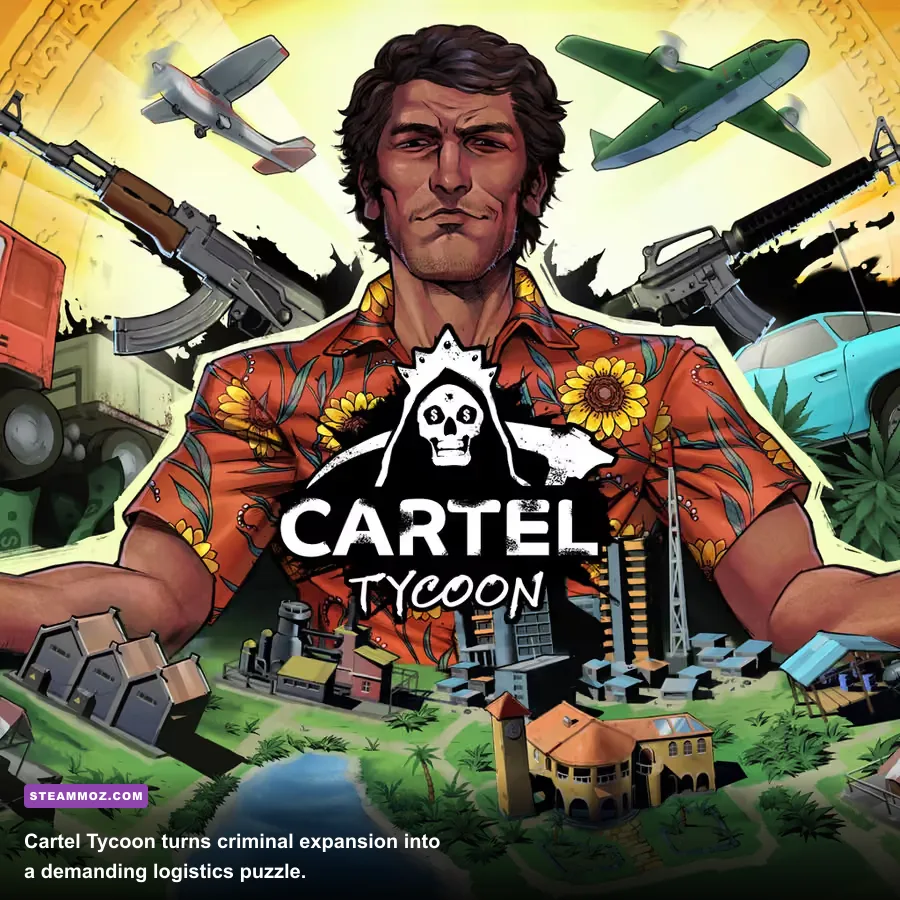
Cartel Tycoon is the obvious first recommendation, but obvious doesn't mean wrong. Both games understand that a criminal operation collapses when the legal front, supply chain, and dirty work stop supporting one another. In Don Duality, that tension plays out through cards and compact encounters. In Cartel Tycoon, it spreads across an entire territory.
You begin with a small operation and expand through production, storage, distribution, and influence. Cocaine farms, warehouses, logistics buildings, lieutenants, and safehouses all have jobs to perform. The critical difference is that Cartel Tycoon runs in real time. You aren't waiting for a hand to reveal the perfect answer; you're watching cash, heat, supply, and territory drift toward disaster while your network grows.
The game's signature headache is heat. Expansion attracts law enforcement, and corruption can delay the consequences but never erases them. A profitable route can become a liability if it runs through contested territory. That makes placement more important than simply buying the most expensive building. Spread too quickly and your cartel becomes impossible to defend. Expand too slowly and rival factions take the map.
Cartel Tycoon is also harsher about logistics. A production site without transportation is dead weight. A warehouse without enough incoming supply becomes a cash sink. Don Duality lets you improvise with a clever card sequence; Cartel Tycoon asks whether your whole organization can keep operating after the first setback. Choose it if your favorite Don Duality moments involve building a machine and watching every gear threaten to break.
Why it ranks S-Tier
The progression curve is excellent: early decisions are local, mid-game choices become network problems, and late-game expansion forces you to manage multiple fronts at once. It has a steeper learning curve than Don Duality, but its failure feels earned rather than random. The downside is pacing. If you want quick runs and immediate card drama, Cartel Tycoon can feel deliberately slow.
2. This Is the Police Makes Every Decision Sting
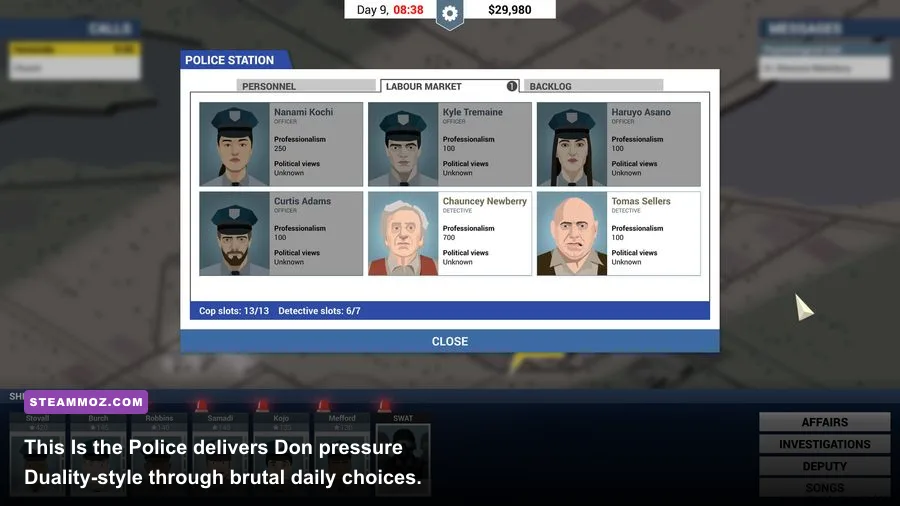
This Is the Police flips Don Duality's perspective. Instead of running crime while maintaining a respectable business, you manage a police department in a corrupt city where time, personnel, and political protection are always running out. The result is a narrative strategy game built around daily dispatch decisions.
The core loop is direct. Each day, you assign officers to calls, weigh whether a situation deserves your best people, and deal with staff who are tired, injured, corrupt, or simply unreliable. Cases arrive with different demands, and sending an underqualified squad can create casualties or lose evidence. Sending your strongest officers everywhere leaves you helpless when the next emergency appears.
That staffing pressure is where the Don Duality connection becomes clear. The best move is rarely the most profitable or immediately satisfying one. It is the move that protects tomorrow's options. An exhausted veteran may solve today's hostage situation, but you could need that same officer for a harder call later. A politically convenient decision might preserve your job while damaging the department's long-term integrity.
The game also uses a strong story clock. You have a limited number of days before protagonist Jack Boyd's retirement, and the campaign constantly makes that deadline feel close. You aren't building an infinitely scalable machine like in Cartel Tycoon; you're trying to survive a closing window while deciding what kind of compromise you can tolerate.
Best for players who want consequences
This Is the Police is less replayable than Don Duality because its narrative events are more authored, but it delivers sharper emotional payoffs. The black-and-white visual style, jazz soundtrack, and grim writing make routine dispatches memorable. If you enjoy Don Duality's moments where a seemingly minor choice creates a financial or operational mess, this is the strongest story-first alternative.
For a more stealth-focused recommendation with the same respect for planning, Steamoz's Desperados III review is worth reading. It is not a management game, but its quicksave-and-rethink rhythm scratches a similar tactical itch.
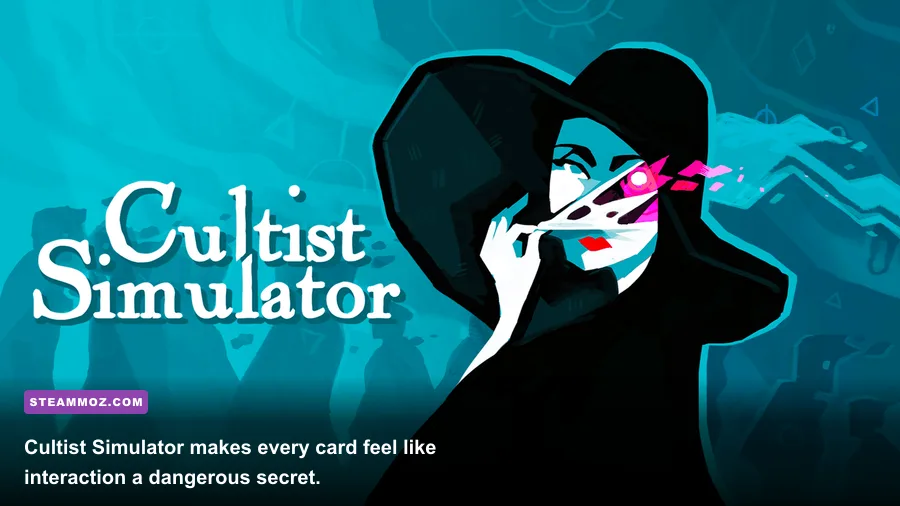
3. Cultist Simulator Turns Cards Into a Survival System
Cultist Simulator is the strangest recommendation here and arguably the most rewarding. It has no restaurant, no mafia family, and no conventional tutorial. Instead, you place cards into action slots such as Work, Study, Dream, and Explore, then watch time advance while hidden systems react.
Its similarity to Don Duality is structural. Both games make you build a working strategy from limited cards, incomplete information, and effects that may not become obvious until several turns later. A card can be useful as a resource, a requirement, a trait, or a dangerous influence. The challenge is not merely collecting better cards; it is understanding what each card can become in a particular context.
In Cultist Simulator, Health, Reason, and Passion are foundational resources. Work with Health to earn money, Study Reason to create scholarship, and Dream Passion to develop artistic paths. But time is always ticking, and the game introduces threats such as Dread, Fascination, Injury, and Notoriety. If you focus too aggressively on one objective, another meter can quietly become the reason your run ends.
The game rewards note-taking. That isn't a criticism; it is the point. You will discover that certain influences combine into lore, that some followers are better suited to expeditions, and that a seemingly harmless recurring card can feed a fatal chain. Don Duality is more readable and approachable, while Cultist Simulator demands that you treat the interface like a cryptic machine.
Why it ranks A-Tier
This is the best pick for players who love experimenting with card interactions more than decorating a business or expanding a map. Its atmosphere is unmatched, and the consequences of ignorance feel deliciously cruel. It ranks below the two S-Tier games because its systems are less immediately legible and its early runs can end before you understand why. Stick with it, and the mystery becomes the progression system.
4. Dungeons 3 Is Don Duality With More Minions
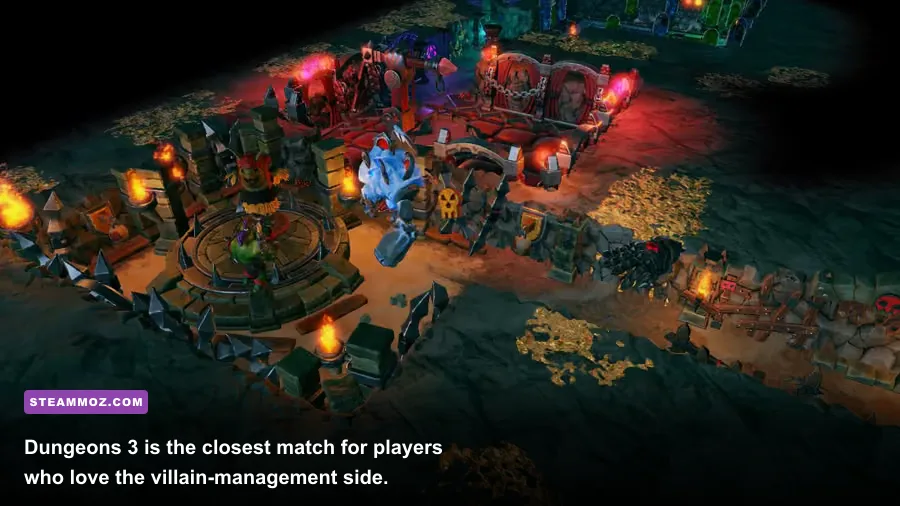
Dungeons 3 captures the fantasy of being the villain who has to manage an actual workplace. You dig rooms, place traps, train creatures, gather resources, and defend your dungeon while Thalya and the Absolute Evil push the campaign forward. It is broader and more action-heavy than Don Duality, but the management humor and operational multitasking line up surprisingly well.
The dungeon economy is built around gold, mana, and evilness. Gold pays for rooms, traps, and creature needs. Mana supports spells and magical infrastructure. Evilness unlocks new powers and campaign progression. Ignoring one resource creates a bottleneck elsewhere: you can have a full army but no room upgrades, or a beautifully trapped base without enough creatures to hold the frontline.
Creature roles also encourage the same kind of specialization that makes Don Duality's crew choices interesting. Orcs are dependable melee bruisers, demons bring magical damage and utility, and undead units offer different durability and support options. You don't simply recruit the strongest unit; you build a dungeon where their needs, rooms, and combat functions complement each other.
The major drawback is that Dungeons 3 eventually asks you to fight directly. Its campaign mixes underground base-building with real-time battles on the overworld. If you want a pure management sim, that can interrupt the satisfying planning loop. If you like seeing your preparation pay off in a chaotic assault, it is a major strength.
Who should play it
Pick Dungeons 3 when the part of Don Duality you love most is running a crew, upgrading a criminal headquarters, and laughing when an elaborate plan turns into a brawl. The tone is much sillier, and the failure states are less psychologically brutal, but the villainous operations fantasy is strong.
Steamoz's guide to Dungeons 3 beginner tips covers the early resource traps that make the first campaign missions harder than they need to be.
5. Beat Cop Delivers Street-Level Crime Pressure
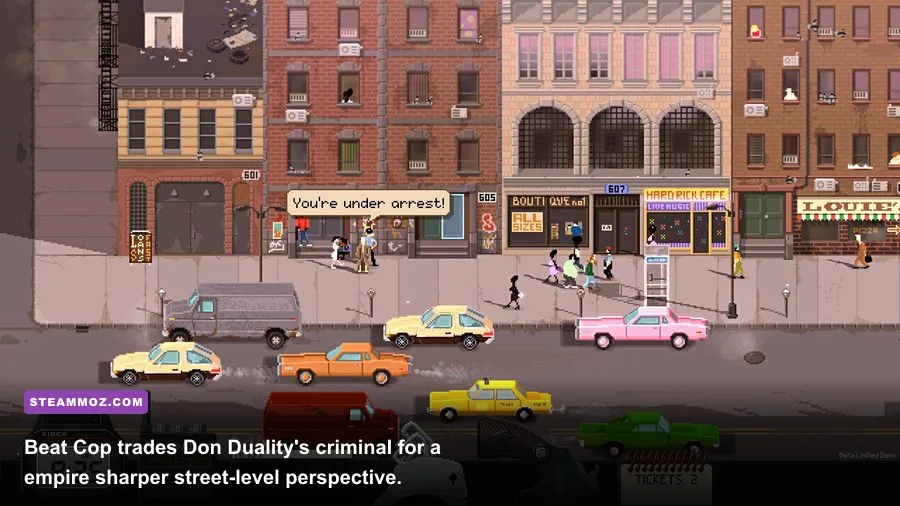
Beat Cop is smaller in scope but excellent at showing how criminal pressure infects ordinary work. You play Jack Kelly, a New York police officer framed for murder and forced to patrol a neighborhood while trying to uncover the truth. Every shift combines tickets, investigations, gang demands, personal survival, and an unforgiving schedule.
The appeal is its competing obligations. You may need to write enough parking tickets to satisfy your lieutenant, help a local gang to protect yourself, investigate a suspicious scene, and still return home with enough money to deal with Kelly's personal problems. The map is compact, but the number of priorities competing for your attention gives every patrol a Don Duality-like sense of overload.
Beat Cop is more linear than the other entries, so don't expect a large sandbox or a flexible build system. Its strengths are atmosphere and pressure. The pixel-art streets make the neighborhood feel lived in, while the dialogue gives each faction a distinct voice. You are constantly deciding which problem can safely be ignored.
The catch
Some of the game's systems are intentionally repetitive, and its humor can be abrasive. The patrol routine doesn't offer the same strategic sandbox as Cartel Tycoon. Still, it is a very good choice if Don Duality's criminal side appeals to you because of the small favors, dirty compromises, and personal danger rather than the business simulation.
6. Frostpunk Makes Survival Management Feel Personal
Frostpunk has no mobsters, cards, or restaurant, yet it belongs on this list because it understands the cost of keeping an operation alive. You lead the last city on Earth, powered by a central generator, while cold, hunger, illness, and political unrest push every decision toward an ugly compromise.
The most important system is the generator's heat radius. Homes and workplaces inside a warm zone are safer, but running the generator consumes coal. Increase the range or activate overdrive and you can protect more citizens while accelerating resource pressure and risk. A good city layout is not cosmetic; it determines who gets sick and whether your workforce can keep producing.
Frostpunk's Book of Laws creates the moral layer. You can introduce Emergency Shift, Child Labour, Radical Treatment, or harsher disciplinary policies, but every law changes hope, discontent, or social stability. The strongest decisions often solve a short-term crisis by creating a future problem. That is very close to Don Duality's best design instinct.
It ranks B-Tier only because the fantasy is different and the campaign is less run-based. There is no criminal empire to build, and the city scenarios have a more deliberate structure. But if what you want is a management game where every optimization has a human cost, Frostpunk remains one of the best choices available.
7. Stacklands Is the Lightweight Card Alternative
Stacklands is the friendliest recommendation and the one to choose when you want Don Duality's card manipulation without the grim subject matter. Villagers, resources, buildings, food, and discoveries are represented as cards that can be stacked together. Put a Villager on a Berry Bush and you produce food; combine cards in the right recipes and your settlement grows.
The simplicity is deceptive. Food spoils, villagers need to be fed, moons bring new card packs, and hostile creatures can interrupt your carefully arranged production chain. A stack that looks efficient can become a problem when it monopolizes your limited card space. The game teaches you to think in production loops: wood becomes houses, houses create villagers, villagers need food, and food requires a stable source of labor.
Unlike Don Duality, Stacklands is cozy rather than criminal. Its danger comes from logistics and timing, not betrayal or law enforcement. That makes it an ideal cooldown game after a punishing run. The base game also has a clear discovery rhythm, with new card packs gradually expanding the recipe tree instead of dumping every system on you at once.
Why it still works in 2026
Stacklands has a clean interface, short sessions, and enough randomness to make repeated runs worthwhile. It is not the deepest recommendation here, but it is the easiest to suggest to someone who specifically wants cards, resource chains, and the satisfaction of turning a messy table into a functioning economy.
Which Don Duality Alternative Should You Play First?
The right choice depends on which part of Don Duality keeps pulling you back. Don't choose based only on the word mafia or the presence of cards. Choose the game that amplifies the system you already enjoy.
| If You Love Don Duality For... | Play This First | Why | Difficulty Profile |
|---|---|---|---|
| Building a criminal network | Cartel Tycoon | Territory, supply chains, heat, and rival factions | High |
| Cards and hidden interactions | Cultist Simulator | Every card has multiple uses and risks | Very high |
| Staffing and daily crises | This Is the Police | Officers, calls, politics, and deadlines | Medium-high |
| Running a villain base | Dungeons 3 | Rooms, minions, resources, and defenses | Medium |
| Street-level criminal pressure | Beat Cop | Patrol work collides with gangs and survival | Medium |
| Consequences and moral choices | Frostpunk | Laws and survival decisions reshape the city | High |
| Relaxed card production | Stacklands | Simple stacks create surprisingly deep economies | Low-medium |
My personal order is Cartel Tycoon, This Is the Police, Cultist Simulator, and then Dungeons 3. Cartel Tycoon best reproduces the sensation of an operation becoming too large to control. This Is the Police is the better pick if you care about characters and consequences. Cultist Simulator is the one I recommend to system obsessives who enjoy discovering rules through failure.
Beat Cop is the strongest shorter narrative option, while Frostpunk is the prestige choice for players who want their management decisions to carry real ethical weight. Stacklands is the low-pressure option, but don't dismiss it as shallow; its production chains become satisfyingly intricate once card space starts to matter.
How to Choose Your Next Management Game
Start with session length. Don Duality is built around compact decisions and runs that can change direction quickly. Stacklands and Beat Cop fit that rhythm better than Frostpunk or Cartel Tycoon. If you want to sit down for thirty minutes and still feel like you made meaningful progress, choose the smaller games.
Next, decide how much opacity you can tolerate. Cultist Simulator hides a lot of its logic, which is thrilling once you understand it and frustrating before then. Cartel Tycoon is more readable but punishes poor planning across a larger map. Frostpunk explains its systems clearly, then makes the consequences emotionally unpleasant anyway.
Finally, consider whether you want failure to be tactical or narrative. In Cartel Tycoon, a failed route can usually be traced to supply, heat, money, or positioning. In This Is the Police and Beat Cop, failure can come from choosing the wrong moral compromise or missing a story opportunity. Both are valid, but they create very different replay habits.
For more demanding management recommendations, Steamoz's Dins's Curse survival tips and Empires of the Undergrowth progression guide are useful next stops. They cover different genres, but both reward the same habit Don Duality teaches: protect your economy before chasing flashy growth.
The best games like Don Duality in 2026 aren't carbon copies. They are games that understand the pleasure of juggling too many responsibilities, spotting a profitable risk, and realizing—usually a little too late—that your clean plan has become a crisis. Start with Cartel Tycoon if you want the closest strategic cousin. Choose This Is the Police for story-driven pressure, or Cultist Simulator if cards are the real reason you keep coming back. Whichever route you take, expect the same lesson: the most entertaining management games make success feel one bad decision away from collapse.