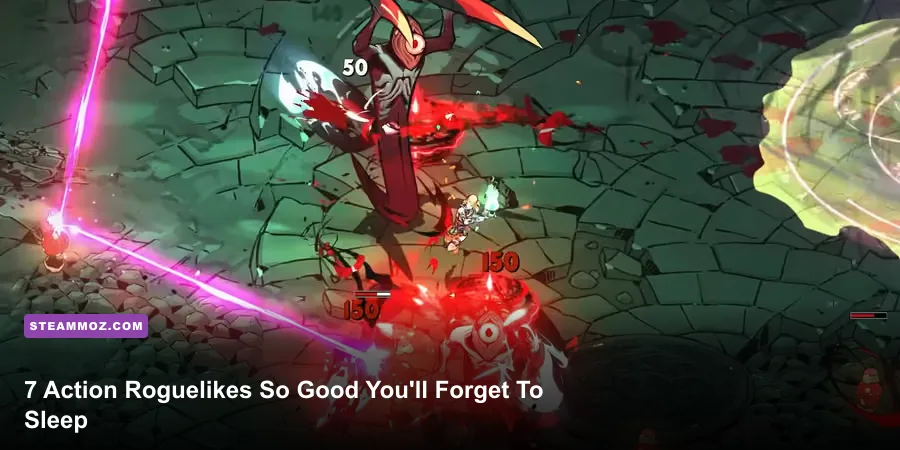
If you want the short answer: Hades, Dead Cells, Risk of Rain 2, Returnal, Vampire Survivors, Enter the Gungeon, and Hades 2 are the seven action roguelikes that actually deserve a permanent spot on your Steam library. Not because they're trendy — because every single one nails the core roguelike loop of "one more run" while adding something genuinely fresh to the genre's DNA. I've sunk hundreds of hours across all of them, and this isn't a listicle padded with filler picks. Every game here earns its spot through mechanics, replayability, and that addictive dopamine hit when a build finally clicks.
What Actually Makes an Action Roguelike Worth Your Time
Before we rank anything, let's be real about what separates a great action roguelike from a mediocre one. It's not just permadeath and randomized loot — plenty of forgettable games check those boxes. The good ones nail three things: tight, responsive combat that feels good frame-to-frame, meaningful build variety where different runs actually play differently, and a progression system that rewards you even when you die (because you will die, a lot). If a roguelike fails any of these three pillars, it usually fades into obscurity within a year. The seven games below pass all three with flying colors, and each one attacks the formula from a different angle.
S-Tier: The Games You Need to Play Immediately
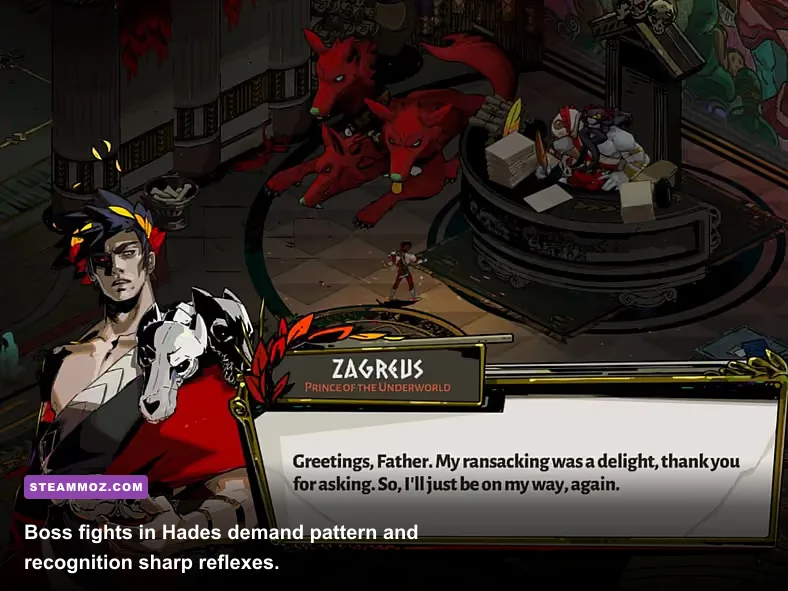
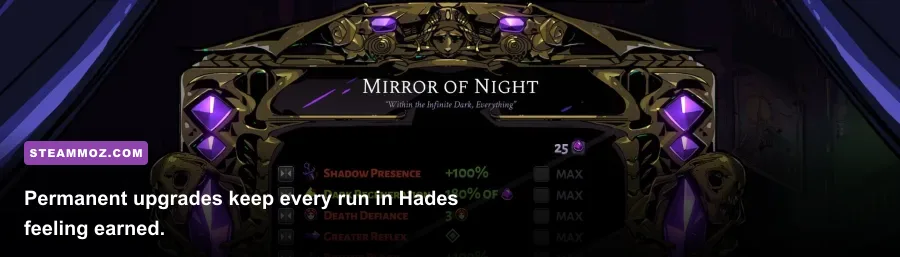
Hades is still the gold standard, and I'll die on that hill. Supergiant Games built a combat system around six distinct weapons (the Stygian Blade, Heart-Seeking Bow, Shield of Chaos, Twin Fists, Adamant Rail, and Eternal Spear) that each feel like separate games. Layer on the Boon system — pick a god like Zeus for chain lightning procs or Ares for Doom stacking — and you get thousands of viable build permutations. The Mirror of Night meta-progression means every death still moves the needle, and the narrative (fully voiced, with hundreds of unique dialogue triggers) makes repetition feel like discovery instead of grind.
Hades 2 somehow improves on that formula. Melinoe's kit revolves around Omega abilities that consume Magick, forcing you to actually manage a resource instead of just spamming attacks. The Arcana Card system replaces the old Mirror upgrades with a tarot-style build-crafting layer that stacks with Boons in ways that create genuinely broken (in a good way) combos — Sisyphus's Sorrow plus Hestia's Boons turns Melinoe into a walking wildfire.
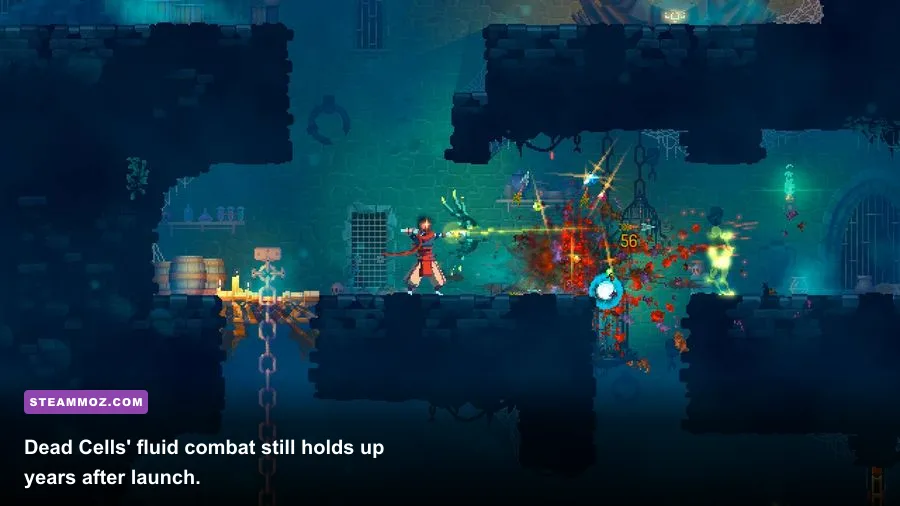
Dead Cells earns its spot through sheer mechanical polish. Motion Twin (now Evil Empire) built a Metroidvania-roguelike hybrid where your run persists across biomes like the Toxic Sewers, Ossuary, and the brutal Clock Tower, and every weapon has genuine identity — the Ice Bow synergizes completely differently than the Nutcracker or the Broadsword. Scrolls of Power let you choose your build's core stat allocation (Brutality, Tactics, Survival), and the Boss Cell difficulty system means the game scales endlessly with your skill.
| Game | Tier | Core Loop Strength | Best For |
|---|---|---|---|
| Hades | S | Boon-driven build variety + narrative payoff | Players who want story with their chaos |
| Hades 2 | S | Arcana + Omega ability resource management | Veterans wanting deeper systems |
| Dead Cells | S | Metroidvania exploration meets roguelike combat | Precision platformer fans |
| Risk of Rain 2 | A | Item-stacking chaos, co-op scaling | Squad play and build-breaking runs |
| Returnal | A | Bullet-hell third-person shooter tension | Players who love high-stakes precision |
| Enter the Gungeon | A | Bullet-hell twin-stick gunplay | Fans of dodge-roll mastery |
| Vampire Survivors | B+ | Auto-battler swarm simplicity | Chill sessions, low commitment runs |
A-Tier: Still Absolutely Essential
Risk of Rain 2 transformed a 2D indie darling into a 3D looter-shooter roguelike, and Hopoo Games nailed the item-stacking chaos that makes late-game runs feel absurd. Stack enough Brainstalks, Wax Quails, and Crowbars and you're basically an unstoppable god by stage 8. The difficulty scaling ties directly to real-time survival, not just enemy count, which creates genuine tension — the longer you loot, the harder monsters hit, so every second you spend farming is a gamble against the clock. Co-op with three friends turns this into one of the best couch-and-online hybrid experiences in the genre.
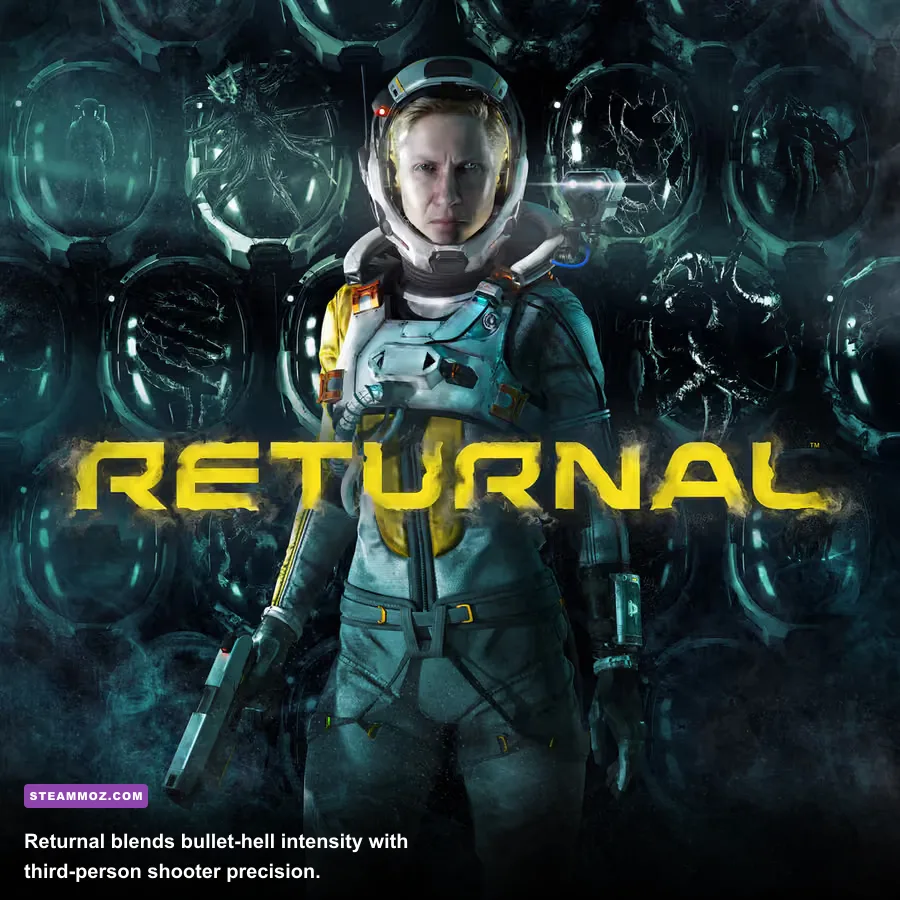
Returnal proved Housemarque could translate bullet-hell shmup sensibilities into a AAA third-person shooter. Selene's parasite-infused weapons (the Hollowseeker, Tachyomatic Carbine, Dreamer) roll random traits each run, and the Adrenaline system rewards aggressive, no-hit play by boosting your stats — but one hit resets the whole stack. It's punishing in the best way, and the audio-visual telegraphing on boss attacks like Ixion or Nemesis is some of the cleanest enemy design in modern action games.
Enter the Gungeon is the bullet-hell purist's pick. Dodge Games built a game entirely around dodge-roll iframes and gun synergy — pairing the Alien Sidearm with a Magazine Rack, for example, opens up build paths that feel like discovering secret tech. If you loved the twin-stick precision of old-school arcade shooters, this is still unmatched.
The Underrated Pick Everyone Sleeps On
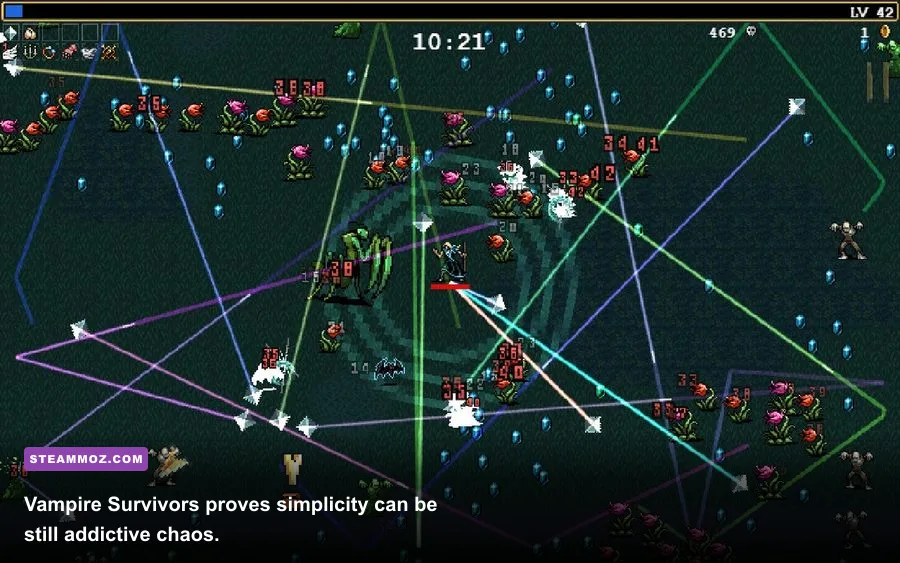
Vampire Survivors gets dismissed as "too simple," and that's exactly why it's brilliant. poncle stripped the genre down to pure input-minimal chaos — you move, everything else auto-attacks — and somehow that's more addictive than half the AAA roguelikes on this list. Weapon evolutions (Whip into Bloody Tear, Garlic into Soul Eater) require specific passive item pairings, so there's actual build depth hiding under the surface. At a few bucks on Steam, it's the best value-per-hour game in this entire list, full stop.
Build Strategies That Actually Work Across These Games
Here's where I'll get specific instead of vague. In Hades, a Zeus Cast build with the Aspect of Zagreus on the Stygian Blade lets you chain Lightning procs that trigger on nearly every dash-strike — pair it with Athena's Deflect for near-invincible clears through Elysium. In Dead Cells, a Tactics build centered on the Ice Bow plus the Frost Blast mutation freezes entire rooms, letting you facetank bosses like the Time Keeper with impunity. In Risk of Rain 2, prioritize Attack Speed items early (Soldier's Syringe, Berserker's Pauldron) before pivoting to on-kill effects like Ukulele once you've got a strong base loadout.
The mistake most new players make is treating every roguelike run the same way. You need to read what the game is offering you in the first 10 minutes and commit. Greedy, non-committal builds die in the mid-game every time.
| Game | Recommended Starter Build | Key Synergy | Best Situation |
|---|---|---|---|
| Hades | Stygian Blade + Zeus Cast | Aspect of Zagreus, Lightning procs | Fast clears through Tartarus/Asphodel |
| Dead Cells | Ice Bow + Frost mutations | Freeze lock into burst damage | Boss fights, Boss Cell 3+ |
| Risk of Rain 2 | Attack Speed rush into On-Kill effects | Soldier's Syringe stacking | Solo survival past stage 5 |
| Returnal | Tachyomatic Carbine + Adrenaline stacking | No-hit aggressive play | Boss encounters, biome 3+ |
Performance and System Requirements Worth Knowing
None of these games are brutal on hardware except Returnal, which genuinely needs a decent GPU to hit stable frame rates at 1440p. The rest run beautifully even on modest laptops, which is part of why the genre thrives on Steam Deck too.
| Game | Minimum GPU | Recommended GPU | Target FPS (1080p) |
|---|---|---|---|
| Hades / Hades 2 | GTX 660 | GTX 1060 | 144+ FPS uncapped |
| Dead Cells | GTX 460 | GTX 750 Ti | Stable 60 FPS locked |
| Returnal | GTX 1060 6GB | RTX 2070 Super | 60 FPS at High settings |
| Risk of Rain 2 | GTX 750 Ti | GTX 1060 | 90+ FPS in co-op |
If you're chasing max frames on a budget rig, treat shadow quality and particle density as your first sacrifices — they eat performance in Returnal especially without much visual payoff. For deeper optimization advice on similarly demanding titles, our breakdown on Far Cry 6's settings for max FPS covers a lot of the same GPU-scaling logic that applies here.
Which One Should You Actually Start With?
If you've never touched the genre, start with Hades</strong. It's the most forgiving on-ramp because failure literally advances the story — you're never "wasting" a death. If you want something crunchier and more mechanically demanding, jump to Dead Cells and prepare to get humbled by the Giant on Boss Cell 2. Want mindless, hilarious chaos with friends? Risk of Rain 2 in co-op is unbeatable. And if you've got a controller and a few hours to spare, Returnal will remind you why bullet-hell design still slaps in 2024's biggest AAA releases.</p>
Whichever you pick, don't expect to "finish" these games in the traditional sense. The whole point is that they don't end — they just keep getting better the more you understand their systems. That's the roguelike promise, and these seven titles deliver on it better than anything else currently on Steam. For more build breakdowns and performance guides across other genres, check out our full library of beginner build guides and hidden rewards walkthroughs here on Steamoz. You can also grab any of these titles directly through their official Steam pages, check patch notes on the Supergiant Games site, or dig into community strategies on the Hades Wiki and the Dead Cells Wiki for deep build data.