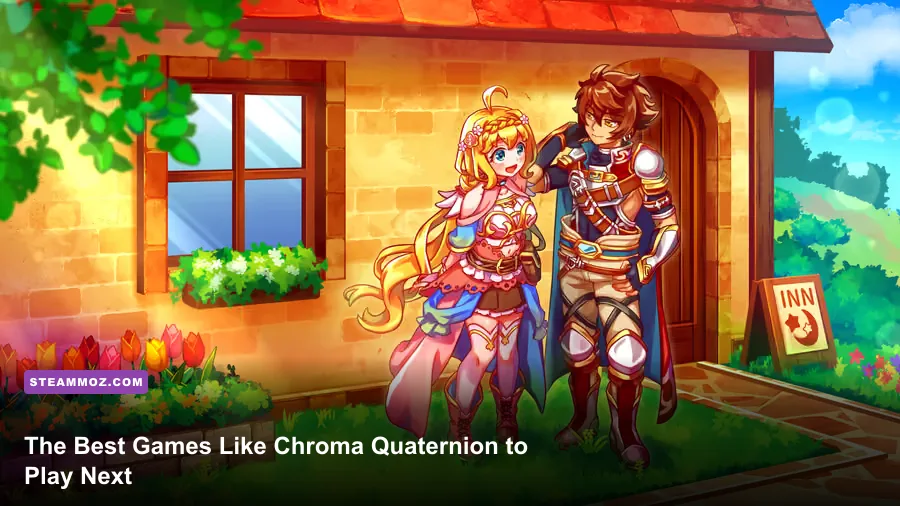
If Chroma Quaternion's colorful pixel art, four-character party, brisk turn-based battles, and old-school adventure loop grabbed you, start with Dragon Sinker, Asdivine Hearts, and Fernz Gate. They preserve the same low-friction JRPG rhythm, while Blacksmith of the Sand Kingdom and WitchSpring R offer stronger crafting, exploration, and character-building systems for players ready to branch out.
Chroma Quaternion is a very particular kind of comfort food. You explore a bright fantasy world, recruit a compact party, upgrade equipment, exploit elemental weaknesses, and push through a story that respects your time instead of demanding a 100-hour commitment. It is not trying to reinvent turn-based combat. The appeal is the clean loop: town, dungeon, battle, boss, new gear, repeat.
The games below are ranked by how well they match that loop, not by budget or review score alone. I have prioritized party management, old-school presentation, sensible progression, optional grinding, and the kind of straightforward dungeon design that makes Kemco-style RPGs easy to pick up after work. If you want a darker tactical game instead, our Disciples Liberation review covers a much heavier alternative.
S-Tier games for Chroma Quaternion fans

These are the games I would recommend first. They share Chroma Quaternion's compact scale and classic JRPG structure, but each has one system that gives it a distinct identity.
1. Dragon Sinker
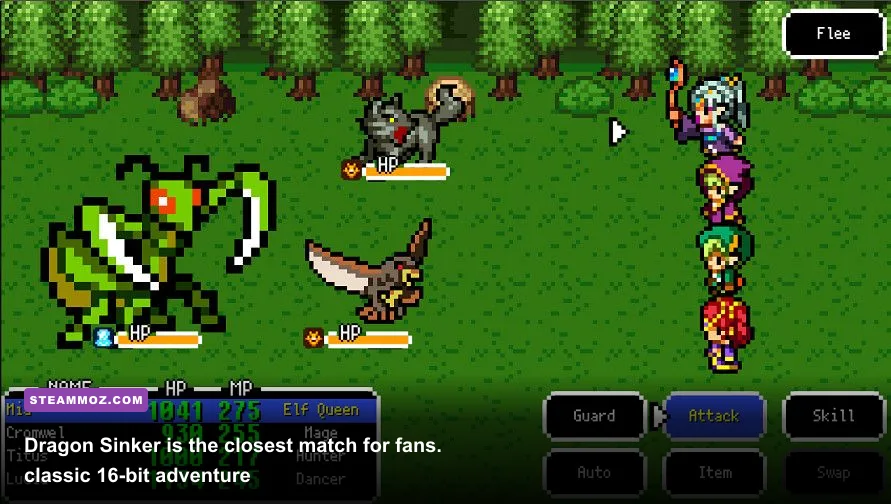
Dragon Sinker is the closest overall match. It wears its 16-bit inspiration openly, with chunky sprite work, bright environments, a world map, random encounters, and a traditional three-member battle party. The story follows a kingdom threatened by the dragon God, and while the writing is deliberately simple, the adventure has excellent forward momentum.
The best part is its class and race structure. Human, beast, and elf characters bring different equipment options and skill identities, so party construction feels more meaningful than simply equipping the newest sword. Physical attackers benefit from strength and weapon upgrades, while magical characters need the right elemental spell coverage rather than one universally superior attack.
Dragon Sinker also understands the value of a good boss telegraph. Major enemies tend to punish obvious habits: relying on one damage type, ignoring buffs, or entering a fight without enough healing items. A reliable opening is to apply your defensive or offensive buff, identify the boss's weakness with a low-cost spell, then concentrate damage while keeping one character ready to heal. It is not difficult by modern hardcore standards, but it does ask you to engage with the system.
2. Asdivine Hearts
Asdivine Hearts is the deeper recommendation. It follows Zack and a party that becomes entangled with a divine crisis, but the real hook is the jewel board. Instead of treating equipment as a simple list of stronger numbers, you place jewels into a grid to adjust stats, resistances, and abilities. That makes experimentation worthwhile long after the early game.
The Spirit Beast companion adds another layer. It can be configured to support the party, and the jewel system lets you steer characters toward physical damage, elemental casting, status resistance, or durability. A fragile mage with increased MP and elemental power feels completely different from the same character built around evasion and survival.
For a smooth first run, give your main physical attacker strength and critical-hit jewels, reserve intelligence and MP bonuses for your caster, and put at least one resistance-focused jewel set on your healer. Do not chase maximum attack at every stage. Asdivine Hearts contains bosses that can punish silence, paralysis, or elemental damage, and a slightly weaker character who can still act is more valuable than a glass cannon who loses a turn.
3. Fernz Gate
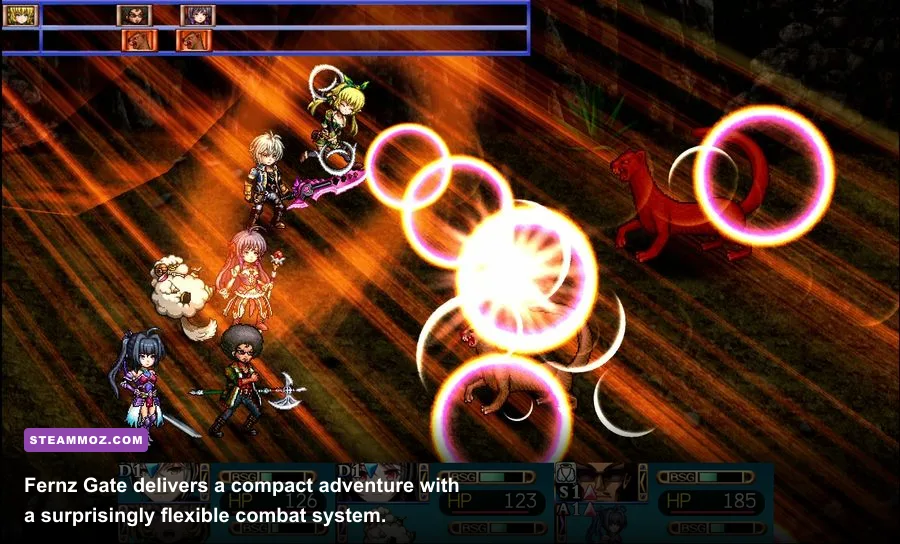
Fernz Gate is a smaller, sharper adventure built around Haruka, a young man transported to another world. It has the familiar Kemco framework—towns, dungeons, treasure chests, equipment shops, and turn-based encounters—but its monster-raising feature gives battles a welcome twist.
Captured monsters can join your formation and contribute skills or combat roles. That means you can solve party gaps without waiting for a story character to arrive. If your human roster lacks reliable area damage, a monster with a strong multi-target skill can cover the weakness. If bosses are cutting through the front line, a defensive creature can buy enough time for buffs and healing.
Fernz Gate is also friendlier to players who dislike grinding. You can make steady progress by rotating monsters, exploiting weaknesses, and checking new equipment in each town. The game is less mechanically dense than Asdivine Hearts, but that is exactly why it works as a Chroma Quaternion follow-up: it keeps the pace moving and rarely buries the adventure under menus.
| Game | Combat match | Best system | Ideal player |
|---|---|---|---|
| Dragon Sinker | Very high | Classic party and race roles | Players chasing a 16-bit JRPG feel |
| Asdivine Hearts | High | Jewel-board customization | Players who enjoy detailed builds |
| Fernz Gate | High | Monster recruitment | Players who want flexible party options |
| Chroma Quaternion | Baseline | Streamlined party progression | Fans of compact, colorful adventures |

🎮 Chroma Quaternion
Looking to experience this game? Grab your digital key directly on our store for $7.49.
View on Steammoz Store →A-Tier alternatives with a different hook
These games are excellent recommendations, but they move away from Chroma Quaternion in one important area. Pick them when you want the familiar turn-based skeleton with a stronger crafting loop, more open exploration, or a different approach to character growth.
4. Blacksmith of the Sand Kingdom
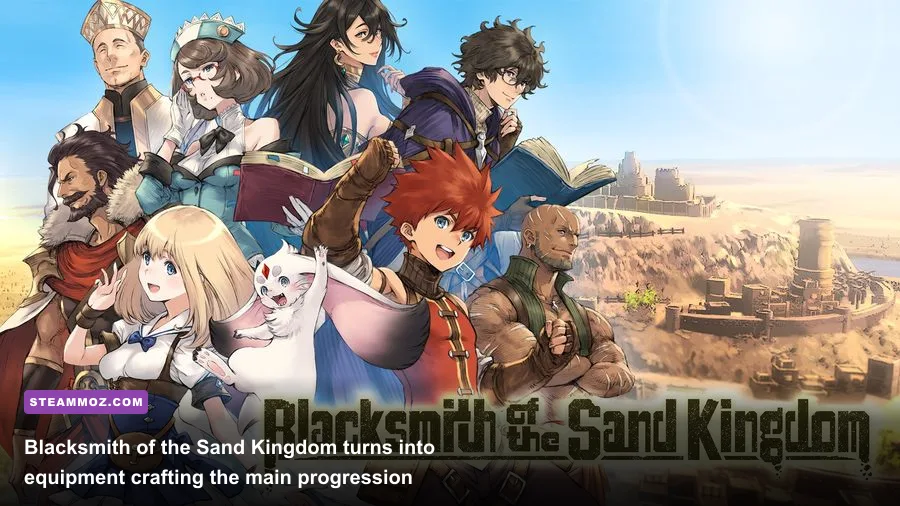
Blacksmith of the Sand Kingdom puts equipment at the center of the entire RPG. You play as a court-appointed blacksmith who joins an adventuring party, and the workshop is not a side activity—it is where much of your power comes from. Materials collected in dungeons become weapons, armor, accessories, and consumables, giving every expedition a practical reward.
The job system lets characters specialize into combat roles, but the important decision is how those roles interact with crafted gear. A front-line fighter wants reliable physical defense and a weapon with strong base attack. A magic-focused job benefits more from staff bonuses, MP increases, and elemental effects. Accessories can cover resistances that would otherwise force you to waste turns curing status effects.
There is a satisfying rhythm to returning from a dungeon with just enough ore to craft one upgrade. The game encourages you to compare raw attack against special effects instead of automatically selling old equipment. A sword with slightly lower damage but an effective fire attribute can outperform a stronger neutral weapon against a boss vulnerable to fire. That kind of decision is exactly what Chroma Quaternion's lighter equipment loop sometimes leaves on the table.
5. Antiquia Lost
Antiquia Lost is a strong pick if you want the same classic presentation with a more unusual combat gimmick. Its central character, Ulan, is a slime-like heroine who can absorb minerals and use them to gain abilities. The system adds a collectible angle to exploration: resources are not merely vendor trash, because they can influence combat options and progression.
The battle system remains traditional enough to feel instantly familiar. You still manage HP, MP, physical attacks, magic, and defensive turns, but the mineral mechanic gives you a reason to test different routes and revisit areas. It also makes the protagonist feel mechanically distinct rather than just another sword user in a colorful party.
Antiquia Lost is not as immediately clean as Dragon Sinker. Some of its progression depends on understanding which materials matter and how to spend them, so keep a small reserve instead of converting every resource into short-term cash. If you enjoy discovering systems organically, that friction is part of the charm. If you want a perfectly signposted adventure, choose Fernz Gate first.
6. Revenant Saga
Revenant Saga takes a darker route while keeping the familiar Kemco foundations. Albert becomes a revenant after a brutal betrayal, and the story leans into revenge, identity, and the consequences of supernatural power. It is still a menu-driven JRPG with towns, dungeons, random battles, and equipment upgrades, but the tone is far removed from Chroma Quaternion's cheerful palette.
Its strongest mechanical idea is transformation. In battle, the protagonist can shift into a more powerful revenant form, gaining access to different strengths and skills. The temptation is to transform whenever possible, but resource management matters. Save the transformation for elite enemies and boss phases rather than burning it on ordinary encounters that your normal rotation can handle.
This is the choice for players who liked the battle structure of Chroma Quaternion but want higher stakes and a more dramatic story. It is less cozy, more melodramatic, and occasionally rough around the edges. That roughness is part of the old-school package, though, not a reason to dismiss it.
| Game | Progression focus | Difficulty feel | Biggest warning |
|---|---|---|---|
| Blacksmith of the Sand Kingdom | Crafting and jobs | Moderate | Skipping material runs makes bosses harder |
| Antiquia Lost | Mineral-based abilities | Moderate | Resource spending is easy to waste early |
| Revenant Saga | Transformation and gear | Moderate to demanding | Dark tone and more dramatic difficulty spikes |
| System | Chroma Quaternion | WitchSpring R | What changes |
|---|---|---|---|
| Combat | Traditional turn-based party battles | Command-driven battles with summons | More active choices and positioning |
| Character growth | Levels, gear, skills | Training, crafting, spells, pets | More freedom but more management |
| Exploration | Classic towns and dungeons | Connected regions with gathering | More backtracking and discovery |
| Presentation | Retro pixel art | Hand-drawn 2D visuals | Much stronger animation and detail |
Before buying, check the official WitchSpring R Steam page for current platform details. Its PC version is the one to choose if you care about larger screens, controller support, and sharper art.
How to choose your next Chroma Quaternion-style RPG
Choosing between these games comes down to the specific part of Chroma Quaternion that kept you playing. If it was the 16-bit atmosphere, go with Dragon Sinker. If it was tinkering with builds, Asdivine Hearts is the obvious answer. If you enjoyed swapping party members and collecting useful combat options, Fernz Gate should be next.
Players who spent most of their time checking shops and optimizing equipment should choose Blacksmith of the Sand Kingdom. Its crafting loop is far more important than in Chroma Quaternion, and the game rewards players who revisit older areas for materials. Antiquia Lost is the better choice for experimentation, especially if you like a protagonist whose abilities are tied to exploration resources.
Difficulty is another useful filter. Dragon Sinker and Fernz Gate are the most approachable because their progression is easy to read: explore the next area, upgrade in the next town, and keep a healer or recovery item available. Asdivine Hearts and Blacksmith of the Sand Kingdom demand more attention because their customization systems can create a weak party if you ignore resistances or spread upgrades too thinly.
| If you want... | Play this first | Why it fits | Second choice |
|---|---|---|---|
| The closest retro match | Dragon Sinker | Classic party combat and 16-bit presentation | Fernz Gate |
| Deep build crafting | Asdivine Hearts | Jewel boards support detailed specialization | Blacksmith of the Sand Kingdom |
| Monster-based flexibility | Fernz Gate | Captured monsters cover party weaknesses | WitchSpring R |
| Gear and materials | Blacksmith of the Sand Kingdom | Crafting directly drives power growth | Antiquia Lost |
| A darker story | Revenant Saga | Revenant transformation raises the stakes | Antiquia Lost |
| Modern presentation | WitchSpring R | Hand-drawn art and a richer world | Asdivine Hearts |
For more party-RPG comparisons, our Dungeon Siege classic RPG review is worth a look, while players who prefer sharper build planning can browse our starting build guide for DeltaZeal. Those games are very different in pace, but they share the same satisfaction of turning a rough early party into a tuned machine.
Best order to play them in 2026
My recommended order is Dragon Sinker, Fernz Gate, Asdivine Hearts, Blacksmith of the Sand Kingdom, and WitchSpring R. Start with Dragon Sinker because it gives you the cleanest transition from Chroma Quaternion. Its systems are readable, its adventure moves quickly, and it does not overwhelm you with crafting menus immediately.
Move to Fernz Gate next if you want a similar campaign with more roster flexibility. Monster recruitment changes how you approach difficult encounters, but the game still respects the familiar rhythm of town upgrades and dungeon pushes. After that, Asdivine Hearts is a natural escalation: same broad genre, considerably more room to optimize.
Blacksmith of the Sand Kingdom works best when you are ready to make crafting your main hobby. Keep notes on materials, do not sell rare drops too quickly, and compare special effects instead of only looking at attack and defense. If you want a less menu-heavy alternative, play Antiquia Lost before it.
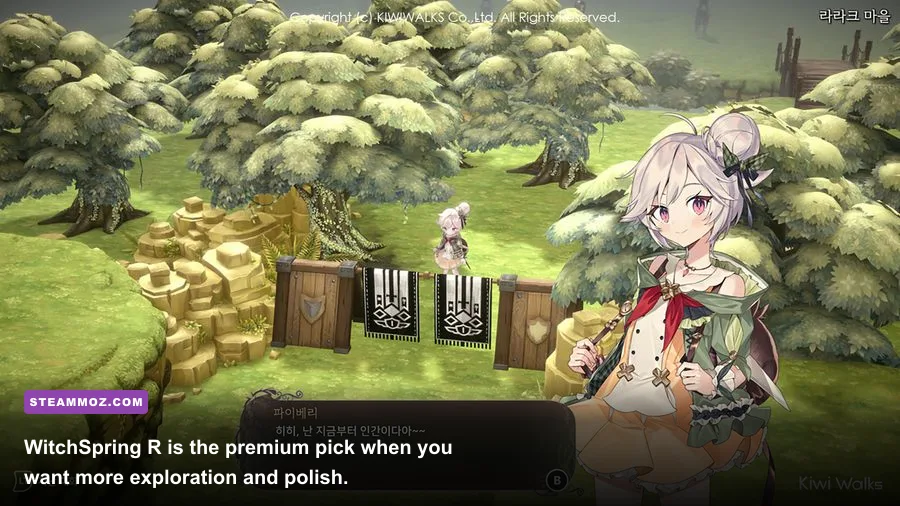
Finish with WitchSpring R when you want the biggest presentation jump. It asks more of your attention, but Pieberry's training, spells, pets, and gathering systems create a much richer long-term loop. It is the least direct Chroma Quaternion substitute on this list and arguably the best game overall.
For official information, check the Dragon Sinker Steam listing, the Asdivine Hearts Steam page, and KEMCO's official game site. Store availability, controller support, and regional pricing can change, so verify those details before purchasing.
One final warning: do not judge these RPGs by the first thirty minutes. Their opening hours are intentionally modest. The payoff arrives when a new class, captured monster, jewel combination, or crafted weapon changes how you handle the next dungeon. That gradual improvement is the whole point. Chroma Quaternion fans are not looking for another bloated open-world checklist—they are looking for a compact adventure with satisfying numbers, memorable party roles, and enough secrets to make the next town feel worth reaching.
Final verdict: choose Dragon Sinker for the closest match, Asdivine Hearts for the best customization, Fernz Gate for monster-based variety, Blacksmith of the Sand Kingdom for crafting, and WitchSpring R for the biggest upgrade in presentation and exploration. Any of them can fill the gap after Chroma Quaternion, but Dragon Sinker is where I would start in 2026.