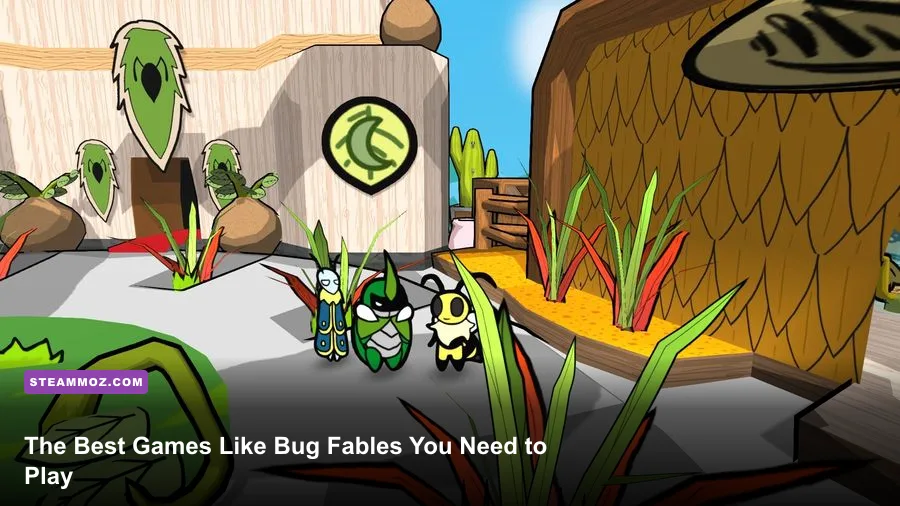
If Bug Fables: The Everlasting Sapling hooked you with timed attacks, clever overworld abilities, badge-style customization, and a genuinely funny party, start with Paper Mario: The Thousand-Year Door, Born of Bread, and Sea of Stars. Those three deliver the closest mix of responsive turn-based combat, expressive characters, and exploration, while Chained Echoes and Mario & Luigi: Superstar Saga are excellent picks when you want deeper systems or faster button-driven battles.
This ranking focuses on what actually makes Bug Fables special rather than simply listing colorful RPGs. You need games where choosing an action is only half the battle. Timing a block, hitting a weakness, managing party resources, or exploiting a specific status effect should matter every turn. I’ve also included the best platform and progression fit for each recommendation, because a charming art style alone won’t replace Kabbu, Vi, and Leif.
The best games like Bug Fables ranked for 2026
| Rank | Game | Tier | Closest Bug Fables match | Best platform |
|---|---|---|---|---|
| 1 | Paper Mario: The Thousand-Year Door | S-Tier | Timed attacks, badges, partners | Switch |
| 2 | Born of Bread | S-Tier | Paper-style combat and humor | PC, Switch, PlayStation, Xbox |
| 3 | Sea of Stars | A-Tier | Timing, weakness breaks, party skills | PC, Switch, PlayStation, Xbox |
| 4 | Chained Echoes | A-Tier | Build depth and tactical turns | PC, Switch, PlayStation, Xbox |
| 5 | Mario & Luigi: Superstar Saga | A-Tier | Real-time Bros attacks | 3DS, Game Boy Advance |
S-Tier: The closest replacements
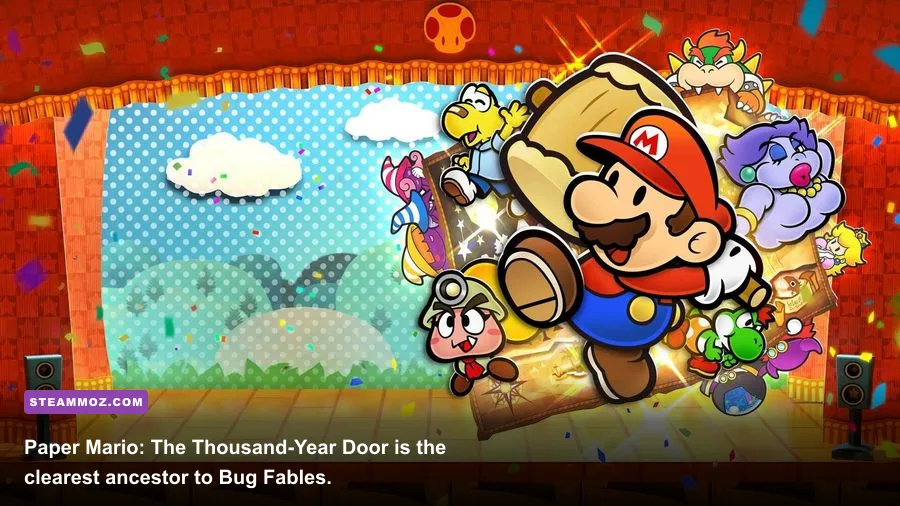
Paper Mario: The Thousand-Year Door is still the obvious answer. Its battle system uses the same basic idea that Bug Fables refines: commands have extra timing windows, and pressing the right button turns a normal move into a much stronger one. Mario’s Jump and Hammer attacks evolve through upgrades, while partners such as Goombella, Koops, and Vivian give you answers to airborne, armored, or fire-based enemies.
The remake keeps the original’s 2004 structure while adding quality-of-life improvements, including a contact-sensitive Battle Select feature and a smoother menu flow. Badge points let you build around damage, defense, or utility instead of locking Mario into a conventional class. Power Bounce, Multibounce, Damage Dodge, and Pretty Lucky can create radically different setups. The main difference is pacing: Thousand-Year Door has more story downtime and a slower opening, while Bug Fables starts throwing meaningful combat decisions at you almost immediately. Check the official Nintendo page for the current Switch version.
Born of Bread is the modern indie pick. You play Loaf, a sentient flour creation with a surprisingly earnest personality, and its battle system combines type weaknesses with timed inputs. Loaf’s attacks use different weapon categories, while enemies often reward you for selecting the correct damage type rather than blindly repeating your strongest move. Its overworld is packed with optional interactions, collectibles, and environmental puzzles that feel deliberately descended from Paper Mario.
It isn’t as mechanically polished as Bug Fables. Some encounters run longer than they should, and the pacing can wobble between story scenes. But the core appeal is absolutely there: a paper-like world, silly dialogue, party support, and combat that asks you to stay engaged. The Steam version of Born of Bread is the easiest way to play it in 2026, especially if you want sharper loading times and flexible resolution options.

🎮 Bug Fables: The Everlasting Sapling
Looking to experience this game? Grab your digital key directly on our store for $7.99.
View on Steammoz Store →Paper Mario fans should start with these combat systems
Bug Fables’ combat works because every hero has a job. Vi’s Beemerang can hit multiple targets and reach airborne enemies, Kabbu’s Horn Attack can pierce defense and redirect enemy attention, and Leif’s Icefall provides reliable multi-target damage while interacting with frozen enemies. Medal choices then let you customize turn economy, damage, and survivability.
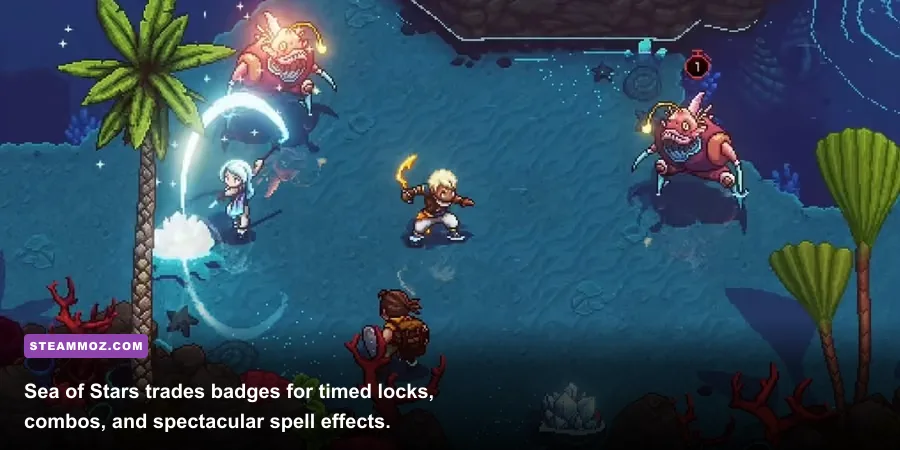
Sea of Stars replaces that exact formula with a more visual timing system. Valere and Zale use Moon and Sun damage, and enemy “locks” appear above targets to show which damage types must be used before a charged attack fires. A lock sequence might demand a sword hit, a moon spell, and a physical strike. Break enough icons before the timer expires and the enemy’s special move is cancelled.
That system makes even ordinary fights feel like small puzzles. Valere’s Moonerang can bounce repeatedly with correct timing, Zale’s Sunball rewards accurate input, and duo skills such as Solstice Strike let you convert party coordination into burst damage. Sea of Stars is less build-heavy than Bug Fables, but its animation, soundtrack, and boss design are considerably more cinematic. The official Sea of Stars site is the best place to check current platform information.
Mario & Luigi: Superstar Saga goes even harder on real-time commands. Mario and Luigi act as separate characters, and nearly every Bros. attack includes a sequence of button presses that determines whether you deal normal, excellent, or failed damage. During defense, jumping over an attack or using the correct hammer counter can completely negate incoming damage.
The old Game Boy Advance version is still superb, but its 3DS remake, Mario & Luigi: Superstar Saga + Bowser’s Minions, is the more accessible version if you own the hardware. Its combat is faster and more arcade-like than Bug Fables, with fewer long-term equipment decisions. Pick it if the best part of Bug Fables for you was pressing buttons under pressure, not stacking medals and exploiting enemy armor.
| Game | Timing mechanic | Build depth | Combat identity |
|---|---|---|---|
| Bug Fables | Blocks, action commands, skill timing | High through medals and TP | Party roles and enemy weaknesses |
| Thousand-Year Door | Action commands and audience bonuses | High through badges | Partners, stage effects, status control |
| Sea of Stars | Timed hits and lock breaking | Moderate | Elemental puzzles and combo skills |
| Superstar Saga | Continuous Bros. attack inputs | Moderate | Fast two-character coordination |
Choose Chained Echoes for deeper RPG builds
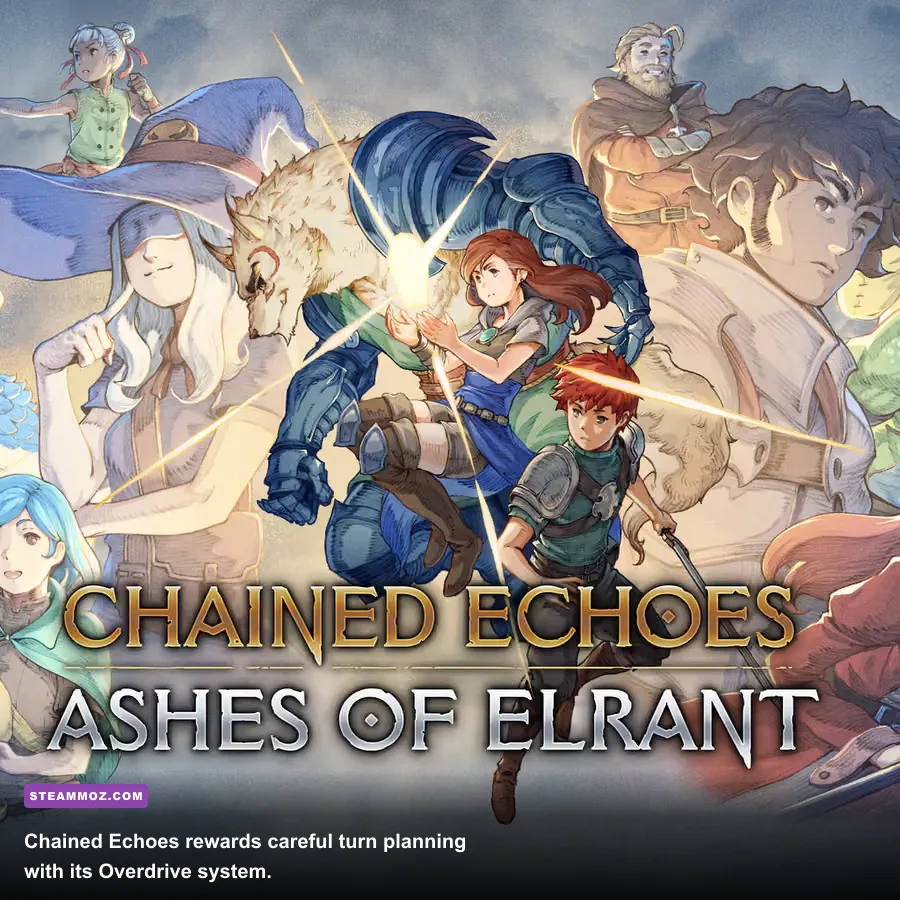
Chained Echoes is not a Paper Mario clone, but it belongs on this list because it understands the same principle: a turn-based RPG should make you think about every action. Its standout feature is the Overdrive gauge. Actions push the gauge through yellow, green, and red zones. Staying in the green zone reduces incoming damage and lowers TP costs; entering red makes your party vulnerable and turns fights against bosses into resource-management tests.
The solution is not simply “use your strongest attack.” You rotate skills, defend, and select moves that shift the gauge back toward green. Glenn’s Cross Slash, for example, becomes more valuable when you need reliable physical damage without wasting TP, while Sienna can turn buff and critical-hit setups into huge bursts if you protect her first. Characters such as Victor and Amalia give you healing and support tools that prevent the party from becoming a collection of interchangeable damage dealers.
Chained Echoes also gives you a large cast, sky armor battles, class emblems, and extensive equipment choices. That makes it the strongest recommendation here for players who loved Bug Fables’ medal experimentation but want a longer, more traditional JRPG campaign. It lacks action commands, so the moment-to-moment feedback is less tactile. In exchange, its boss preparation and party-building ceiling are much higher. The developer’s official site has the latest details.
How to adapt your Bug Fables habits
Don’t hoard every resource. Chained Echoes rewards frequent skill use because the Overdrive gauge is designed around rotation, not conserving TP forever. Apply buffs before a boss enters a dangerous phase, watch the gauge color, and keep at least one character ready to heal or cleanse. If you liked Leif’s role as a control specialist, build around debuffs and status effects rather than turning every character into a raw damage dealer.
| Player priority | Best pick | Why it fits | Main warning |
|---|---|---|---|
| Closest overall formula | Thousand-Year Door | Badges, partners, action commands | Slower opening chapters |
| Modern indie presentation | Born of Bread | Paper world and timed combat | Uneven encounter pacing |
| Boss puzzle combat | Sea of Stars | Locks and timed weakness breaks | Less equipment customization |
| Deepest RPG systems | Chained Echoes | Overdrive, classes, equipment | No action-command timing |
| Fastest button inputs | Superstar Saga | Constant Bros. attack interaction | Older hardware availability |
Why Born of Bread is the best indie follow-up
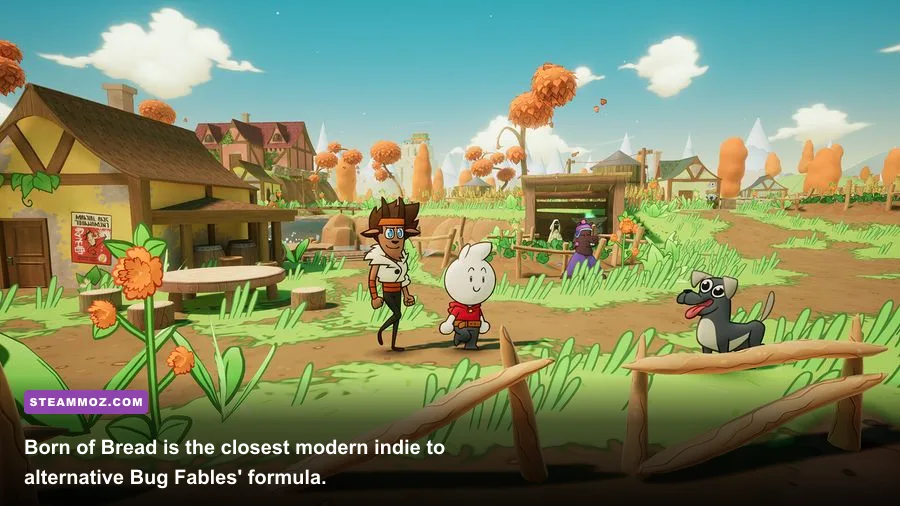
Born of Bread deserves special attention because it captures Bug Fables’ tone better than most modern alternatives. Loaf isn’t just a visual gag; his optimism gives the adventure a warm center, and the world’s jokes are usually tied to its characters rather than pasted onto random dialogue. You’ll investigate strange locations, talk to oddball NPCs, and solve environmental problems with abilities that expand as the story moves forward.
The combat loop is built around identifying weaknesses and using the right attack type. That makes enemy knowledge matter, although it doesn’t reach Bug Fables’ level of precision. Bug Fables lets you alter turn order, exploit armor, freeze targets, and spend TP with a degree of control that Born of Bread sometimes lacks. Still, the latter is a much better match than a generic turn-based game if your favorite moments involved wandering through a colorful area and clicking on every suspicious object.
For PC players, run it at 60 frames per second if your hardware allows. The art style is not demanding, but a stable frame rate makes exploration and combat inputs feel cleaner. On Switch, accept that loading and scene transitions are the trade-off for portability. You can also compare this kind of practical performance advice with Steamoz’s PC requirements breakdown before choosing where to play.
Your 2026 play order after Bug Fables
Start with Paper Mario: The Thousand-Year Door if you want the original blueprint with the strongest badge system and partner roster. Play Born of Bread next for a newer indie interpretation that keeps the jokes and paper-world charm. Move to Sea of Stars when you want better audiovisual spectacle and bosses built around visible combat puzzles.
Choose Chained Echoes instead if your favorite Bug Fables habit was rebuilding the party before every difficult encounter. Its Overdrive gauge and equipment systems demand more planning, and the campaign feels closer to a full-scale classic JRPG. Finally, track down Mario & Luigi: Superstar Saga for the purest expression of timed button combat. It’s older, but its Bros. attacks still make routine battles feel like something you’re actively playing rather than watching.
There are plenty of other RPGs worth exploring, including the classic systems discussed in Steamoz’s Dungeon Siege retrospective and the tactical progression covered in the Dungeons 3 strategy guide. But for the specific Bug Fables craving, the ranking is clear: start with Thousand-Year Door, give Born of Bread your next weekend, and keep Sea of Stars or Chained Echoes ready depending on whether you want timing puzzles or serious buildcraft.