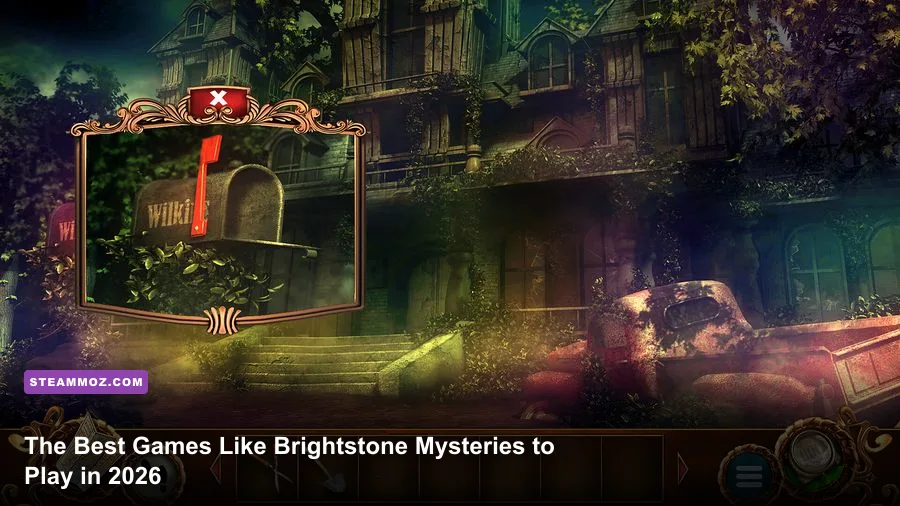
If you liked Brightstone Mysteries: The Others for its hidden-object searches, supernatural investigation, illustrated locations, and low-pressure puzzle solving, start with Mystery Case Files: Return to Ravenhearst, Grim Legends: The Forsaken Bride, and Dark Parables: The Exiled Prince. They preserve the same satisfying loop of scanning a busy scene, collecting useful objects, unlocking a new location, and chasing an unsettling mystery. For tougher, more tactile puzzles, The Room: Old Sins is the best left-field recommendation, while Agent A: A puzzle in disguise is the sharpest choice if you want colorful presentation and more inventory experimentation.
That shortlist matters because Brightstone Mysteries sits in a very specific corner of adventure gaming. It isn't a combat-heavy horror game, and it isn't a pure logic-puzzle box either. Its appeal comes from rhythm: explore a scene, notice a clue, solve a compact puzzle, then revisit the world with a new item or piece of information. The games below are ranked by how well they recreate that rhythm, not simply by how spooky they look.
The best games like Brightstone Mysteries ranked
There are two ways to approach this list. If you want the closest possible match, choose one of the hidden-object adventures in the S-Tier group. If you want to keep the investigative mood but make the puzzles more demanding, move toward The Room or Agent A. None of these games needs a gaming PC, but their puzzle design and storytelling styles are surprisingly different.
| Game | Tier | Closest Match | Best For |
|---|---|---|---|
| Mystery Case Files: Return to Ravenhearst | S-Tier | Haunted investigation and object hunts | Players who want the most atmospheric successor |
| Grim Legends: The Forsaken Bride | S-Tier | Fairy-tale mystery and cinematic locations | Story-first players |
| Dark Parables: The Exiled Prince | S-Tier | Illustrated hidden-object adventure | Players who enjoy folklore and branching clues |
| The Room: Old Sins | A-Tier | Locked-box investigation | Players who want harder mechanical puzzles |
| Agent A: A puzzle in disguise | A-Tier | Item-based exploration | Fans of witty, colorful spy mysteries |
| Lost Lands: The Golden Curse | A-Tier | Large-scale fantasy investigation | Players who want a longer campaign |
| Enigmatis: The Ghosts of Maple Creek | B-Tier | Evidence-driven supernatural mystery | Players who prefer detective narration |
My personal order is Return to Ravenhearst first, Grim Legends second, and Old Sins third. Ravenhearst nails the unsettling mood. Grim Legends has the cleanest onboarding and most readable scenes. Old Sins is the one to pick when you want to feel like you're actually operating a strange machine rather than clicking through a checklist.

🎮 Brightstone Mysteries: The Others
Looking to experience this game? Grab your digital key directly on our store for $5.99.
View on Steammoz Store →Why Return to Ravenhearst is the closest match
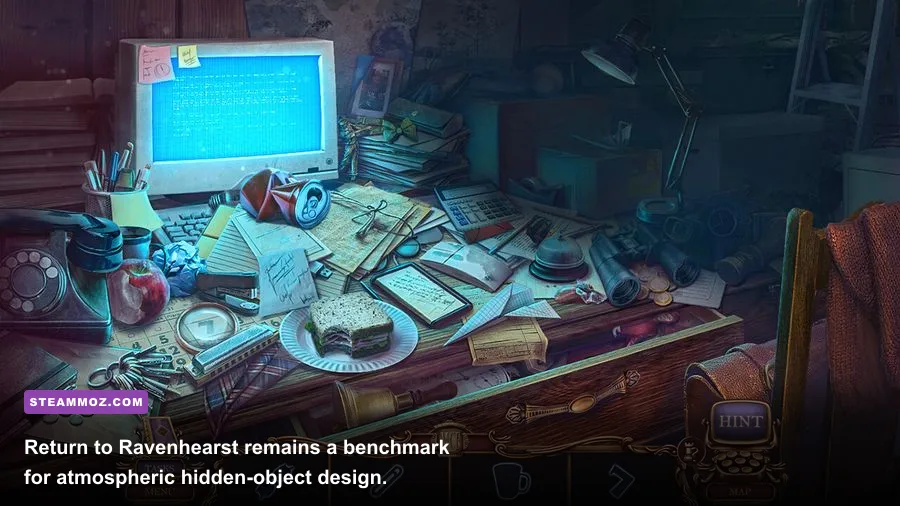
Mystery Case Files: Return to Ravenhearst is the obvious starting point for Brightstone fans because it understands the power of a location with a memory. The Ravenhearst estate is more than a backdrop: corridors, bedrooms, gardens, and locked rooms steadily reveal the consequences of the central haunting. The game alternates between hidden-object scenes, inventory use, and set-piece puzzles, so you aren't stuck doing the same activity for hours.
The object scenes are deliberately dense. A useful technique is to scan by shape first, then by color, rather than reading the entire word list repeatedly. Look for distinctive silhouettes such as keys, feathers, masks, and tools before searching for small items. That reduces eye fatigue and makes the later scenes feel like observation tests instead of pixel hunts.
Its strongest design choice is escalation. Early puzzles teach you how the estate works; later ones layer symbols, audio cues, and room-to-room relationships. When a puzzle feels opaque, don't brute-force every combination. Check nearby rooms for a visual motif first. Ravenhearst frequently teaches a solution through environmental repetition, which is exactly the kind of breadcrumb trail that makes Brightstone Mysteries enjoyable.
There are several official Steam listings for Mystery Case Files, and availability can vary by edition and storefront. If you're comparing the series with other classic RPG adventures, Steamoz's Dungeon Siege review is a useful reminder that atmosphere and pacing can matter more than modern technical polish.
Grim Legends and Dark Parables deliver the storybook fix
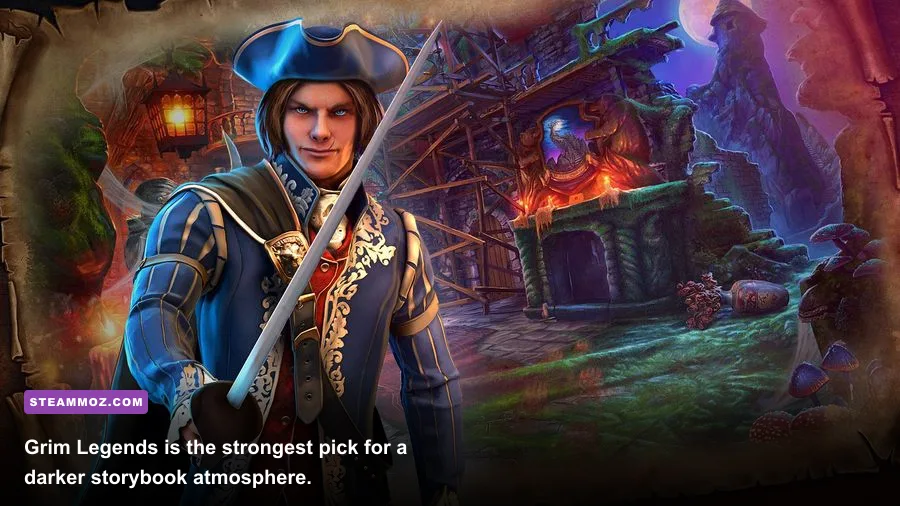
Grim Legends: The Forsaken Bride is the safest recommendation for players who want Brightstone Mysteries with a more polished fairy-tale frame. You investigate a missing bride, travel through a village and surrounding forest, and gradually uncover the relationship between folklore, family history, and the supernatural threat. The scenes are colorful without becoming visually noisy, and the game usually makes interactable objects easy to distinguish from decorative clutter.
That readability is important. Hidden-object games live or die by contrast. Grim Legends uses lighting and object placement to guide your eyes, while its map helps you remember unresolved tasks. If you dislike wandering back through half a dozen locations, this is one of the friendliest games in the group. Use the map whenever a location has an active indicator, but don't treat every marked room as an invitation to click randomly. Read your journal first; its clues often tell you whether you need an object, a combination, or a character conversation.
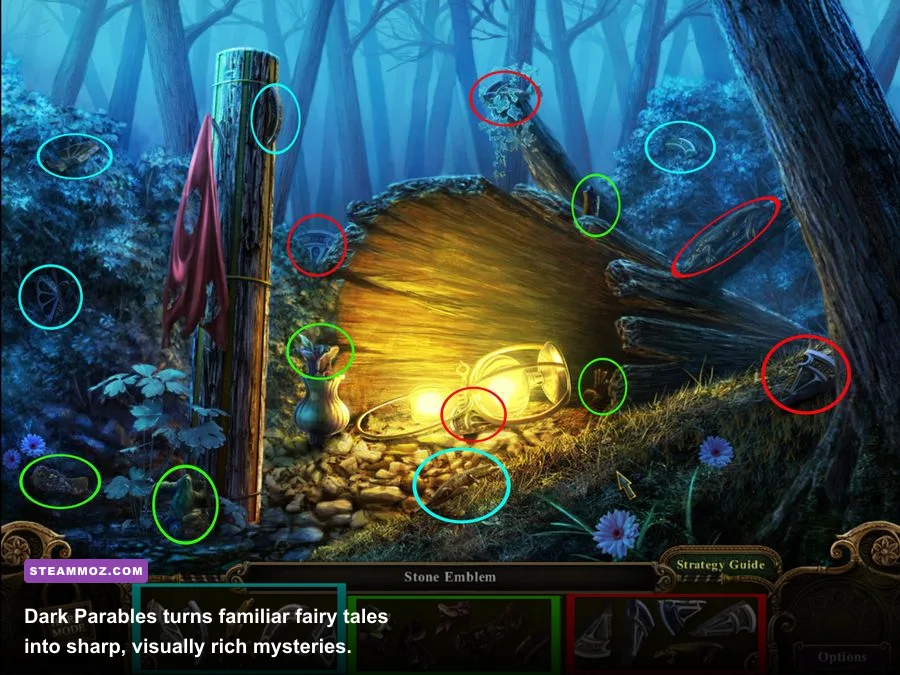
Dark Parables: The Exiled Prince takes a more stylized route. Instead of presenting a single grounded mystery, it remixes fairy-tale symbols into a world of cursed castles, royal families, and suspicious legends. The series is particularly good at visual storytelling. A broken crown, a poisoned garden, or a statue with missing eyes often tells you what kind of puzzle is coming before the game explains it.
The big difference is scope. Dark Parables tends to bounce between several connected story threads, while Grim Legends stays more focused. Choose Dark Parables if you enjoy decoding recurring symbols and comparing contradictory versions of a legend. Choose Grim Legends if you want a clean beginning, middle, and end with less narrative fragmentation.
| Game | Story Tone | Puzzle Pressure | Exploration Style |
|---|---|---|---|
| Grim Legends: The Forsaken Bride | Dark fairy tale | Gentle to moderate | Focused map with clear objectives |
| Dark Parables: The Exiled Prince | Mythic folklore | Moderate | Branching locations and recurring symbols |
| Enigmatis: The Ghosts of Maple Creek | Supernatural detective story | Moderate | Evidence boards and revisited locations |
| Lost Lands: The Golden Curse | Epic fantasy | Moderate to high | Large world with optional collectibles |
You can browse the official Artifex Mundi game catalog for these series. The developer's catalog is also a good way to identify collector's editions, which commonly add bonus chapters, concept art, or extra scenes rather than changing the main campaign.
The Room: Old Sins is the best harder alternative
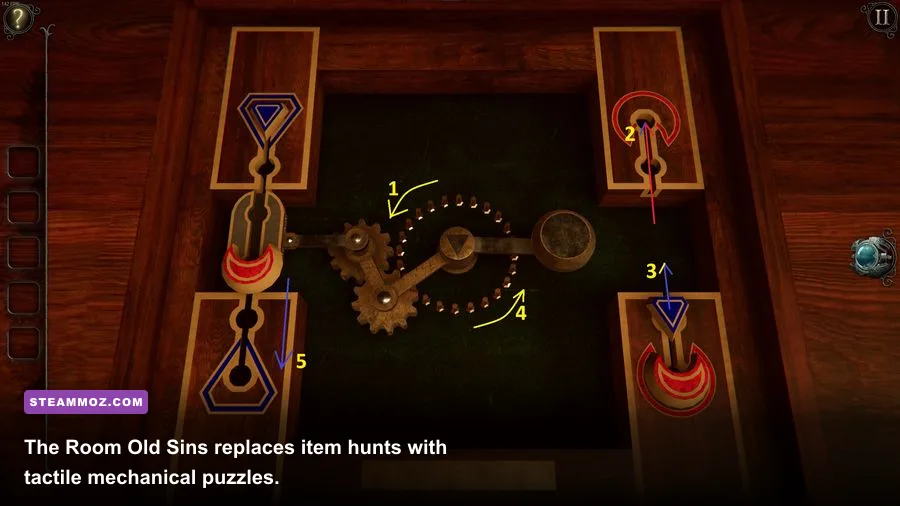
The Room: Old Sins is not a traditional hidden-object game. There is no long word list asking you to locate a comb, bell, or red gem in a crowded painting. Instead, you examine a mechanical dollhouse and manipulate locks, lenses, gears, sliders, and hidden compartments. Every object has weight and purpose. You rotate a brass dial, align a mechanism, inspect a seam through the eyepiece, and discover that the box has another box inside it.
That physicality makes Old Sins ideal when Brightstone Mysteries leaves you wanting more resistance. The game rarely tests reflexes; it tests whether you noticed a pattern. Pay attention to sound cues. A click, scrape, or change in music often confirms that you've activated the right mechanism before the visual reward appears. The eyepiece is also more than a zoom tool: use it whenever a surface looks unusually ornate, because symbols that are invisible at normal scale may become interactive through the lens.
Difficulty is higher here because clues are contextual rather than explicit. If you find a key with an unusual shape, don't immediately search the entire dollhouse. Inspect every lock or socket with a matching silhouette. Likewise, when a mechanism has three positions, look for a three-part pattern elsewhere in the room before trying combinations. Old Sins rewards disciplined inspection, not frantic clicking.
Its compact chapter structure makes it easy to play in short sessions, and the lack of combat keeps the tension focused on discovery. The official Steam page for The Room: Old Sins lists its PC version and system information. For broader performance-tuning ideas, Steamoz's PC fixes guide covers the sort of basic troubleshooting that helps older adventure games behave properly on modern systems.
Agent A and Lost Lands keep exploration fresh
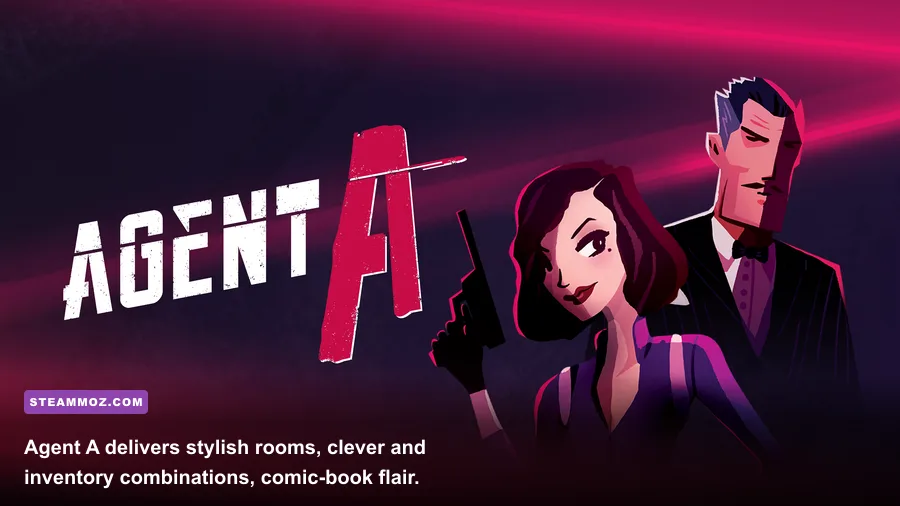
Agent A: A puzzle in disguise swaps gothic dread for 1960s spy-comic style. You infiltrate Ruby La Rouge's home, collect objects, combine them in logical ways, and use environmental details to open new routes. Its spaces are smaller than those in Lost Lands, but they are packed with multi-purpose props. A seemingly decorative aquarium, painting, or desk ornament can become part of a solution several steps later.
Agent A's inventory puzzles are the main attraction. Don't assume an item has only one use. A wire may open a panel, while a magnet or lens changes what you can do with that panel. If you have several unused objects, revisit the most recently unlocked room before touring the entire map. The game usually introduces a new tool close to the place where it matters.
Lost Lands: The Golden Curse is the opposite kind of recommendation. It expands the hidden-object formula into a broad fantasy journey with multiple regions, a larger cast, and a steady supply of optional collections. If Brightstone Mysteries feels too short or too contained, Lost Lands provides a much longer runway.
The trade-off is backtracking. Keep notes about blocked paths and unusual symbols, particularly when the game opens a new region before you've finished the old one. The map helps, but it won't replace a simple checklist. Mark locations that need a missing item, a character response, or a tool upgrade. That small habit prevents the classic hidden-object problem of revisiting every screen just because one puzzle remains unresolved.
Which game should you choose in 2026?
The right choice depends on what you loved about Brightstone Mysteries rather than the label “mystery game.” Players who want haunted architecture should begin with Return to Ravenhearst. Those who prefer folklore should choose Grim Legends or Dark Parables. If your favorite moments involved manipulating a strange object, buy The Room: Old Sins. If you enjoyed collecting items and testing unexpected combinations, Agent A is the cleanest fit.
| Your Priority | Best Pick | Why It Fits | Watch Out For |
|---|---|---|---|
| Closest hidden-object mood | Return to Ravenhearst | Haunted estate, dense scenes, layered investigation | Some scenes can feel visually busy |
| Fairy-tale mystery | Grim Legends | Readable locations and focused storytelling | Less challenging for veteran puzzle players |
| Folklore and visual symbolism | Dark Parables | Distinct art direction and connected legends | Story threads can feel sprawling |
| Hard mechanical puzzles | The Room: Old Sins | Excellent tactile interactions and layered locks | Not a conventional hidden-object game |
| Inventory experimentation | Agent A | Compact rooms and clever item combinations | Shorter campaign than Lost Lands |
| Long fantasy campaign | Lost Lands: The Golden Curse | Many regions, collectibles, and story beats | More backtracking |
Performance and accessibility tips
These games are generally lightweight, but “lightweight” doesn't mean every setup is identical. On a laptop with integrated graphics, start at 1080p, use windowed or borderless mode, and disable high-resolution texture options if the game offers them. Hidden-object scenes benefit from a stable image more than from extreme frame rates, so a locked 60 frames per second is preferable to an uncapped, inconsistent presentation.
Brightness also deserves attention. Raising it too far can flatten the contrast that makes clues readable, while a dim display can turn tiny objects into guesswork. Keep the game's default brightness first, then adjust your monitor rather than aggressively changing in-game gamma. If text appears soft, disable display scaling overrides or try exclusive fullscreen. For older titles, compatibility mode and updated graphics drivers can solve more problems than lowering every visual option.
| System Profile | Resolution | Recommended Approach | Expected Experience |
|---|---|---|---|
| Older integrated graphics laptop | 1080p | Medium textures, capped 60 FPS, windowed mode if needed | Clear scenes with minimal heat |
| Modern integrated graphics | 1080p | High textures, native resolution, 60 FPS cap | Smooth play without major compromises |
| Entry-level gaming PC | 1440p | High settings, native resolution, disable unnecessary post-processing | Sharper artwork and stable performance |
| High-end gaming PC | 1440p or 4K | Maximum settings with brightness tuned for clue contrast | Best presentation, though gameplay remains mostly CPU-light |
For more PC-focused recommendations, Steamoz's Drawful 2 requirements guide explains how to judge older games without trusting inflated modern hardware assumptions. The same practical rule applies here: prioritize readable text, stable frame pacing, and a comfortable display over chasing graphics settings that barely change a puzzle scene.
The final verdict
Brightstone Mysteries: The Others fans have plenty to play in 2026, but the strongest follow-ups aren't interchangeable. Return to Ravenhearst is the closest atmospheric replacement, Grim Legends: The Forsaken Bride is the most approachable all-rounder, and Dark Parables: The Exiled Prince offers the richest folklore flavor. The Room: Old Sins is the essential upgrade for puzzle difficulty, while Agent A and Lost Lands cover inventory-driven comedy and larger-scale fantasy respectively.
Start with Ravenhearst if you want another haunted investigation tonight. Pick Old Sins if you want to put down the hint button and genuinely wrestle with a mechanism. Either way, these games understand the central pleasure Brightstone Mysteries gets right: the best clue is the one you notice yourself.