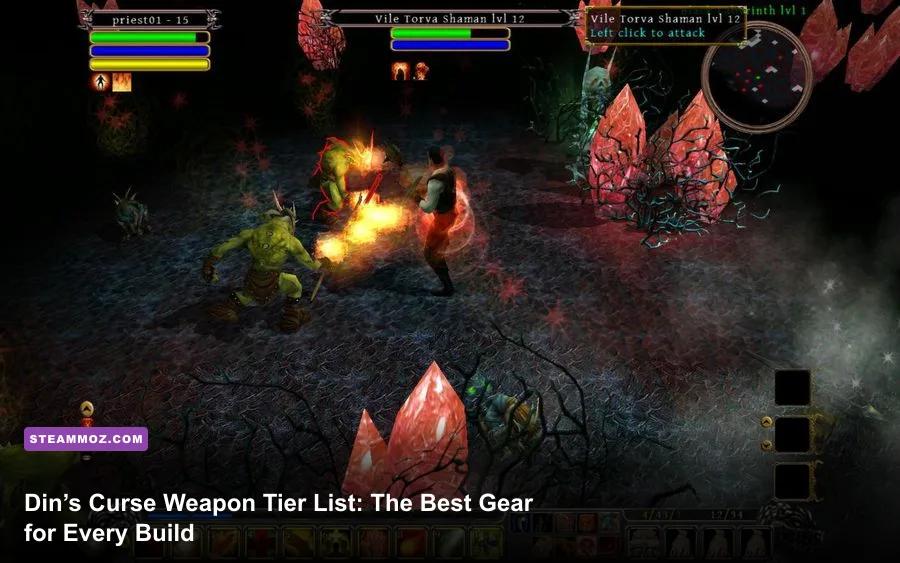
The best Din’s Curse weapons are not fixed named uniques: they’re high-quality randomized drops with the right damage type, attack speed, attribute bonuses, and survival affixes for your class. In practical terms, fast one-handed weapons and shields lead most melee builds, bows dominate cautious Rangers, and staffs or wands only reach S-Tier when their bonuses support your actual spell rotation. This tier list ranks equipment by build value rather than by a misleading universal damage number.
That distinction matters because Din’s Curse is a procedural action RPG built around changing towns, hostile invasions, destructible buildings, and loot that can completely reshape a character. A weapon that looks weaker on paper may be the superior choice if it adds the attribute your skills scale from, increases attack speed, boosts resistances, or lets you meet a crucial equipment requirement. The ranking below is designed for the game’s 19 classes and hybrid skill system, not a single idealized endgame character.
How Din’s Curse weapon ranking actually works
Din’s Curse does not hand you a clean list of named legendary weapons with permanently fixed statistics. Most equipment is generated with a base type, level, quality, damage range, and randomized modifiers. That means a “S-Tier sword” is really a category of sword with an excellent roll, not one specific item you can farm from a boss.
Start with the weapon’s level and base damage, then check attack speed and requirements. A slower two-handed axe can display impressive maximum damage, but a quick sword may produce more reliable damage once misses, recovery time, and interrupted attacks are considered. On a hybrid character, the winning weapon can be the one with lower damage but useful bonuses to Strength, Dexterity, casting resources, resistances, or health.
Weapon damage also has to be read beside the skill bar. A Warrior using close-range attacks benefits from a dependable physical weapon, while a Mage may treat the weapon as a stat stick and let Fireball, Lightning, or another spell do the real work. Din’s Curse rewards this flexibility, so don’t vendor an unusual drop simply because its attack number is modest.
| Weapon category | Tier | Best users | Why it ranks here |
|---|---|---|---|
| Fast one-handed sword or axe | S-Tier | Warrior, Assassin, hybrid melee | Reliable hit frequency, shield access, strong all-purpose scaling |
| Bow | S-Tier | Ranger, ranged hybrids | Excellent kiting, safer pulls, strong room control |
| Staff with spell or resistance bonuses | S-Tier | Mage, Priest, spell hybrids | High utility when its affixes improve casting and survival |
| Two-handed axe or mace | A-Tier | Berzerker, heavy Warrior | High burst and impact, but fewer defensive options |
| Wand | A-Tier | Mage, caster hybrid | Flexible ranged damage and useful stat rolls |
| Crossbow | B-Tier | Ranger, experimental hybrids | Good burst, but slower attacks punish missed shots |
| Low-level spear or poorly rolled two-hander | B-Tier | Early-game replacement | Useful temporarily, rarely worth protecting over a strong roll |

🎮 Din's Curse
Looking to experience this game? Grab your digital key directly on our store for $2.49.
View on Steammoz Store →S-Tier weapons for melee and hybrid characters
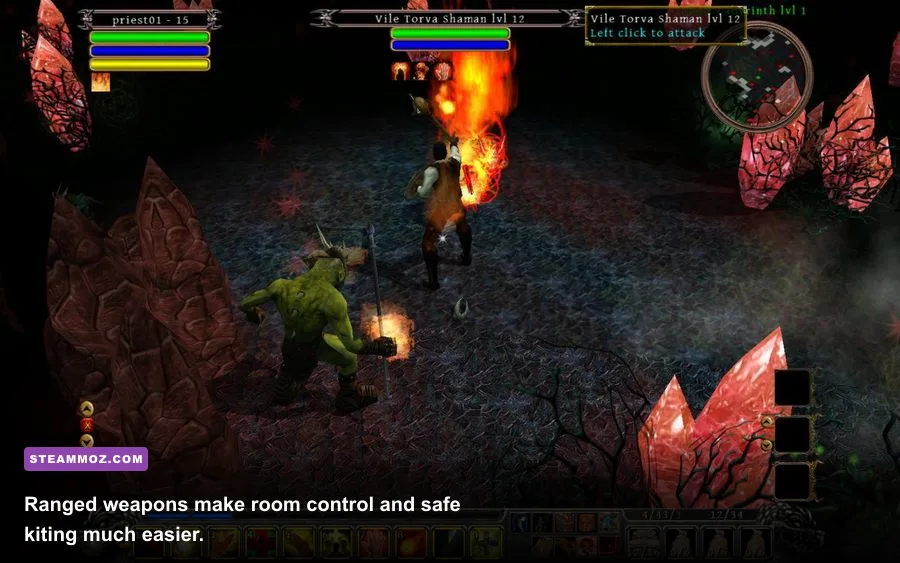
Fast one-handed swords and axes are the safest S-Tier recommendation for most physical characters. Their real advantage is not just the listed damage. They let you carry a shield, attack consistently while repositioning, and make better use of on-hit effects or short-range skills such as Bash and Power Strike. This matters when a town invasion turns a routine hallway into a fight against several enemies at once.
Look for a one-handed weapon with a high minimum-damage roll rather than chasing an occasional huge maximum hit. Consistent damage makes it easier to finish wounded enemies before they reach villagers or destroy buildings. Strength is the obvious offensive priority for many melee setups, but Dexterity, health, resistances, and defensive bonuses can be worth more than a small damage increase once enemies begin hitting hard.
Two-handed axes and maces sit at the top of A-Tier and can become S-Tier for a dedicated Berzerker. They’re excellent when your plan is to burst down one target, use Cleave-style area damage, or accept incoming hits while trading aggressively. The cost is meaningful: no shield, less room for defensive mistakes, and a harsher penalty when a slow attack misses or gets interrupted.
Use a two-hander when your armor, health pool, and crowd-control skills already cover your defenses. Otherwise, a sword-and-shield setup usually produces better real-world results, especially in the early and middle game. Din’s Curse is less forgiving than a normal loot crawler because enemies can attack your settlement while you’re recovering from a bad engagement.
Ranged weapons and the safest damage profile
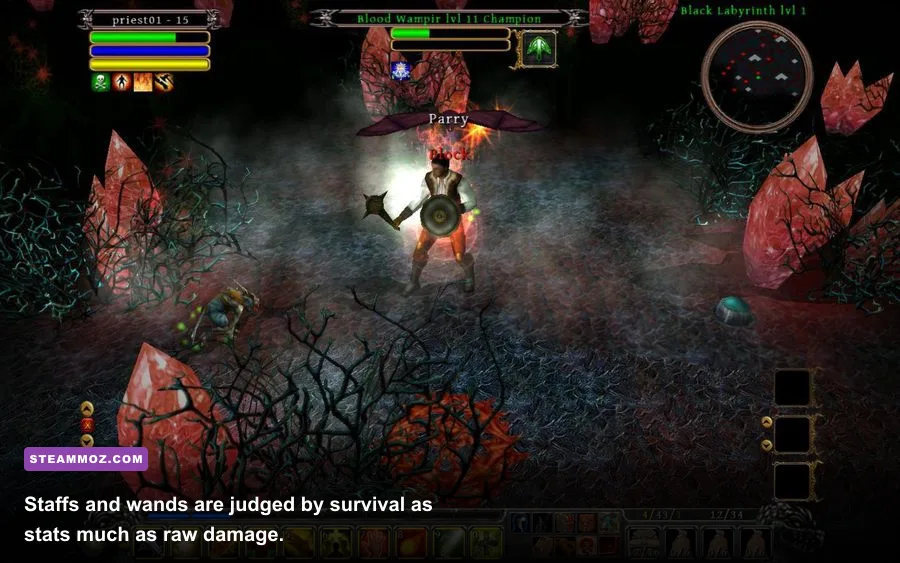
Bows are S-Tier because they solve several problems at once. A Ranger can attack from outside melee range, pull individual enemies from a packed room, and kite around corners while allies or summons absorb pressure. That safety is more valuable than a flashy damage roll when a champion, caster, and ordinary mobs collapse on your position.
For a bow, prioritize damage consistency, attack speed, and Dexterity-related bonuses. A weapon that fires quickly helps maintain pressure while moving, which is crucial because standing still is often how ranged characters get surrounded. Don’t overvalue a large damage range if the weapon’s slow firing rhythm makes every missed shot expensive.
Crossbows are solid B-Tier to A-Tier options for players who prefer deliberate burst. They can feel powerful against isolated targets, but their slower cadence makes them less forgiving during invasions. If you use one, pair it with movement skills, traps, slows, or a durable companion. The weapon becomes much better when you can create enough distance to reload or recover between attacks.
Ranged characters should also keep a backup melee weapon. It doesn’t need to be a damage masterpiece; it needs to prevent a bad situation from becoming a death spiral. A fast one-handed weapon with health or resistance bonuses can be more useful than a second low-quality bow when enemies breach your defensive line.
Staffs, wands, and caster equipment rankings
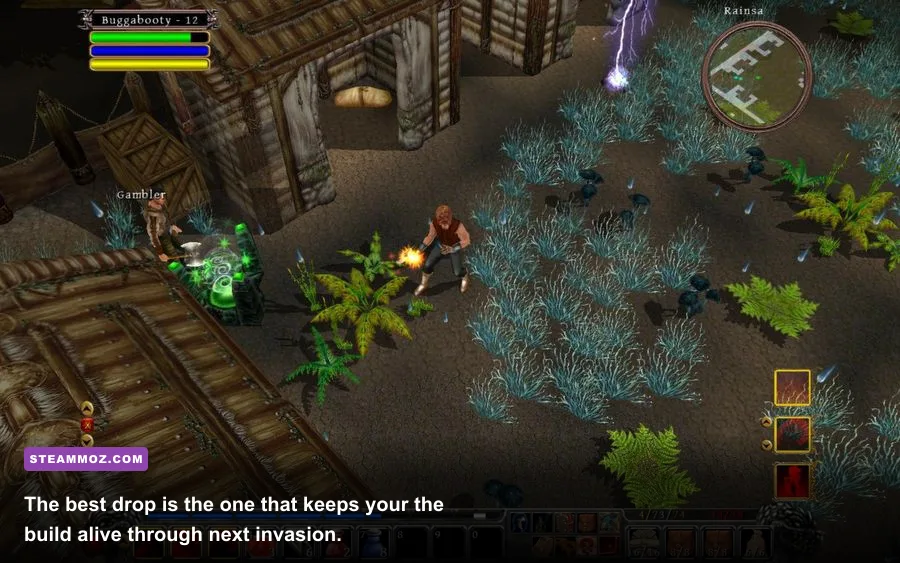
A staff is S-Tier for a spell-focused Mage or Priest only when its modifiers support the build. The base attack is not the deciding factor. Caster weapons should be judged by bonuses to relevant attributes, spell resources, resistances, health, and any effect that improves the frequency or reliability of your chosen skills. If your spells already kill quickly, defensive affixes often create more value than another small damage bump.
Wands are A-Tier because they offer a flexible middle ground. They suit casters who want ranged weapon damage between cooldowns, and they can work well on hybrids that split points between combat and magic. Their weakness is opportunity cost: a mediocre wand can occupy the weapon slot without providing enough damage or useful defensive statistics.
Don’t build around the weapon’s elemental flavor alone. Fire, lightning, cold, and other damage themes are only valuable when they complement your skill selection and the enemies in the current town. Din’s Curse can generate dangerous situations faster than you expect, so a resistance-heavy staff may outperform a more offensive one if it lets you survive a caster-heavy dungeon.
| Build goal | Preferred weapon | Priority affixes | Common mistake |
|---|---|---|---|
| Shielded melee | Fast sword or axe | Damage consistency, Strength, health, resistances | Chasing maximum damage and ignoring defense |
| Two-handed burst | Axe or mace | High base damage, Strength, attack support | Entering crowded rooms without control tools |
| Ranged kiting | Bow | Attack speed, Dexterity, reliable damage | Standing still to fire every shot |
| Spell caster | Staff | Spell resources, attributes, health, resistances | Rating the item by physical damage |
| Hybrid caster | Wand or one-hander | Balanced offensive and defensive stats | Splitting bonuses across unrelated skills |
Best armor and equipment to pair with each tier
A weapon tier list is only useful when the rest of the loadout can keep you alive long enough to use it. For melee characters, armor with health and resistances is usually the best partner for a high-speed one-hander. Your shield should be treated as a major defensive item, not an accessory. A slightly weaker sword plus a strong shield often beats a two-handed weapon once enemies begin attacking from multiple angles.
Rangers want movement-friendly defenses, health, and resistances rather than pure armor at any cost. The goal is to survive the hit that gets through your kiting pattern, then regain distance. Casters should inspect every slot for resource bonuses and elemental protection. A staff that adds damage but leaves you vulnerable to a specific enemy spell can be a downgrade in a procedurally generated town.
Keep replacement equipment in town storage when possible. Din’s Curse can punish a single-minded damage setup with an invasion that demands a different answer. Swapping to resistance gear, a shield, or a weapon with better crowd-control support is not wasted preparation; it’s one of the game’s core strategic advantages.
How to upgrade gear without wasting strong drops
Replace equipment by comparing the whole character sheet, not one green number. A new weapon should improve damage without pushing you below a requirement, removing an important resistance breakpoint, or breaking the rhythm of your skills. Test it against ordinary enemies first, then against a tougher target where attack speed and consistency become obvious.
Sell or discard low-level gear aggressively once better replacements appear. Inventory space has strategic value, and carrying five “maybe useful later” weapons makes it harder to notice the genuinely excellent roll. Keep only items that serve a clear alternate setup: a bow for a ranged swap, a resistance staff for a caster-heavy dungeon, or a shield that turns a fragile hybrid into a viable emergency tank.
For broader classic-RPG context, Steamoz’s Dungeon Siege review is a useful comparison point, while the Dungeons 2 winter weapon tier list covers a very different but equally gear-focused system. If performance is your concern, the Dragonkin settings guide explains how to protect frame pacing in another loot-heavy action RPG.
The final Din’s Curse equipment verdict
For most players, the ranking is straightforward: use a fast one-handed weapon and shield for dependable melee, choose a bow for the safest ranged damage, and take a staff or wand only when its bonuses directly support your spells. Two-handed axes and maces are devastating but demand better positioning, while crossbows reward patience and punish panic.
The most important rule is to judge equipment by the complete build. Din’s Curse constantly changes the problem in front of you, and the best item is often the one that covers your current weakness rather than the one with the largest damage value. Check the official Steam page for Din’s Curse, compare your drops after every major dungeon, and keep a backup loadout ready. That habit will carry you farther than chasing a perfect weapon that doesn’t fit the character you’re actually playing.
For the developer’s original feature overview, see Soldak Entertainment’s Din’s Curse overview, and use the official Soldak forums when you want class-specific community discussion. Din’s Curse has no single god-roll that solves every town; smart swapping, defensive planning, and a weapon that matches your skill scaling do.