
Dino Crisis 2 becomes much easier once you stop treating it like a traditional survival-horror game. You aren't meant to hide from every dinosaur or hoard every bullet forever. The winning rhythm is to keep moving, preserve your combo, switch between Regina and Dylan for their best tools, and spend Extinction Points on upgrades that solve your next problem. These 10 tips will help new players survive the jungle, Edward City, and the game's nastiest boss encounters without wasting ammunition or healing items.
Capcom's sequel is a strange but brilliant hybrid. It has fixed-camera tension and backtracking, yet its score system pushes you toward aggressive, efficient play. The game rewards clean kills, quick room clears, and careful route planning more than cautious corner-camping. If you're coming from the slower first Dino Crisis, that difference is the first thing to understand. For broader survival-horror recommendations, Steamoz's list of games like Dead Rising 4 is a useful next stop.

1. Learn the Extinction Point economy first

Extinction Points, usually abbreviated as EP, are both your score and your shopping budget. You earn them by killing dinosaurs, maintaining kill combos, and completing sections efficiently. The important detail is that a high score isn't just bragging rights: EP lets you buy ammunition, healing items, armor, and weapons at shops. A careless run can leave you technically alive but unequipped for the next boss.
Combos are the real money-maker. A combo begins when you kill enemies in quick succession, and it grows when you avoid long pauses between kills. You don't need to sprint blindly into danger, but you should avoid stopping to reload in the middle of a group if another target is available. Use the handgun or machine gun to soften enemies, then finish several targets close together. Environmental hazards and explosive weapons can erase a pack quickly, but don't waste expensive ammunition on a lone Compsognathus.
Buy according to the next section, not according to whatever looks exciting in the shop. Early on, ammunition and recovery items are usually better investments than a flashy weapon upgrade. Later, powerful area-of-effect weapons become worthwhile because Edward City's crowded encounters can destroy a low-damage loadout. Save a reserve of EP before major story transitions so you can restock immediately instead of entering a new zone with empty magazines.
| Purchase Priority | Why It Matters | Best Timing |
|---|---|---|
| Healing items | Prevents one mistake from ending a run | Before boss rooms and long routes |
| Shotgun ammunition | Reliable crowd control and stagger potential | When raptors appear in groups |
| Grenades or explosive rounds | Clears clustered enemies quickly | Edward City and packed corridors |
| Armor upgrades | Improves your margin for error | After core ammunition is stocked |

🎮 Dino Crisis 2
Looking to experience this game? Grab your digital key directly on our store for $4.99.
View on Steammoz Store →2. Treat combos as a combat strategy, not a bonus

The easiest way to lose EP is to kill enemies randomly. Dino Crisis 2's combo system rewards a deliberate sequence: group enemies, damage them without overcommitting, then finish them in rapid succession. Rushing through every encounter can actually produce a worse result if you break the chain or take damage that forces you to spend your earnings on healing.
Use the room's geometry. Narrow paths are ideal because dinosaurs approach from predictable angles. Backpedal through a doorway, turn when the camera changes, and fire as enemies enter the same lane. This is safer than standing in an open clearing where a raptor can attack from outside your camera view. If a dinosaur is already staggered, don't waste a high-powered round on it; switch to a cheaper weapon and preserve the stronger ammunition for the next target.
There is also a practical limit to greed. If the combo counter is active but your health is low, break away and heal. A lost combo costs EP; a grabbed character can cost your entire inventory. New players often chase one more kill while surrounded and end up spending more than they earned. The best players aren't constantly attacking. They're choosing when the combo is worth defending.
3. Know when to use Regina and Dylan
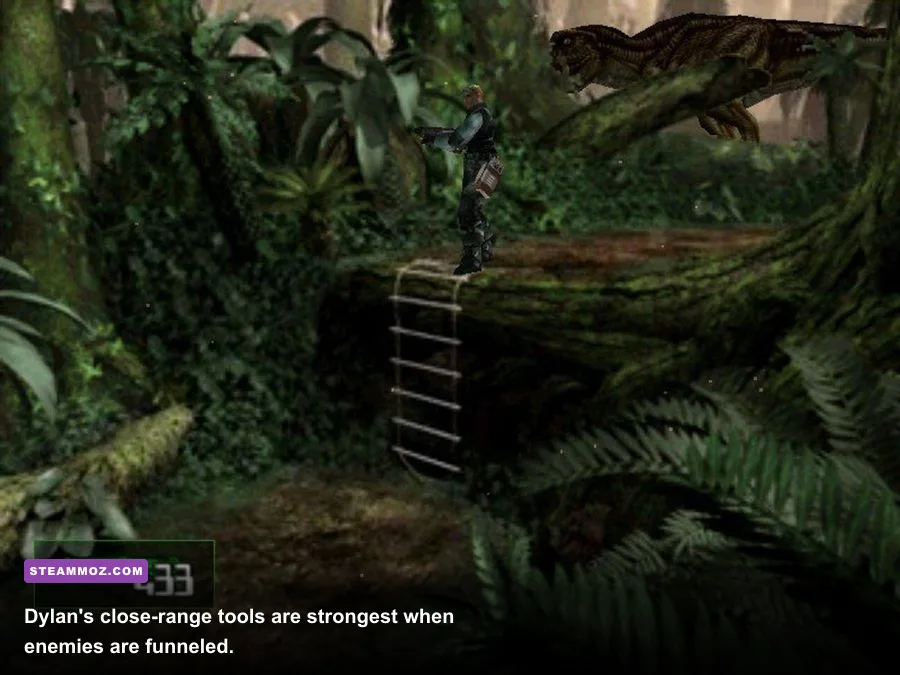
Regina and Dylan aren't interchangeable skins. Regina is the more technically versatile character, while Dylan's equipment and close-range options suit direct crowd control. The campaign controls which character you use in many sections, but understanding their strengths still helps you choose ammunition and prepare for transitions.
Regina's handgun is dependable for conserving resources, and her shotgun is excellent when a raptor closes the distance. Her grenade gun and flame-based equipment are especially useful against groups or enemies vulnerable to explosive and incendiary damage. Regina's biggest advantage is flexibility: she can soften a target with inexpensive shots, then switch to a specialized weapon when the encounter demands it.
Dylan's machete is not a replacement for firearms, but it is useful for finishing weakened enemies and handling situations where ammunition is scarce. His heavier combat feel makes positioning more important. Keep enemies in front of him, use the environment to prevent flanking, and don't attempt melee attacks against a full-health raptor in open space. Dylan's weapons are at their best when enemies are funneled through a doorway, ladder approach, or narrow ruin.
| Character | Strongest Role | Best Tools | Common Mistake |
|---|---|---|---|
| Regina | Flexible ranged damage | Handgun, shotgun, grenade gun | Using specialist ammunition on isolated targets |
| Dylan | Close-range control and finishing | Machete, shotgun, heavy weapons | Trying to melee surrounded dinosaurs |
4. Use every weapon for a specific job

Dino Crisis 2 gives you more tools than the early inventory suggests, but weapons overlap less than newcomers expect. The handgun is your economy weapon. It handles weak targets and lets you maintain pressure without burning rare ammunition. The shotgun is the emergency button: use it when several dinosaurs breach your space or when a close-range stagger creates a safe escape route.
The grenade gun is for clusters, not single targets. Wait until enemies stack in a corridor, then fire into the center of the group. Flame weapons are useful when you can keep enemies inside the damage area, but they are less attractive if you are constantly forced to move. Explosive launchers and missile-based weapons are boss or elite-target tools. Their damage is valuable, but carrying too little ordinary ammunition can leave you unable to build combos after spending them.
Reload before entering a new room whenever the route gives you a safe moment. Fixed-camera games can hide enemies until the view shifts, and discovering an empty magazine after the camera turns is one of the sequel's most common beginner traps. You can also reduce risk by entering an encounter with the appropriate weapon already equipped instead of waiting for the dinosaur to reach striking distance.
5. Read dinosaur attacks by their telegraphs
Most dinosaurs in Dino Crisis 2 are dangerous because of timing and camera placement, not because they have complicated movesets. Raptors tend to close distance rapidly and can attack from the side of the screen. Their approach is your warning: if one lowers its body and commits to a rush, stop firing long enough to reposition. A short retreat is often safer than trying to finish a reload while it is already in striking range.
Allosaurus encounters punish players who stand directly in front of the animal. Keep moving laterally, fire during its recovery animation, and avoid backing into scenery that prevents the camera from showing the next threat. Pteranodons create a different problem because their attacks arrive from above and can interrupt your rhythm. Don't waste ammunition wildly into the sky; wait for their dive or attack pass, then use a controlled burst.
Compsognathus are weak individually but dangerous in numbers. They can interrupt movement and break combos, so clear them with cheap, fast attacks rather than saving every bullet. Aquatic and larger enemies are usually about route control: identify where the safe ground is, take the shot when the enemy exposes itself, and move before the next attack cycle begins.
For more creature-focused action games, compare Dino Crisis 2's pressure with the prehistoric combat in Steamoz's guide to games like Far Cry Primal. The weapons are completely different, but the lesson about reading animal behavior carries over.
6. Heal before danger, not after damage

Healing items are most valuable when they prevent a second hit. Waiting until the health bar is nearly empty sounds efficient, but it leaves you vulnerable to a grab, an off-screen bite, or a camera transition that reveals another dinosaur. Use recovery items when you're hurt enough that one ordinary attack could put you in critical condition, especially before a long corridor or an area with multiple camera changes.
Always create distance before healing. Turning your back to a nearby raptor and opening the inventory is not a strategy; it is an invitation. Back through a doorway, use a corner to force enemies into a predictable approach, or clear the immediate group first. Inventory management is also important because carrying too many low-value items can leave you unable to pick up something more useful later.
Save points and shops should be treated as preparation checkpoints. Top off health, reload your primary weapons, and check whether you have enough EP for the next major encounter. If you reach a save point in poor condition with no ammunition, don't assume the game expects a perfect combat sequence. Revisit nearby areas, build a safe combo, and return with resources.
7. Explore for supplies, but don't wander blindly
The jungle, Edward City, and the military and research facilities hide useful resources in corners that are easy to miss because of the fixed camera. Search side paths, dead ends, control rooms, and areas that become accessible after a key event. The reward may be ammunition rather than a dramatic weapon, but those extra rounds can preserve your EP for a boss purchase.
At the same time, Dino Crisis 2 is not asking you to sweep every screen repeatedly. If a route is clearly blocked by a story objective, remember it and move on. Backtracking without a purpose wastes healing opportunities and can make you re-enter encounters with depleted resources. Pay attention to key items, doors, computer terminals, and character dialogue; the game often signals the next destination more clearly than its old-school presentation suggests.
Make mental notes of safe spaces. A room with a wide entrance and clear camera angle can become a reliable place to reset your position. If you are experimenting with combos, practice in an area where enemy spawns and exits are easy to read. That knowledge becomes particularly valuable once Edward City starts throwing denser groups at you.
8. Prepare for bosses around movement, not damage
Boss battles in Dino Crisis 2 are less about unloading every powerful weapon immediately and more about surviving attack cycles. The Giganotosaurus, for example, can make panic-firing look attractive, but its size and reach punish players who stand still. Watch the arena, identify the safe lanes, and fire during recovery windows rather than during its most committed attacks.
Before a boss room, carry at least one reliable healing option and a weapon that can deal consistent damage without consuming your entire stock. Keep specialist ammunition for clear openings. If the arena includes machinery, vehicles, consoles, or explosive objects, assume they are part of the solution and look for interaction prompts rather than treating the fight as a pure damage race.
| Boss Situation | Main Danger | Counter Strategy | Preferred Tool |
|---|---|---|---|
| Large dinosaur at close range | Wide bite or charge reach | Circle toward open space and attack after recovery | Shotgun or heavy weapon |
| Boss with arena hazards | Getting trapped against scenery | Keep a clear escape lane and use interactable objects | Explosive ammunition |
| Long damage phase | Running out of healing items | Prioritize survival and only fire during safe windows | Handgun plus reserve weapon |
Don't be afraid to restart a boss attempt if the opening minute goes badly. Wasting half your inventory to recover from a poor position usually costs more than learning the pattern and trying again. That old-school reset is part of the game's design, not a failure.
9. Use the training and Dino Duel modes intelligently
Dino Crisis 2 includes extra modes that can teach you useful fundamentals beyond the campaign. Training-style encounters and Dino Duel let you become familiar with enemy behavior, weapon timing, and movement without risking the main story's resources. They aren't just diversions for completionists; they are practical laboratories for learning how quickly a raptor closes distance or how a larger dinosaur reacts to different attacks.
Use these modes to practice one skill at a time. First, learn to turn and retreat without losing control of the camera. Next, practice switching weapons before an enemy reaches you. Finally, work on finishing several targets in a short window so the combo system feels deliberate rather than chaotic. You don't need perfect scores to benefit. A few minutes of focused practice can save far more ammunition in the campaign.
The extra modes also reinforce a key lesson: every enemy has a preferred engagement distance. The shotgun wants close-range commitment, the handgun wants controlled spacing, and explosive tools want groups. Once you understand that relationship, combat stops feeling like frantic button presses and starts feeling like route management.
10. Build a repeatable first-run routine
For a new-player run, use this simple routine every time you reach a shop or save point. First, heal to a comfortable level. Second, reload your main weapon. Third, check the next area's likely enemy type and buy only the ammunition that answers it. Fourth, keep enough EP for an emergency recovery item. Finally, save before making a major transition.
Your first clear should prioritize learning over score. Don't restart because you missed a combo, and don't burn rare ammunition chasing a perfect ranking. Once you know where the story sends Regina and Dylan, which routes contain raptor packs, and where bosses demand specialized firepower, a second run becomes dramatically cleaner. That's when you can start optimizing EP, cutting unnecessary backtracking, and experimenting with aggressive combo chains.
| Run Stage | Main Goal | Resource Rule | Player Focus |
|---|---|---|---|
| Early jungle | Learn movement and combos | Use handgun ammunition freely | Keep enemies in front of you |
| Edward City | Control crowded encounters | Stock shotgun and explosives | Protect your combo without getting greedy |
| Facilities | Prepare for story escalation | Carry healing and reserve heavy ammo | Search side rooms before advancing |
| Boss sections | Survive attack cycles | Spend EP before entering | Move first, shoot second |
For official background, check the game's listing through PlayStation's official games portal and Capcom's official games site. Release information and age-rating details are also available through the ESRB database. Availability varies by platform and region, so verify the current store listing before buying.
Dino Crisis 2 still works because its systems constantly push against each other. You want the safety of distance, but the score system wants speed. You want to save ammunition, but combos reward commitment. You want to heal only when necessary, but dinosaurs punish hesitation. Master that tension, spend EP with a plan, and use Regina and Dylan according to their strengths. Once those habits click, the jungle stops feeling random—and starts feeling like a route you can control.
If you enjoy learning older games through practical systems rather than nostalgia alone, Steamoz's guides to games like F.E.A.R. 2 and games like 10 Second Ninja X offer more sharp, replay-friendly recommendations.