
The best Clanfolk starting build is a compact three-person settlement focused on food, fuel, and shelter before anything fancy. Start with one strong generalist, one reliable gatherer, and one crafter or builder; rush a hearth, beds, a covered stockpile, and basic insulation; then spend the first warm season banking food, hay, logs, and reeds for winter. Clanfolk punishes sprawling ambition, not slow progress.

Build Your Clan Around Jobs, Not Combat
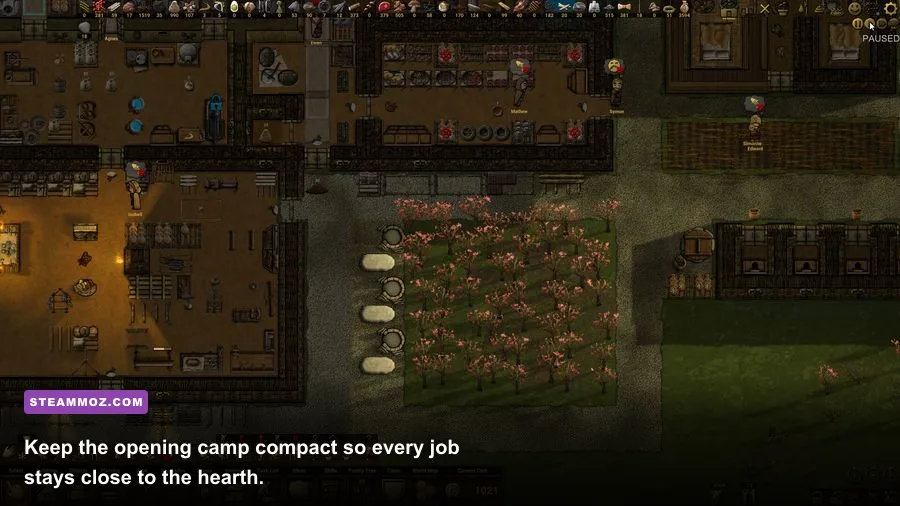
Clanfolk isn’t a combat game with classes, weapons, or a damage rotation. Your “build” is the way you distribute labor across the family. That distinction matters because a settlement can look busy while quietly collapsing: everyone hauls, nobody cooks, the fire goes out, and your food spoils in an exposed pile.
For a beginner start, use three roles. The first clan member should be your all-rounder and emergency builder. The second should handle gathering, farming, hunting, and fishing. The third should own crafting, cooking, hauling, and construction. You can swap priorities later, but this opening division keeps essential tasks covered without turning every pawn into a mediocre jack-of-all-trades.
When selecting your clanfolk, favor useful work skills over a single spectacular rating. A character with solid Building, Labouring, and Learning is more valuable on day one than a specialist who cannot help with hauling. A strong Cooking or Crafting worker becomes increasingly important once raw food, leather, textiles, and preserved meals enter the chain.
| Clan Role | Top Priorities | Early Tasks | Why It Matters |
|---|---|---|---|
| Settlement Lead | Building, Labouring, Learning | Hearth, beds, walls, hauling | Prevents the camp from stalling when construction expands |
| Provider | Gathering, Farming, Hunting, Fishing | Berries, reeds, vegetables, meat | Creates the food and material buffer before cold weather |
| Maker | Crafting, Cooking, Tailoring | Meals, tools, clothing, fuel preparation | Converts raw resources into supplies the clan can actually use |
Use the official Clanfolk Steam page as your baseline for current Early Access features, because balance and available recipes can change between builds. The game’s job system is the constant: assign priorities, watch bottlenecks, and never assume an idle worker is truly useless. Often they’re waiting on a missing ingredient or an unreachable stockpile.
🎮 Clanfolk
Looking to experience this game? Grab your digital key directly on our store for $14.99.
View on Steammoz Store →Your First Three Days Need a Strict Order
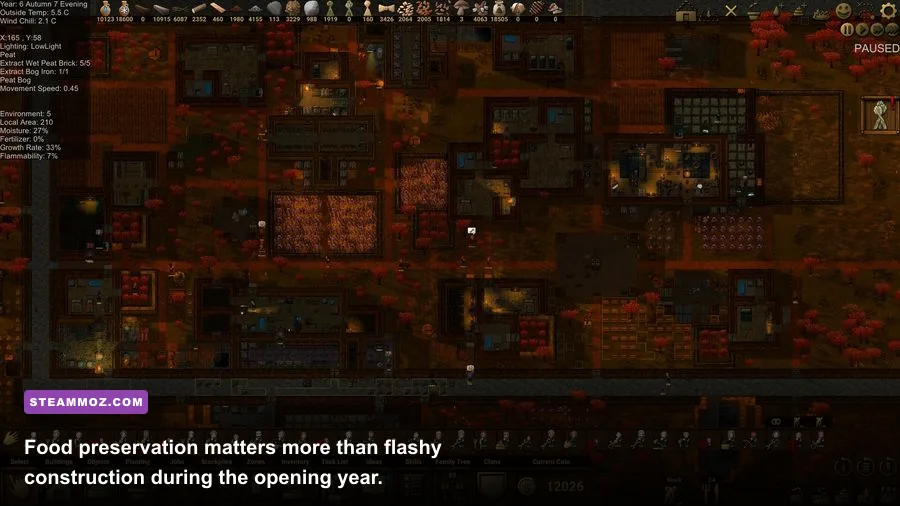
Pause immediately after landing. Put down a small hearth, three sleeping spots or beds, a general stockpile, and a food stockpile close together. Do not start with a grand hall. A compact 7-by-7 or 9-by-7 footprint is enough for the opening shelter, provided there is room for the hearth, beds, and walking paths.
Next, designate nearby trees, rocks, reeds, and wild food. Keep gathering zones close to camp during the first day. Long walking routes quietly consume the daylight your clan needs for building. Reeds are especially valuable because they support early construction and later material chains, while logs become fuel, structural material, and a constant source of pressure during winter.
Your first construction queue should be hearth, beds, stockpiles, a roofed room, and basic walls. Add a latrine early, but don’t let sanitation projects outrank food or firewood. A beautiful settlement with no fuel is still a frozen settlement.
- Pause and inspect every clan member. Record the best builder, gatherer, and crafter before assigning priorities.
- Place the hearth near the center. This shortens cooking, heating, and hauling routes.
- Build sleeping spaces immediately. Poor sleep damages productivity and makes every later task slower.
- Cover food and fuel. Exposed resources are vulnerable to weather and deterioration.
- Queue simple meals before luxury items. Raw food is useful, but cooked food gives your schedule a more dependable rhythm.
- Leave one worker flexible. The generalist should respond to emergencies instead of being trapped in a permanent crafting loop.
Set work priorities deliberately rather than giving every category equal weight. A good opening pattern is food and fire-related work at the top, building and hauling immediately below, then crafting and comfort tasks. If a worker keeps abandoning construction to gather one berry, lower the gathering priority temporarily. Clanfolk’s simulation follows your queue more faithfully than your intentions.
The Best First-Year Resource Plan
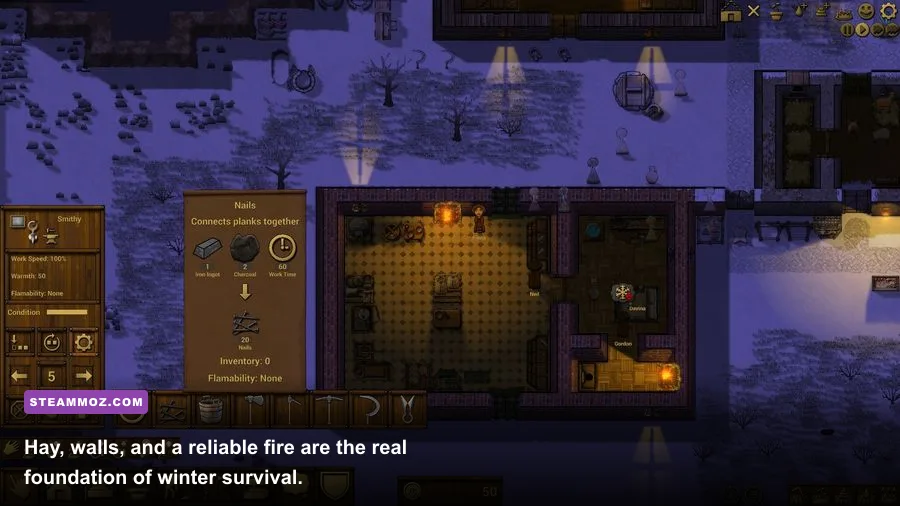
Your first year is a race against seasonal scarcity. Warm months provide the labor window; cold months expose every weak link. The target is not a perfect town. The target is a stable food supply, enough fuel to keep the hearth active, dry shelter, and a reserve of materials for repairs.
Gather more than you think you need, but don’t fill the map with distant zones. Create several small harvesting areas and rotate them. That keeps workers productive while reducing travel. Prioritize wild foods early, then add farming once you have spare labor and a reliable water plan. Farming is powerful, but it is not an excuse to ignore immediate gathering during the opening days.
Logs deserve special attention. They feed construction and firewood production, and winter consumption can make a comfortable stockpile disappear faster than expected. Keep a dedicated log reserve and avoid spending every piece on decorative structures. Hay, reeds, and plant fibers also deserve protected storage because they feed into beds, insulation, animal care, and textile production.
| Resource | Opening Target | Primary Uses | Beginner Mistake |
|---|---|---|---|
| Food | Several days of meals plus a reserve | Meals, animal support, winter survival | Eating every gathered item instead of preserving a buffer |
| Logs | Large reserve before cold weather | Fuel, walls, furniture, construction | Using the entire supply on oversized rooms |
| Hay and plant fiber | Enough for beds, insulation, and contingencies | Roofing, bedding, animal and textile chains | Leaving it outside where weather reduces its value |
| Reeds | Steady early collection near water | Early structures, crafting, utility items | Waiting until winter to begin gathering them |
| Stone and clay | Small working reserve | Fireplaces, kilns, durable structures | Mining aggressively before food and shelter are stable |
Storage is part of production, not a cosmetic afterthought. Put raw materials near the stations that consume them, while finished food belongs in a protected, sensible location. If your cook spends half the day crossing the settlement for ingredients, the problem isn’t cooking skill; it’s logistics.
For more PC performance and troubleshooting habits, Steamoz’s Bionic Dues settings guide and Cossacks 3 specs guide offer useful reminders about keeping simulation-heavy games responsive. Clanfolk’s challenge is mostly planning, but a readable interface and stable frame rate make that planning much easier.
Turn the Starter House Into a Winter Shelter

Build small and seal the room before adding wings. A roofed, enclosed shelter is more valuable than a large open-plan building because it concentrates heat and reduces walking. Keep the hearth inside the living area, but leave enough space around it for access and future furniture. Don’t trap beds behind production stations; congestion creates a hidden productivity tax.
Insulation is the key upgrade once the basic shelter works. Use available hay and other insulating materials in walls, roofs, and bedding where the game allows it. The exact value of each construction piece can shift with updates, but the principle does not: an insulated small room needs less fuel than a giant room with thin or unfinished boundaries.
Separate dirty work from sleeping and food preparation when you can. A dedicated workshop doesn’t need to be huge. Put crafting stations close to a material stockpile, then place a compact kitchen and food store near the hearth. This arrangement makes the settlement easier to expand without forcing every worker through one doorway.
Fire management is a daily check, not a winter-only panic button. Watch the fuel reserve, keep logs accessible, and make sure your fire-tending worker can reach the hearth. If the fire goes out during a cold snap, the resulting loss of comfort and productivity can cascade into missed meals, unfinished construction, and further exposure.
Before winter, finish the roof, move critical resources indoors, prepare warm clothing or bedding as available, and stop starting ambitious projects. A half-built barn is less useful than a stocked shelter. This is where new players usually overreach: they see a productive summer and spend every resource on expansion, then discover that winter is a separate economic test.
Work Priorities That Prevent a Labor Collapse
Clanfolk’s priority system rewards constant adjustment. Your best worker should not remain locked to one job all season. Early on, set the all-rounder to building and hauling, then lower construction once the shelter is enclosed. Shift the provider between gathering, farming, and food production as the map’s opportunities change. Let the crafter handle cooking and essential items first, then move into textiles and upgrades only after meals are secure.
Use stockpiles as control points. If a station is repeatedly idle, check three things in order: does the recipe have ingredients, can the worker reach those ingredients, and is the finished product allowed somewhere? Many apparent AI failures are simply storage rules or inaccessible paths.
Also watch personal needs. Exhausted clanfolk may technically be available but functionally worthless. Keep beds accessible, avoid forcing long night-time walks, and don’t schedule every adult for nonstop labor. A short-term productivity spike is not worth a hunger, sleep, or temperature spiral.
| Situation | Priority Change | What to Pause | Reason |
|---|---|---|---|
| Food below a comfortable reserve | Cooking and gathering to the top | Decorative building and low-value crafting | Stops the settlement from consuming its emergency buffer |
| Firewood falling quickly | Labouring, chopping, and fuel production high | Long mining trips | Keeps heat production ahead of seasonal demand |
| Construction queue stuck | Hauling and building elevated | Secondary gathering routes | Moves missing materials to the job site faster |
| Winter shelter incomplete | Building and insulation highest | Expansion and luxury stations | Completes protection before temperatures become dangerous |
| Workers constantly exhausted | Sleep and food access protected | Overlong shifts and distant errands | Restores reliable output instead of burning through morale and health |
For comparison, Steamoz’s City of Gangsters optimization guide covers another management game where bottlenecks are easy to misread. The lesson carries over: inspect the chain behind the problem rather than treating the final symptom.
What to Unlock After Your Camp Stabilizes
Once food, heat, and beds are reliable, expand in layers. Add a workshop for tools and material processing, then improve cooking and storage, then pursue textiles and better insulation. This progression creates useful feedback: better tools improve work, better clothing protects workers, and better storage reduces waste.
Do not rush animals simply because they look like an obvious source of food. Livestock creates recurring demands for feed, shelter, handling, and labor. Add animals when your clan can support them without stealing the provider from farming or gathering. The same rule applies to large farms: a field is only an asset if someone can plant, tend, harvest, and process it.
Expansion should follow your labor surplus. If every adult has a full schedule, adding another room increases maintenance rather than prosperity. Wait until essential jobs finish early or your stockpiles consistently refill. Then build the next room close enough to existing storage that the new distance doesn’t erase the gains.
Keep an eye on MinMax Games’ official Clanfolk information and the official Steam announcements for changes to recipes, systems, and Early Access balance. A guide built around priorities survives updates better than one built around a rigid construction order.
The Beginner Build Checklist Before Winter
Before the first serious cold arrives, stop and audit the settlement. You want a roofed and enclosed living area, accessible beds, a working hearth, indoor food storage, a dependable cook, and enough logs to cover bad weather rather than only average weather. Critical materials should be protected, and the clan should have a clear answer for what happens if one worker becomes sick or unavailable.
- One compact insulated shelter is complete.
- Every clan member has a reachable bed.
- The hearth and food stockpile are close to the kitchen area.
- Logs, hay, reeds, and food are stored under cover where possible.
- At least one adult can switch to emergency hauling or construction.
- Cooking, fire tending, and gathering are not assigned to the same overloaded worker.
- Nonessential expansion has been paused until the winter reserve is secure.
That’s the Clanfolk beginner build in practice: a small, warm logistics machine that gets more efficient before it gets bigger. Resist the urge to build a village immediately. Secure the hearth, protect the food, shorten the walking routes, and let every new room earn its place. Once the first winter passes without a crisis, you’ll have the resources and confidence to turn that scrappy camp into a proper Highland settlement.
If you’re also managing another unforgiving survival game, Steamoz’s Children of Silentown progression guide is a useful reminder that the strongest strategy often comes from understanding systems rather than chasing flashy upgrades.