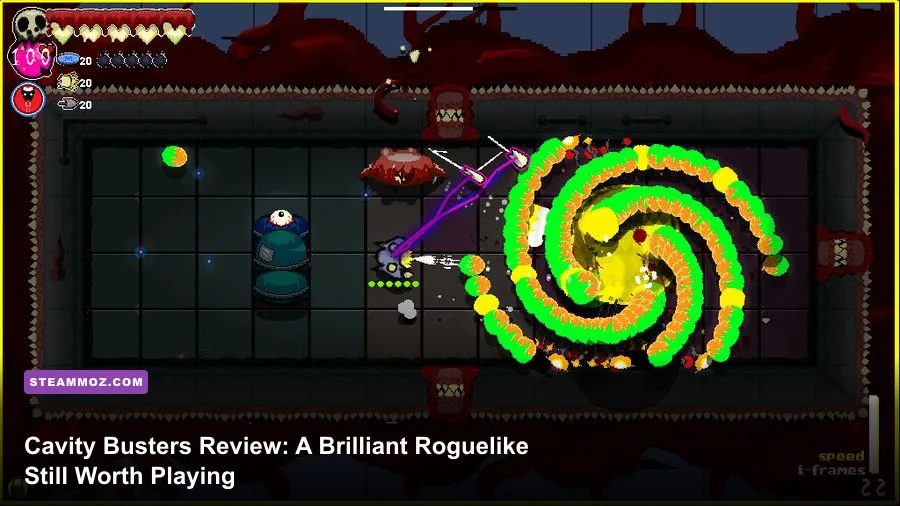
Yes, Cavity Busters is worth playing in 2026—especially if you enjoy compact roguelikes that reward movement more than grinding. Its tooth-and-mouth setting is ridiculous on paper, but the real appeal is a sharp loop built around shooting, grappling, dashing, room-clearing, and rapid adaptation. The caveat is just as important: this is a demanding indie action game, not a relaxed weekend roguelite. Expect repetition, failed runs, and a learning curve that asks you to improve rather than simply overlevel your character.
That makes it an unusually good recommendation for players who have already exhausted larger roguelikes and want something stranger. It doesn't have the production scale of Dungeon Siege, the build sprawl of a modern ARPG, or the endless content pipeline of a live-service game. What it does have is personality, speed, and a combat system that feels far more deliberate than its cartoon presentation suggests.
What makes Cavity Busters different in 2026?
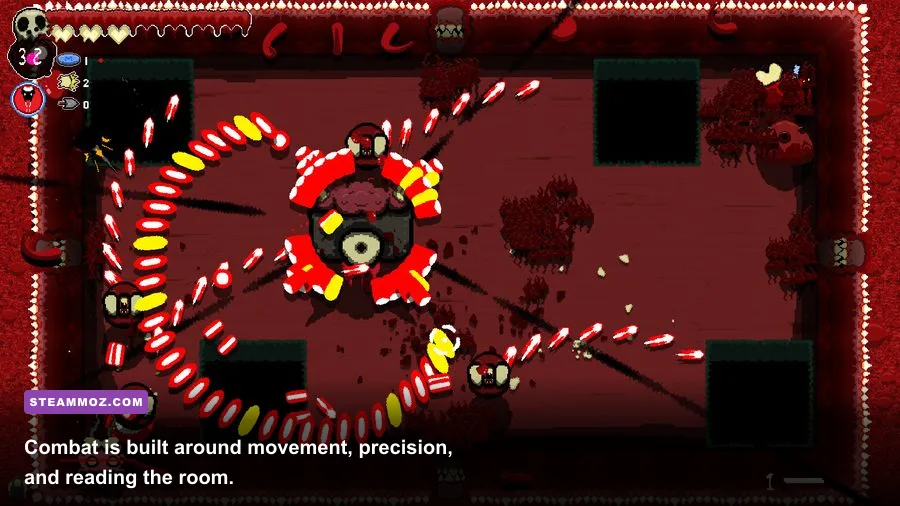
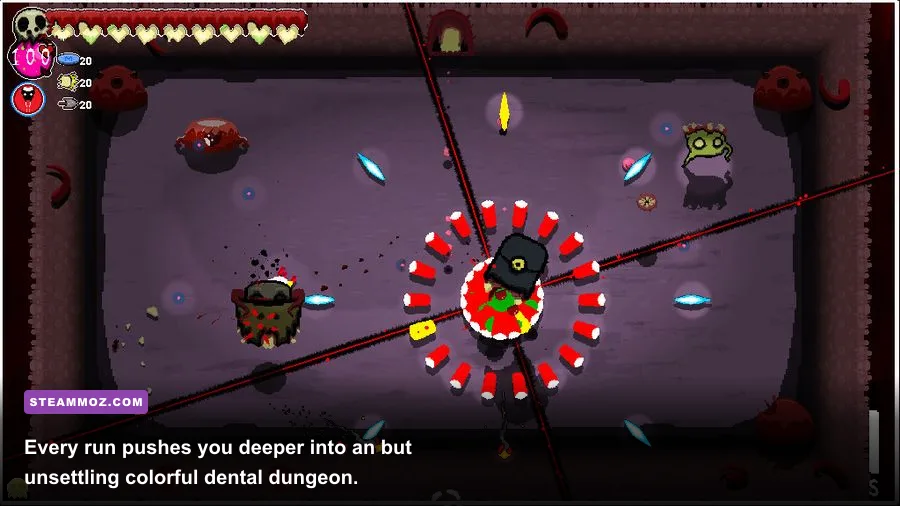
Cavity Busters is a roguelike set inside a hostile biological world, with rooms arranged into procedurally generated runs. The central joke is dental horror: teeth, cavities, bodily textures, and strange organic enemies are pushed into a bright, almost toy-like visual style. The contrast works because the game never treats its setting as a disposable gag. The mouth is the dungeon, the enemies belong to it, and the whole presentation gives each room a memorable identity.
The official Steam listing describes the game around fast action, procedural generation, and a combination of shooting and grappling. That combination is the key. You aren't simply strafing around an arena while waiting for cooldowns. The grapple lets you reposition, reach awkward angles, and turn the room's layout into part of your attack plan. Dashing, firing, and grappling have to be chained together quickly, particularly once projectile patterns begin filling the screen.
Runs are short enough to make another attempt tempting, but not so brief that your choices feel meaningless. You move through combat rooms, collect rewards, choose upgrades, and gradually assemble a temporary build. When a run ends, the important question is usually not “Did I get lucky?” but “Which mistake made the next room impossible?” That distinction is why Cavity Busters remains interesting after the novelty of the dental theme wears off.

🎮 Cavity Busters
Looking to experience this game? Grab your digital key directly on our store for $4.49.
View on Steammoz Store →How the combat actually feels
The combat is at its best when you stop treating it like a conventional twin-stick shooter. Enemies telegraph attacks, room geometry creates safe and unsafe lanes, and your movement tools are just as important as your damage output. Standing still is often the fastest way to lose health. Even a seemingly harmless room can become dangerous when projectiles overlap or an enemy blocks the escape route you were planning to use.
Grappling is the mechanic that gives Cavity Busters its identity. It isn't just a traversal button for crossing gaps. Used well, it breaks the rhythm of an encounter: fire while creating distance, grapple toward a useful position, then dash away before the enemy pattern closes in. Players who only circle the edge of the room will survive some early encounters, but later rooms demand more decisive movement and better spatial awareness.
The game also rewards target priority. Ranged enemies and anything capable of restricting your movement should usually be handled before slower threats. Clearing the most visually obvious enemy isn't always correct if another creature is quietly filling the arena with hazards. Learn to scan the room immediately, identify the attack source, and choose an escape direction before you start shooting.
| Combat element | What it does | Best use | Common mistake |
|---|---|---|---|
| Shooting | Removes enemies and controls space | Focus dangerous ranged targets first | Holding position to maximize damage |
| Grappling | Repositions you through the room | Escape patterns or reach a clean firing angle | Using it only for movement between rooms |
| Dashing | Creates a brief emergency escape | Crossing projectile gaps and avoiding contact damage | Spending it before the attack telegraph appears |
| Room geometry | Shapes line of sight and escape routes | Use edges and openings to split enemy pressure | Entering the center without a retreat path |
Progression, upgrades, and the real learning curve
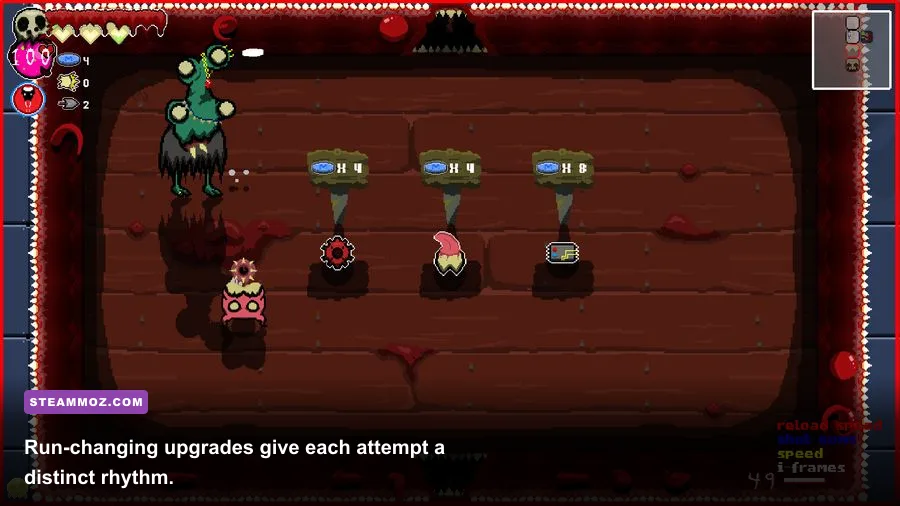
Cavity Busters uses the familiar roguelike structure of temporary run upgrades layered over repeat attempts. That structure is simple, but the game gets mileage from how directly upgrades affect your moment-to-moment decisions. A damage-focused run feels different from one built around survivability or mobility because the arena itself changes value depending on your tools.
Don't chase the highest damage option automatically. Extra damage is excellent when it lets you remove a priority enemy before the room becomes crowded, but it won't save a run where you repeatedly take contact hits. Early attempts are better spent learning which upgrades support your preferred rhythm. If you naturally play aggressively, mobility and defensive options can keep that aggression sustainable. If you prefer careful ranged play, choose upgrades that make your firing windows more reliable.
The progression curve is intentionally less generous than in many popular roguelites. You won't always feel dramatically stronger after a failed run, and that can be frustrating if you're expecting permanent upgrades to carry you through the game. Cavity Busters is closer to a skill test: unlocks and experience expand your options, but execution still decides whether you can finish a difficult sequence.
That design is a strength for experienced players and a warning for newcomers. If you want a game that lets you become overpowered through repeated farming, this probably isn't the right pick. If you like recognizing an attack, changing your route, and finally clearing the room that destroyed you ten attempts earlier, the progression feels satisfying.
| Player type | Best approach | Why it works | Expected friction |
|---|---|---|---|
| New roguelike player | Prioritize survivability and learn room layouts | Leaves more time to read enemy patterns | Early deaths can feel abrupt |
| Action-game veteran | Build around mobility and aggressive target priority | Converts movement skill into faster clears | Greedy damage choices punish mistakes |
| Completionist | Experiment with varied upgrade combinations | Reveals more of the game's build possibilities | Some repetition is unavoidable |
| Relaxed player | Use short sessions and accept failed runs | Keeps the challenge from becoming exhausting | Limited accessibility options may matter |
Bosses and difficulty are where opinions split
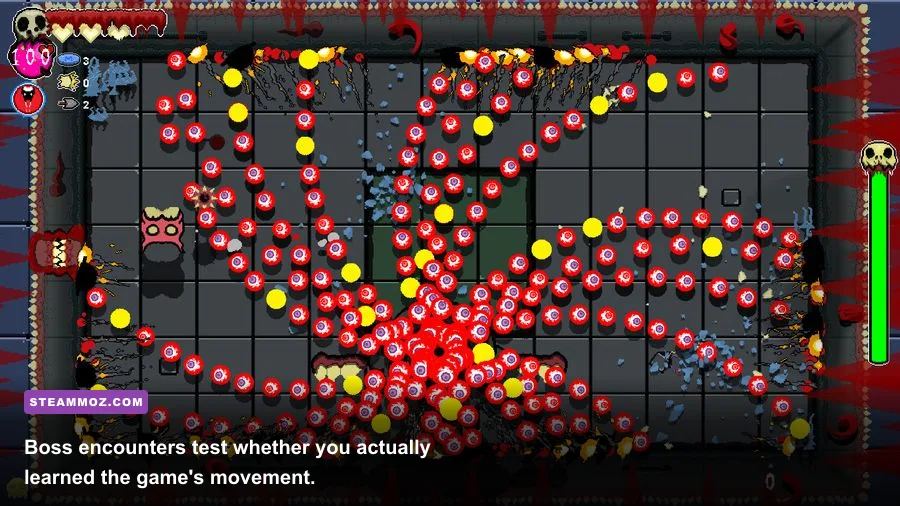
The boss encounters are less about memorizing a single scripted sequence and more about surviving layered threats. You need to watch the boss, the projectiles, and your available movement space at the same time. That can create excellent “one more attempt” moments, but it can also make a first encounter feel chaotic rather than fair until you've seen the attack cycle.
Your best strategy is to preserve a reliable escape option. Don't spend every dash or grapple simply to deal a little extra damage. Wait for the attack pattern to commit, move through the opening, and attack from a position that leaves you another route out. The same rule applies to healing or reward decisions: a slightly weaker build with room to maneuver is often better than a powerful build that forces you into close-range danger.
| Situation | Primary danger | Counter strategy | Priority |
|---|---|---|---|
| Dense projectile pattern | Escape lanes disappear | Grapple early, then dash through the remaining gap | Survival first |
| Multiple ranged enemies | Crossfire limits movement | Remove the source that controls the largest area | Target priority |
| Close-range pressure | Contact damage during firing | Attack briefly, disengage, and reset spacing | Timing |
| Boss arena | Attacks overlap with environmental hazards | Stay near an open route and save mobility tools | Positioning |
Performance and PC settings in 2026
Cavity Busters is visually stylized rather than technically demanding. Its performance profile is far friendlier than large open-world releases, and a modern entry-level gaming laptop should have little trouble running it. Still, the screen can become busy during intense encounters, so stable frame pacing matters more than chasing maximum visual quality.
The most useful adjustment is usually a sensible resolution and fullscreen mode rather than aggressive image-quality reductions. If your system struggles, lower effects first and keep the game responsive. A frame-rate dip during a crowded projectile sequence is more damaging here than a slightly softer image because successful movement depends on reading timing clearly.
| Setting profile | Recommended configuration | Performance effect | Best for |
|---|---|---|---|
| Low-end laptop | Fullscreen, native or 900p, reduced effects | Maximizes consistency during busy rooms | Integrated graphics and older laptops |
| Mainstream PC | Native resolution, high effects, frame cap | Strong image quality with stable pacing | Most 1080p gaming systems |
| High-refresh setup | Native resolution, high effects, stable 120Hz target if available | Improves input feel when consistently sustained | Players sensitive to movement latency |
For the current platform details, check the official Cavity Busters Steam page before buying. The developer's Space Lizard Studio page is also worth checking for project information and updates. Steam reviews remain useful here because they reveal whether a current build or controller setup fits your expectations better than a generic hardware chart can.
Is Cavity Busters worth playing in 2026?
Cavity Busters is worth playing if you want a focused, mechanically demanding roguelike with a genuinely memorable setting. Its best qualities—movement, room awareness, grappling, and quick decision-making—still feel distinct years after release. It also avoids the bloated feeling that can affect larger roguelites: runs are about learning and executing, not managing a dozen systems before the fun begins.
It isn't an automatic recommendation for everyone. The repetition can wear thin if you dislike restarting, the presentation may be too garish for players who prefer grim horror, and its difficulty gives you fewer excuses than a heavily progression-driven roguelike. Players looking for a broader build guide may enjoy comparing it with our Dragonkin secrets guide, while anyone focused on performance can see how we approach frame-saving PC settings.
My verdict is 8/10. Cavity Busters doesn't need a 2026 overhaul to justify its place in your Steam library. It succeeds because its core loop is clean, unusual, and satisfying to master. Buy it if you want a weird little action roguelike that respects your ability to learn. Skip it if you need extensive permanent progression or a forgiving difficulty curve. For everyone in between, this is exactly the kind of overlooked indie game that rewards an evening of curiosity.
If you enjoy discovering smaller games with strong mechanical identities, Steamoz's Everspace 2 hidden-rewards guide is another good follow-up. Cavity Busters is much smaller in scope, but its design lesson is similar: memorable systems matter more than sheer content volume.