
The fastest way to succeed in Bear and Breakfast is to build small, specialize each property, and protect your resources for the next unlock. Start with clean bedrooms and bathrooms, keep food production under control, raise guest satisfaction before expanding, and never spend rare materials just because a new decoration looks nice. These ten tips will help you turn Hank's first roadside motel into a profitable chain without drowning in clutter, travel time, or unnecessary renovation costs.
Bear and Breakfast looks cozy, but its management systems are surprisingly demanding. Every room consumes space, every facility affects guest needs, and every new region adds another layer of hauling, crafting, and staffing. The good news is that the game rewards careful planning far more than frantic expansion. If you're just starting, the official Steam page for Bear and Breakfast gives you the broad pitch; the practical details below are what keep your business alive once the guests arrive.
1. Treat Timber Crossing as a tutorial, not a mega-resort
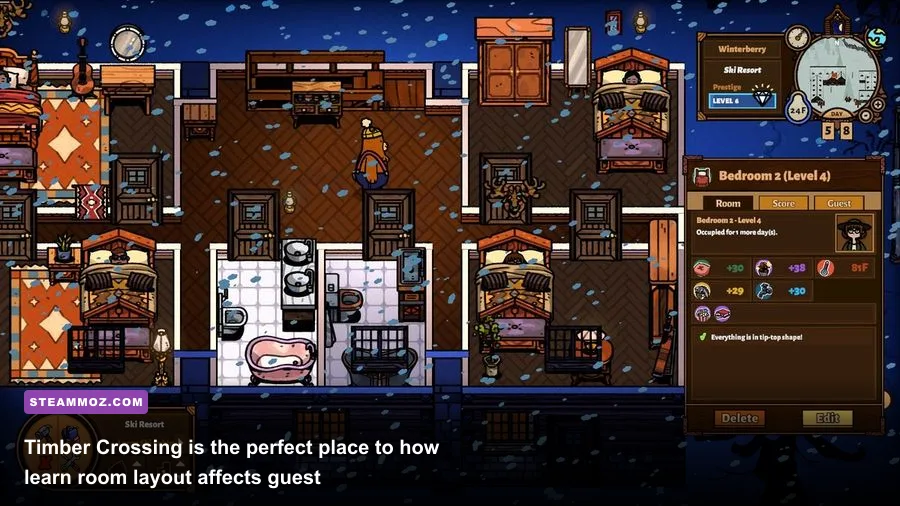
Timber Crossing is your first real test of hotel management, and it quietly teaches the most important lesson in the game: more rooms don't automatically mean more money. Hank begins with a modest property and a limited selection of blueprints. Resist the urge to fill every empty patch immediately. A larger motel creates more demand for bathrooms, entertainment, food, cleaning, and walking space.
Build one dependable bedroom first, then add the basic facilities needed to support it. A guest who has a comfortable bed but no nearby bathroom will punish your rating, while a beautiful dining room is wasted if your kitchen can't keep up. Once the first property is stable, you can use it as a safe source of income while exploring the surrounding map and completing quests.
Timber Crossing is also where you should learn the difference between unlocking an item and being ready to build it. Characters such as Barbara and other quest-givers open up new blueprints, but the blueprint itself doesn't guarantee that you have enough planks, fabric, food, or mechanical parts. Keep a reserve instead of immediately converting every resource into furniture.

🎮 Bear and Breakfast
Looking to experience this game? Grab your digital key directly on our store for $6.99.
View on Steammoz Store →2. Build around guest needs before decoration
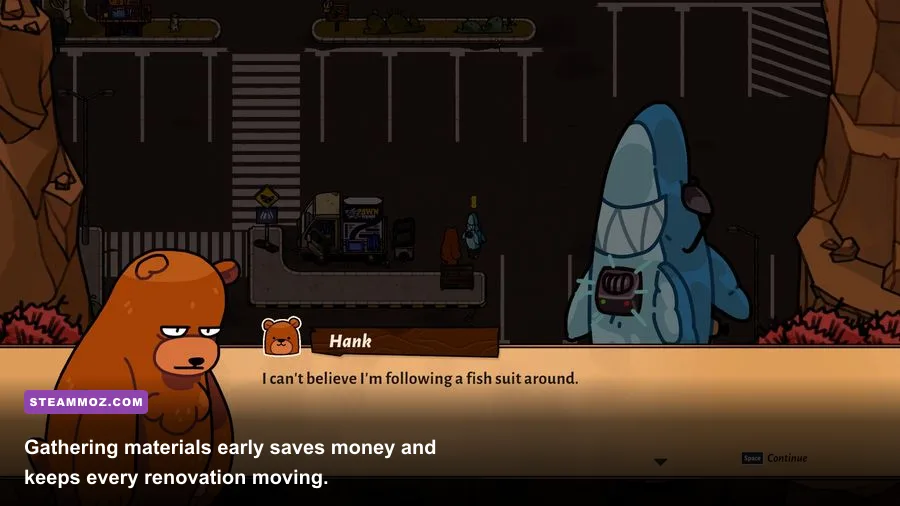
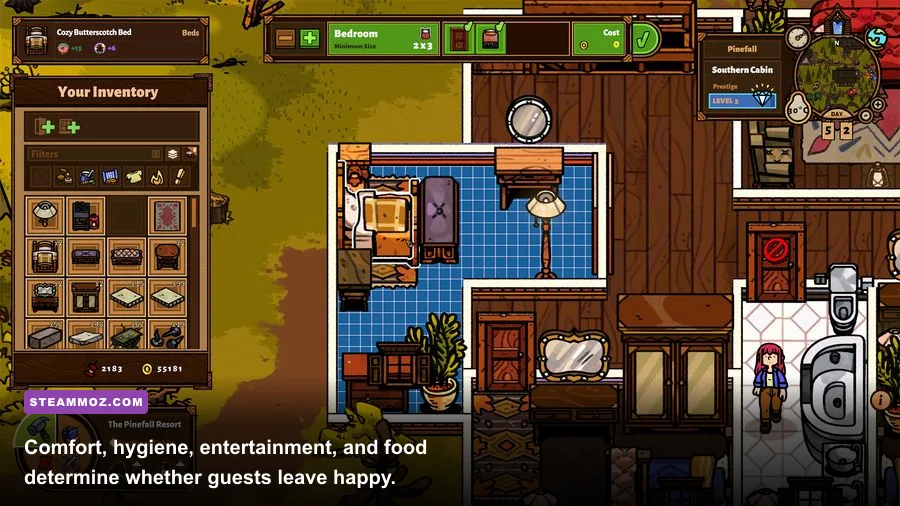
Guest satisfaction is driven by practical needs before visual style. Bedrooms need enough comfort, while bathrooms handle hygiene and dining spaces support food. Entertainment rooms improve the guest experience, but they should come after the core loop works. If your motel has gorgeous wallpaper and no reliable bathroom access, the rating screen will make that priority painfully clear.
Use a simple room hierarchy during the opening hours:
- Bedroom: the foundation of every booking. Improve comfort with beds and useful furniture before adding expensive decorative pieces.
- Bathroom: essential as soon as you accept guests. Keep it close to bedrooms so the property feels efficient rather than sprawling.
- Dining room and kitchen: add these when your guest requirements and available recipes justify them. Food is powerful, but it also creates an ongoing supply burden.
- Entertainment: valuable for improving ratings and satisfying more demanding visitors, but rarely the first upgrade you need.
The game doesn't demand one perfect floor plan, yet compact layouts are much easier to maintain. Put connected facilities near the rooms they serve, leave clear walking routes, and don't build a giant empty lobby just because the property has space. You can always demolish and rearrange later, but wasted early materials slow every other upgrade.
| Guest Need | Primary Facility | Early Priority | Best Upgrade Approach |
|---|---|---|---|
| Comfort | Bedroom | Highest | Improve beds and useful furniture before luxury decoration |
| Hygiene | Bathroom | Highest | Place bathrooms close to guest rooms and avoid unnecessary walking |
| Food | Kitchen and dining room | Medium | Expand only when recipes and supplies can support demand |
| Entertainment | Entertainment room | Medium to low | Add after the basic comfort and hygiene loop is reliable |
| Decoration | Furniture and decor | Situational | Use affordable pieces to raise the atmosphere without draining rare items |
3. Save rare materials and shop with a plan
Resource management is where many new players accidentally sabotage their progress. Bear and Breakfast mixes common construction supplies with rarer components, and the latter are much harder to replace. Wood, stone, trash, fabric, metal, and other materials appear through gathering, quests, recycling, and merchants. Pick up common materials whenever you're nearby, but don't assume every shiny item should be spent immediately.
Before starting a renovation, check the full recipe and identify the bottleneck. If a new facility requires a rare machine part, constructing three decorative tables first is a bad trade. The same rule applies to crafting: turn materials into what your current property needs, not whatever blueprint happens to be available.
Keep a running mental list of three resource categories: construction stock for rooms and facilities, operational stock for food and day-to-day production, and progression stock for quests or major unlocks. That separation prevents the classic disaster where you finish a beautiful room and discover you can't afford the kitchen upgrade that makes it useful.
Search the environment systematically. Clear one area, collect everything, then move to the next instead of zigzagging across the map. Return to places after quests or story progress, because new objects and interactions can appear. If you enjoy optimization-heavy games, the same “farm before you spend” mentality also works well in Steamoz's Dungeons 4 farming guide, although Bear and Breakfast is much less combat-focused.
4. Learn the value of travel routes and storage
Hank's movement time is a hidden operating cost. As the story moves beyond Timber Crossing into A24, Whitestone Bay, Pinefall, and eventually Winterberry, you may find yourself constantly returning to an older property for materials, quests, or unfinished errands. That travel isn't merely inconvenient; it breaks your building rhythm and makes every expansion feel more expensive.
Use storage intelligently. Keep construction supplies grouped together, hold food ingredients near the kitchen when possible, and avoid filling every container with low-value clutter. A clean inventory makes it obvious whether you can accept a renovation job now or need another gathering run first.
Don't rush to open every property the moment the story allows it. A new location is another business to maintain, and its facilities often require new blueprints and materials. Finish the important work at your current motel first: stabilize guest satisfaction, unlock useful recipes, and gather enough supplies to build the next location's essential rooms immediately.
The map's characters are part of this logistics system. Keep talking to people such as Fin, Gus, Julia, and other regional residents whenever quests become available. Their requests often lead to blueprints, resources, or progress that cannot be replaced by simply grinding the same patch of forest. For broader resource-planning inspiration, Steamoz's Banners of Ruin farming guide covers a similar principle: route your effort toward the next meaningful upgrade.
5. Don't overbuild kitchens and food production
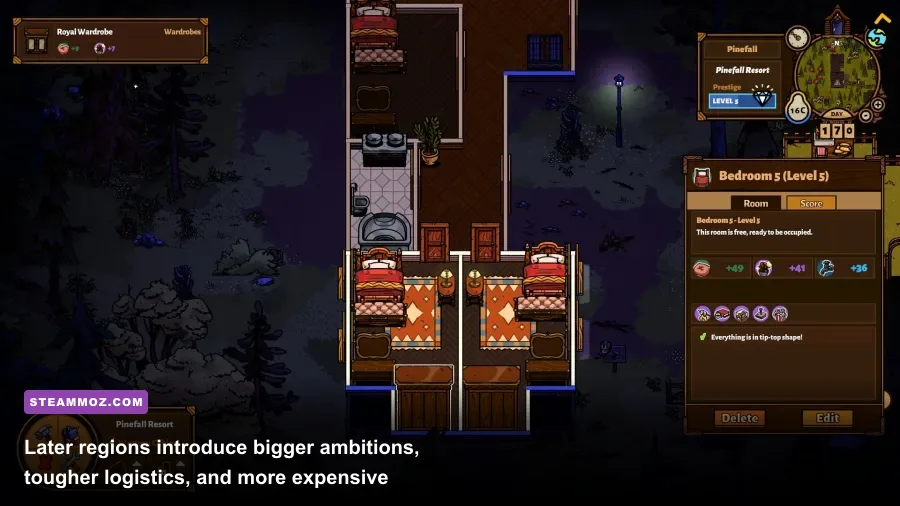
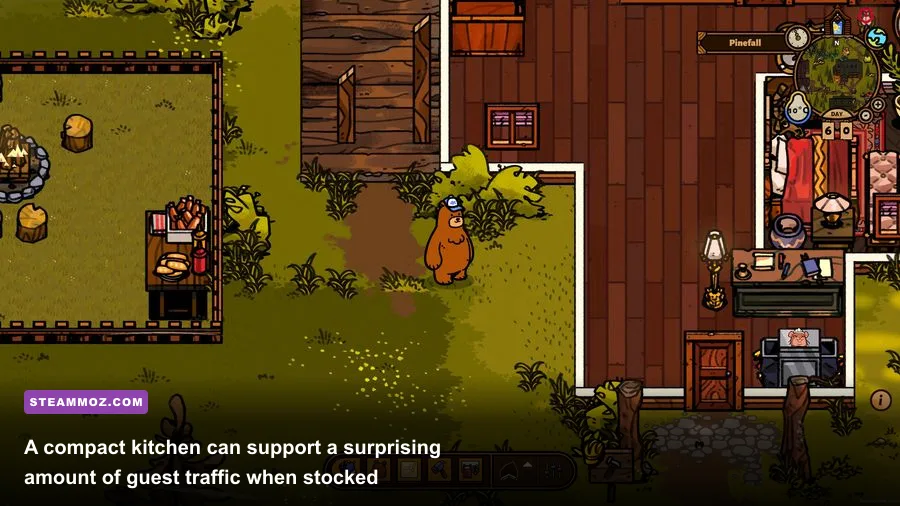
Food is one of Bear and Breakfast's most tempting traps. A dining room makes the motel feel complete, and new recipes are fun to unlock, but every additional guest increases pressure on your kitchen and ingredient supply. If the property is small, a simple menu and a compact dining area are better than a sprawling restaurant you can't stock.
Build food production around actual demand. Watch which recipes are available, which ingredients you can gather consistently, and how often guests consume meals. If a recipe requires a rare ingredient that you only find in another region, it may be a poor everyday choice even if it offers a stronger satisfaction boost. Reliable food beats ambitious food.
Keep your kitchen workflow close to the dining room and avoid making staff or facilities cross the entire property. The game is forgiving about aesthetics, but not about wasted layout. A short route means fewer operational headaches and makes it easier to notice when supplies are running low.
Food also shouldn't replace room quality. New players sometimes chase a better menu while their bedrooms remain underfurnished. Fix the room that guests use constantly before optimizing the service they use periodically. This is the same reason a practical bathroom upgrade often beats a flashy entertainment item.
6. Use decoration as a targeted rating tool
Decoration matters, but it works best when you use it to solve a specific rating problem. Don't scatter random furniture across every room. Instead, inspect what the property lacks and spend on items that raise the relevant atmosphere, comfort, or facility value.
Theme consistency can help a room feel intentional, but it shouldn't override function. A cheap chair that completes a bedroom's comfort profile is more useful than an expensive ornament that only looks good. Save premium decorations for properties you expect to keep operating for a long time, especially later resorts where guest expectations rise.
Room size is another common mistake. Huge bedrooms can look impressive, but an oversized room demands more furniture to avoid feeling empty and can make every guest route longer. Compact, fully furnished spaces are easier to upgrade and usually give you more value per material spent.
When renovating, make changes in batches. Upgrade all bedrooms, then reassess the property. Improve bathrooms next, then review the guest report. This gives you a clear before-and-after comparison. If you change ten different variables at once, you won't know which purchase actually improved the motel.
7. Unlock blueprints through characters and quests
Progress in Bear and Breakfast isn't just about earning money. Key blueprints and systems arrive through story progression and conversations, so explore each region instead of treating quests as optional flavor. Hank's relationships with characters such as Barbara, Beanie, Anton, Fin, and others are directly tied to the tools available to his businesses.
Read quest objectives carefully before spending resources. Some tasks ask you to build a specific facility, while others require finding an item, repairing something, or delivering supplies. Completing the wrong construction first can leave you short of materials for the quest that unlocks your next useful system.
Keep an eye on the world after major story moments. A path that looked decorative may become interactive, and previously visited areas can gain new objectives. Backtracking feels slow, but it often pays better than repeatedly gathering random low-value materials.
For players who like checking unlock paths before committing, the official Gummy Cat website is a useful starting point for developer information, while the Armor Games Studios site covers the publisher's broader catalog. Use external references to clarify a stuck objective, not to spoil every discovery; the characters and their oddball requests are a big part of the game's charm.
8. Expand only when your current motel is stable
The moment you can open a second property is not always the moment you should. Expansion multiplies your responsibilities: more rooms to furnish, more facilities to maintain, more guest requirements to satisfy, and more reasons to haul materials between regions. Before moving on, make sure the current motel earns consistently and doesn't depend on emergency gathering every few minutes.
A stable property should have a clear room purpose, functioning bathrooms, manageable food production, and enough decoration to keep guests from dragging down the rating. You don't need perfection, but you should know exactly what the next upgrade is and what it costs.
Later areas change the pace. A24 introduces a different atmosphere and new management possibilities, Whitestone Bay pushes you toward a more developed resort model, Pinefall adds another substantial project, and Winterberry brings its own specialized demands. Treat each region as a fresh operational puzzle rather than copying the same layout blindly.
| Expansion Stage | What to Prioritize | What to Delay | Warning Sign |
|---|---|---|---|
| Timber Crossing | Bedrooms, bathrooms, basic gathering | Large entertainment wings | Guests lack hygiene or comfort |
| A24 | Blueprint progression and compact support rooms | Luxury decoration everywhere | Constant backtracking for supplies |
| Whitestone Bay | Reliable food and stronger guest services | Oversized empty rooms | Kitchen demand exceeds ingredients |
| Pinefall | Efficient resort layout and storage planning | Unfocused renovations | Every new room needs another emergency upgrade |
| Winterberry | Specialized facilities and long-term optimization | Spending rare materials casually | Progression stock is gone before quests finish |
9. Take advantage of the game's forgiving redesign tools
Don't treat your first layout as permanent. Bear and Breakfast expects you to learn by rebuilding. Once you understand guest flow, you can move bedrooms closer to bathrooms, reduce oversized common areas, and turn awkward corners into useful facilities. Renovation costs materials, so redesign with a purpose, but don't cling to a bad floor plan just because you already placed it.
Make a copy of your successful layout mentally rather than physically. The best arrangement for Timber Crossing may not fit Pinefall, where the available area, guest expectations, and blueprint selection change. Build around each property's shape and the facilities you can actually support.
Save major redesigns for moments when you already have a resource buffer. If you demolish half a motel immediately after unlocking a new region, you can strand yourself without enough furniture to reopen the essential rooms. Upgrade one section at a time, verify that the property still functions, and only then tackle the next section.
10. Play for steady profit, not a perfect rating
The final tip is the one that keeps the whole game enjoyable: don't chase a flawless rating from the beginning. Guest satisfaction is useful feedback, but a slightly imperfect motel with healthy cash flow is better than a beautiful property that consumes every material you own.
Use each guest cycle as a report. If hygiene is low, improve bathroom access. If comfort is weak, upgrade bedrooms. If food is failing, simplify the menu or expand production. If entertainment is the only weak category, add it once the essentials are paid for. Solve the biggest problem first instead of buying a little bit of everything.
Bear and Breakfast has no traditional combat build to master, and that is its strength. The challenge is reading systems, forecasting demand, and making a cozy business feel efficient. For a similar look at learning an indie game's priorities through careful upgrades, check Steamoz's Excubitors starter build guide. The genre is different, but the lesson is familiar: a focused early plan makes every later decision easier.
Keep Timber Crossing compact, gather before spending, follow the story characters, and expand only when your current motel can carry itself. Do that, and Hank's journey from a nervous bear with a rundown property to a capable resort owner becomes far smoother—and a lot more satisfying.
For official updates and platform information, check the official Steam listing and follow the developer through Gummy Cat's official social channel. The best Bear and Breakfast strategy still comes from experimenting, but a little preparation means your experiments won't bankrupt the bear.