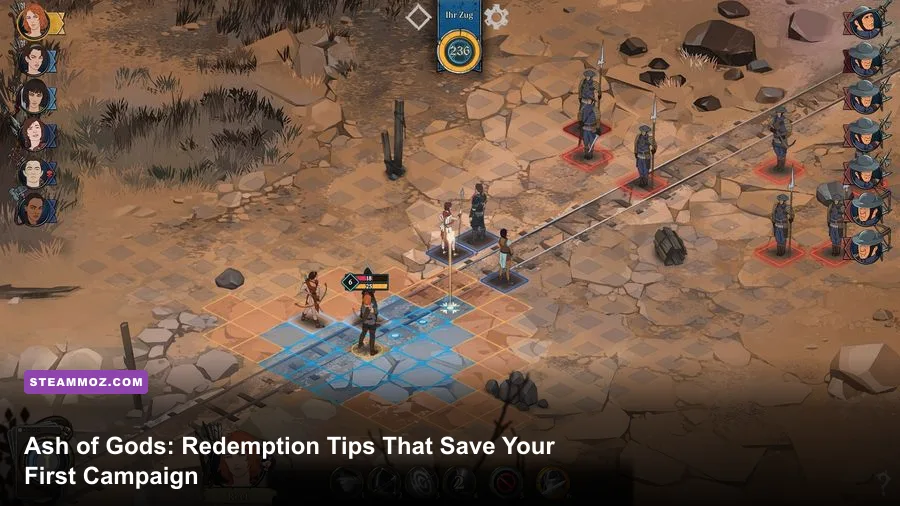
Surviving your first Ash of Gods: Redemption campaign comes down to three habits: protect armor before health, spend cards with a plan, and treat every map decision as permanent pressure on your party. Thorn, Hopper, and Lo Pheng each solve different problems, and the campaign becomes dramatically easier once you stop chasing kills and start controlling lanes, morale, fatigue, and retreat routes.
This is not a traditional RPG where grinding eventually erases bad decisions. Ash of Gods combines a branching narrative with lane-based tactical battles, a card system, persistent consequences, and characters who can be wounded or lost. The advice below is aimed at a first playthrough on the standard experience, where learning the systems matters far more than finding a supposedly perfect build.
Start With the Combat Rules That Actually Matter
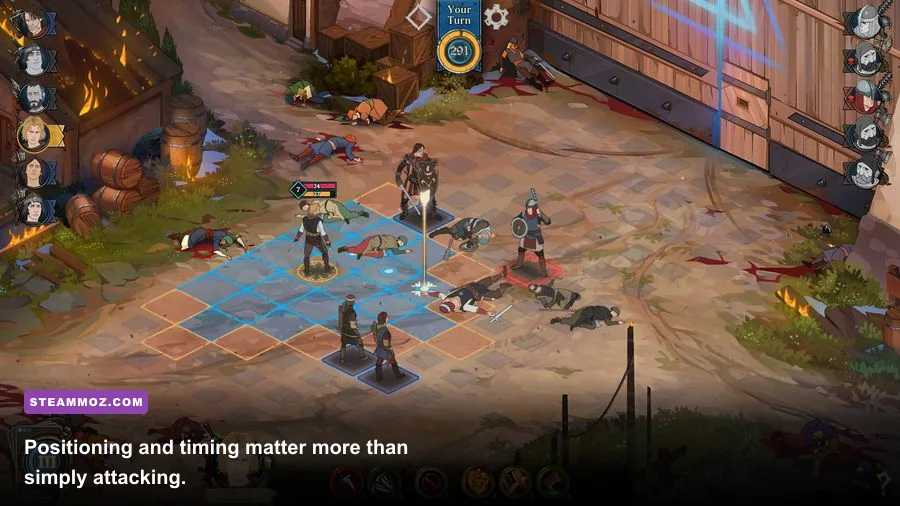
1. Break armor before chasing health damage
Every unit effectively has two defensive layers: armor and health. Armor absorbs incoming punishment first, while health damage is the part that threatens a unit's survival. That makes an armored enemy a poor target for a low-damage attack unless you're deliberately setting up a follow-up strike.
Focus attacks on one target whenever possible. Several small hits against separate enemies often leave you facing the same number of functioning opponents next turn. Concentrated damage, by contrast, removes an attack, a body occupying a lane, and often a dangerous ability all at once. Use your weakest attacks to finish already-damaged armor rather than opening new targets.
Pay attention to attack order. If Thorn can strip the remaining armor and Hopper can immediately land health damage, that sequence is much stronger than letting Hopper hit first and waste part of the attack against armor. The combat preview is there for a reason; check it before committing.
2. Read the lane, not just the enemy portrait
Ash of Gods is built around a narrow battlefield where adjacency and lane control decide whether a turn is good or disastrous. A unit that looks harmless can become a problem if it reaches your exposed side, while a heavily armored enemy may be safely delayed if you can deny its approach.
Keep your most vulnerable character from being surrounded. If an enemy is about to create a two-on-one exchange, spending a turn repositioning is often better than squeezing out one extra point of damage. Leave yourself a usable retreat square whenever you can. A frontline unit with nowhere to fall back is already half-defeated.
3. Use morale as a tempo weapon
Morale is easy to overlook because it doesn't look as tangible as armor or health, but it changes how efficiently your force trades damage. Winning exchanges, protecting allies, and avoiding needless losses helps preserve momentum; taking repeated punishment without answering back can make the next fight much harder.
Don't automatically attack the strongest enemy. Sometimes the correct move is to remove a weak unit, deny a flank, or preserve a damaged ally so the battle stays under control. Your goal is not maximum damage per turn. Your goal is to keep the enemy from producing a better turn than you can answer.
| Battle Situation | Best First Action | Why It Works |
|---|---|---|
| Enemy has full armor | Strip armor with a reliable attack | Sets up meaningful health damage next turn |
| One ally is surrounded | Reposition or remove the weakest adjacent threat | Prevents a losing two-on-one exchange |
| Several enemies are wounded | Focus one target to finish it | Removes an entire enemy activation |
| Your frontline is exposed | Defend or fall back | Preserves formation and future options |

🎮 Ash of Gods: Redemption
Looking to experience this game? Grab your digital key directly on our store for $4.99.
View on Steammoz Store →Build Your Party Around Jobs, Not Favorites
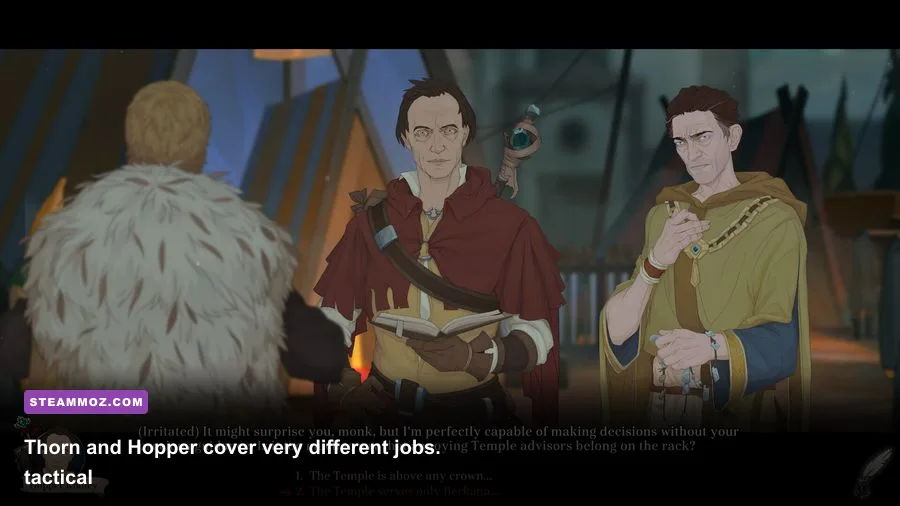
4. Give Thorn the reliable frontline work
Thorn is the campaign's practical anchor. He can absorb pressure, occupy dangerous lanes, and create the time needed for your other characters to operate. That doesn't mean throwing him into every enemy immediately. His value comes from surviving contact while the rest of the party creates a favorable trade.
Prioritize equipment and cards that improve consistency over flashy single-use damage. Thorn should be the character you can trust to hold a lane when your opening hand is awkward. If he is already carrying several wounded enemies, don't spend his turn chasing a target that can be finished by someone else. A living anchor is more valuable than a dramatic kill.
5. Keep Hopper out of fair fights
Hopper is at her best when she exploits openings rather than trading blows with armored frontliners. Use her mobility and damage potential to punish exposed units, finish targets whose armor has already been removed, or reach an enemy support piece before it gets another useful activation.
The common beginner mistake is treating Hopper as a second tank. She isn't. If an attack leaves her in range of two enemy responses, the damage probably wasn't worth it. Let Thorn draw attention, then use Hopper when the board has a clear seam.
6. Make Lo Pheng your stabilizer
Lo Pheng rewards patient play. He is particularly useful when a battle is beginning to collapse: protecting a damaged lane, buying time, or turning a defensive turn into a safer counterattack. Don't measure his value only by the largest number on an attack preview.
In a first campaign, a defensive action that preserves Lo Pheng's armor can be better than a low-percentage attempt to finish an enemy. His job is to make your formation less fragile. When Thorn is forced to commit and Hopper is waiting for an opening, Lo Pheng keeps the middle from falling apart.
| Character | Primary Role | Best Use | Common Mistake |
|---|---|---|---|
| Thorn | Frontline anchor | Hold a lane and create safe trades | Overextending for unnecessary kills |
| Hopper | Mobile finisher | Punish exposed or armor-broken targets | Trading directly with heavy units |
| Lo Pheng | Stabilizer | Protect formation and recover tempo | Ignoring defense for small damage |
Make the Card System Work for You
7. Don't empty your hand just because you can
Cards are not merely extra attacks. They are the system that lets you convert a good position into a winning exchange, and wasting them early can make the final turns miserable. Before playing a card, ask what problem it solves: armor removal, movement, protection, finishing damage, or tempo.
Hold a flexible card when the board is stable. That reserve can answer an enemy advance or rescue a character after an unlucky exchange. Conversely, if a card creates a guaranteed kill and removes the opponent's next activation, spending it is usually correct. Saving everything is just another form of waste.
8. Build for consistency instead of spectacle
A first-time deck should have dependable ways to do the basics: damage armor, finish weakened units, reposition a hero, and protect a threatened character. A deck packed with expensive effects may look powerful but can leave you unable to act when the opening hand doesn't cooperate.
Think in sequences rather than isolated card strength. A card that strips armor becomes much better when you regularly have a follow-up attack. A movement effect becomes valuable when it lets Hopper escape a counterattack or lets Thorn block an approach. If a card only looks good in a perfect scenario, it probably doesn't belong in your early campaign plan.
9. Learn the enemy telegraph before spending your answer
Enemy formations often reveal their danger through positioning and intent. A unit moving toward your weakest lane is more urgent than a stronger enemy stuck behind its own line. Watch the attack preview, identify which ally is actually threatened, and reserve your defensive card for that moment.
This is where restarting after a disastrous first battle can teach you more than blindly pushing forward. Review which enemy moved first, which lane collapsed, and whether your card was spent before the threat became real. Ash of Gods rewards pattern recognition more than reflexes.
Survive the Campaign Map and Its Consequences
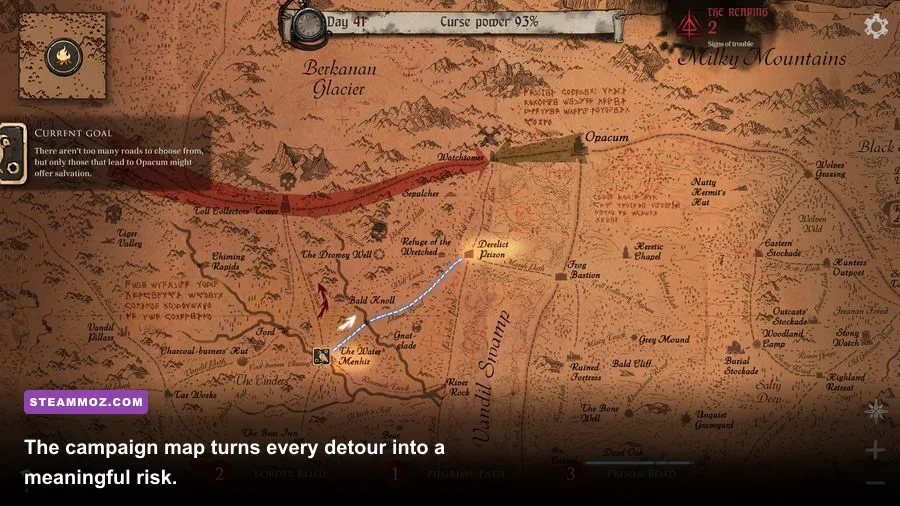
10. Treat story choices as resources
The campaign's narrative decisions are not decoration. Travel choices, conversations, and event outcomes can affect supplies, relationships, recruitment, and who reaches the next chapter in fighting condition. There is rarely a universally correct answer, so choose according to the party state you actually have.
If your team is wounded, a safer route can be worth more than a potentially lucrative detour. If your deck lacks reliable damage, recruiting or protecting a useful character may matter more than taking a risky reward. Keep multiple saves before major decisions if you want to explore outcomes, but don't assume every failure can be repaired later.
11. Protect supplies and avoid vanity battles
Resources become more valuable when the party is already carrying injuries. A fight that gives you little reward but costs health, cards, or a key character can damage the next three encounters. Before committing, look at the likely route afterward. Winning one battle badly can be strategically worse than taking a less glamorous option.
This same principle applies to injured heroes. A character at low health is not automatically useless, but forcing them into every battle increases the chance that a small mistake becomes a permanent campaign problem. Rotate responsibilities when the story allows it, and don't confuse familiarity with necessity.
12. Save before irreversible decisions, then accept consequences
Ash of Gods is designed around consequence, and that tension is part of its identity. Save before major branch points if you want to understand the narrative, but avoid reloading every time a battle goes slightly wrong. Some of the best lessons come from adapting to a wounded roster, a missed reward, or an unexpected loss.
For a first run, prioritize learning over perfect outcomes. A campaign where Thorn, Hopper, or Lo Pheng suffers a setback can teach you more about the game's pressure curve than a heavily savescummed victory. On a second run, those lessons become route knowledge.
| Campaign Pressure | Safer Priority | Risky Alternative | When Risk Is Worth It |
|---|---|---|---|
| Party is wounded | Shorter, safer route | Optional combat detour | Only when the reward fixes a major weakness |
| Deck lacks finishers | Seek reliable damage options | Take a defensive reward | When your frontline is already stable |
| Key hero is threatened | Protect or reroute the party | Chase a narrative reward | When the story consequence is your priority |
| Resources are healthy | Explore for long-term value | Ignore optional content | When the next chapter is well supplied |
A First-Campaign Routine That Works
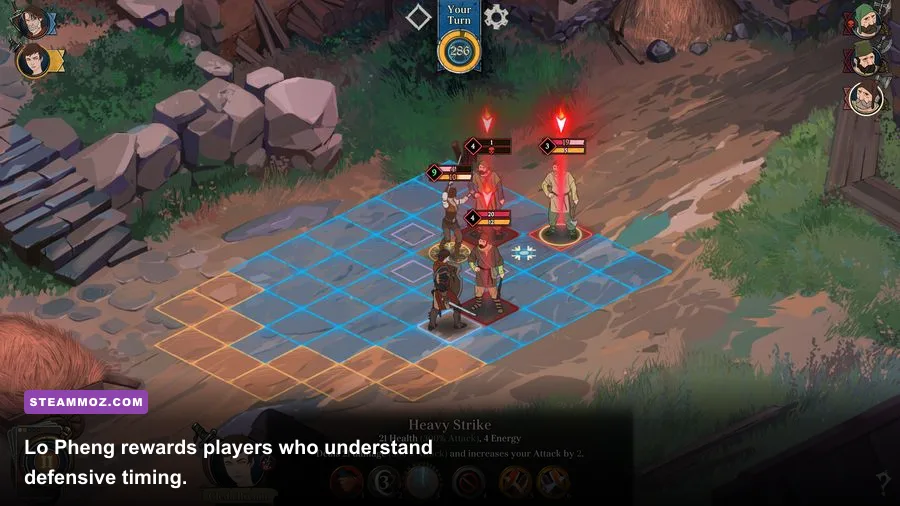
Before each battle, identify the enemy's most dangerous lane, decide which hero will take first contact, and reserve one answer for a surprise movement. During the opening turns, break armor and establish formation instead of spending every card for immediate damage. Midway through the fight, remove one enemy completely, then reassess the board rather than following your original plan.
After combat, inspect who is injured and what the next route demands. Don't treat every reward as an upgrade; choose the option that improves the party's weakest function. Thorn should keep the line dependable, Hopper should have safe finishing opportunities, and Lo Pheng should prevent your formation from unraveling.
For reference, check the official Steam page for Ash of Gods: Redemption and the AurumDust developer site for current game information. If you enjoy consequence-heavy tactical RPGs, our guides to saving your first town in Din's Curse and secret locations in Disciples: Liberation offer similarly practical advice. You can also compare its deliberate stealth-and-positioning mindset with our Desperados III review or find more progression-focused RPG advice in our Dungeon Siege retrospective.
The winning mindset is simple: make every turn improve the next one. Preserve armor, focus targets, hold a useful card, and choose campaign routes that match your party's condition. Once you stop treating Ash of Gods as a damage race, its harsh decisions become readable—and Thorn's long road becomes much easier to survive.