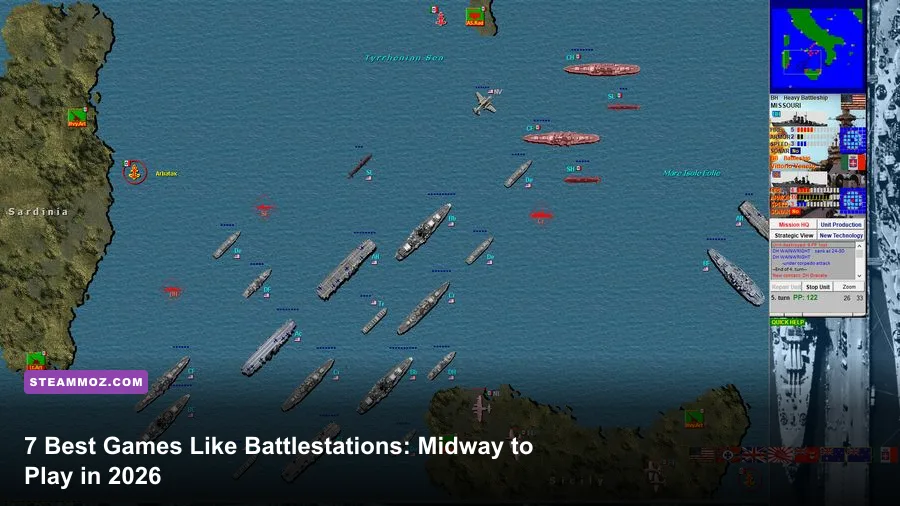
If you miss Battlestations: Midway's blend of ship command, fighter launches, torpedo runs, and hands-on action, start with Battlestations: Pacific, then move to War on the Sea for a far deeper Pacific campaign. The other five picks cover turn-based gunnery, submarine stalking, custom warship design, and carrier-command strategy, giving you a strong 2026 shortlist instead of seven near-identical naval games.
What made Midway special was its constant change of perspective. You could steer the USS North Carolina, jump into an SBD Dauntless, order a torpedo attack, or switch back to the tactical map before the enemy carrier group disappeared into the weather. Few games copy that exact rhythm, so this list ranks alternatives by how well they preserve its most important ingredients: accessible controls, combined-arms combat, historical atmosphere, and a satisfying sense of commanding an entire task force.
S-Tier picks for the closest Midway experience
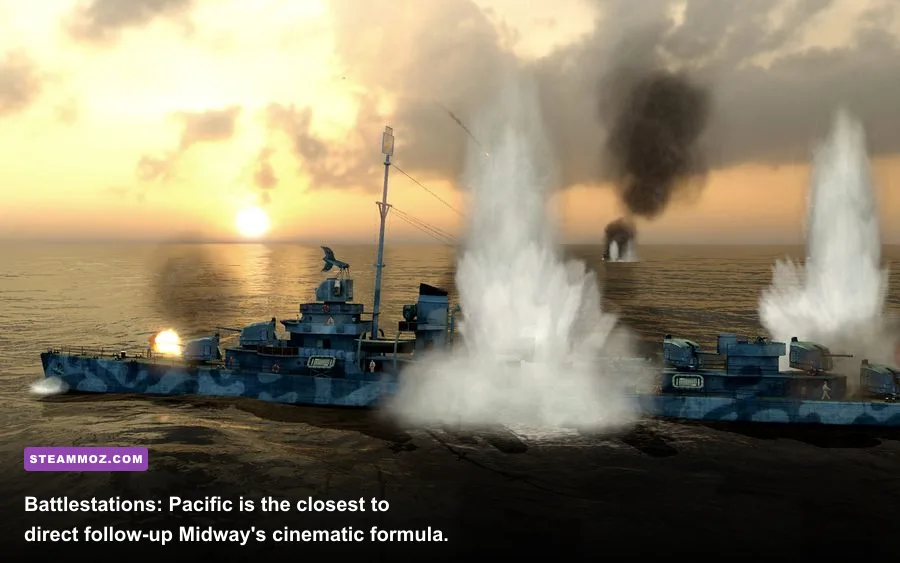
Battlestations: Pacific is the obvious first recommendation. It keeps the third-person ship and aircraft controls, the radial command system, and the ability to jump between units during a fight. Its two campaigns also widen the historical scope: the U.S. campaign follows the Pacific war from Pearl Harbor toward Okinawa, while the Japanese campaign lets you alter history through objectives such as attacking Midway successfully.
The handling is arcade-leaning rather than a strict simulation. A destroyer can turn quickly enough to dodge incoming torpedoes, aircraft have generous targeting assists, and the tactical map makes it easy to issue orders without pausing the action. That accessibility is exactly why it remains the best recommendation for Midway fans. It also includes more aircraft variety, including the F4F Wildcat, SBD Dauntless, TBF Avenger, A6M Zero, and D3A Val.
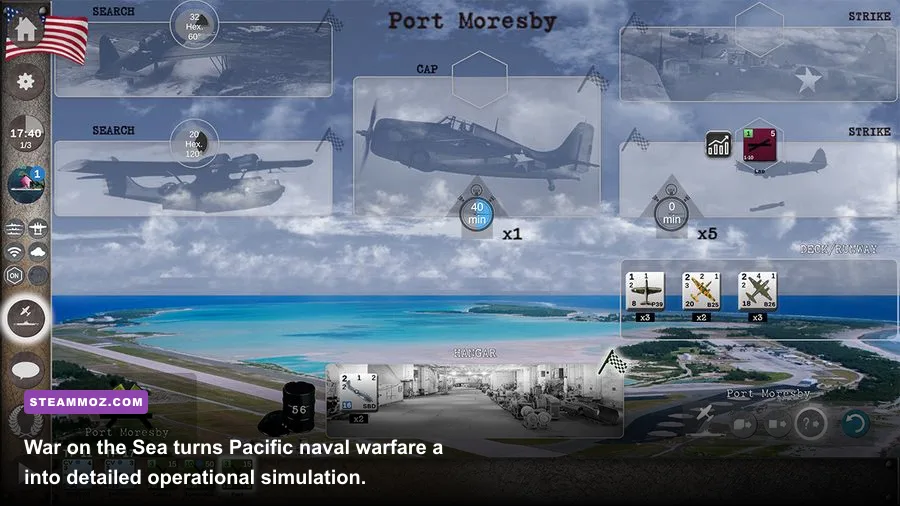
War on the Sea is the S-Tier choice if you want the same Pacific theater without the arcade handling. You command task forces around Guadalcanal, assign search aircraft, manage fuel and ammunition, and fight battles in real time. Radar contacts, scouting arcs, visibility, torpedo spreads, and formation discipline matter far more than reflexes. A cruiser hidden by rain squalls can survive a fight that would be an easy target in Pacific.
| Game | Midway DNA | Difficulty | Best For |
|---|---|---|---|
| Battlestations: Pacific | Direct control of ships and aircraft | Moderate | Campaign action and quick unit switching |
| War on the Sea | Pacific task forces and carrier warfare | High | Operational command and realistic scouting |
| Atlantic Fleet | Ship positioning and naval gunnery | Moderate | Measured, turn-based battles |
Both games are available through the Steam store, though older titles can need community fixes or compatibility tweaks on modern systems. For a broader PC troubleshooting reference, our guide to ELEX crash and FPS fixes explains the same practical approach: verify files, disable overlays, and test fullscreen modes before blaming the hardware.

🎮 Battlestations: Midway
Looking to experience this game? Grab your digital key directly on our store for $0.97.
View on Steammoz Store →A-Tier naval games with a different tactical hook
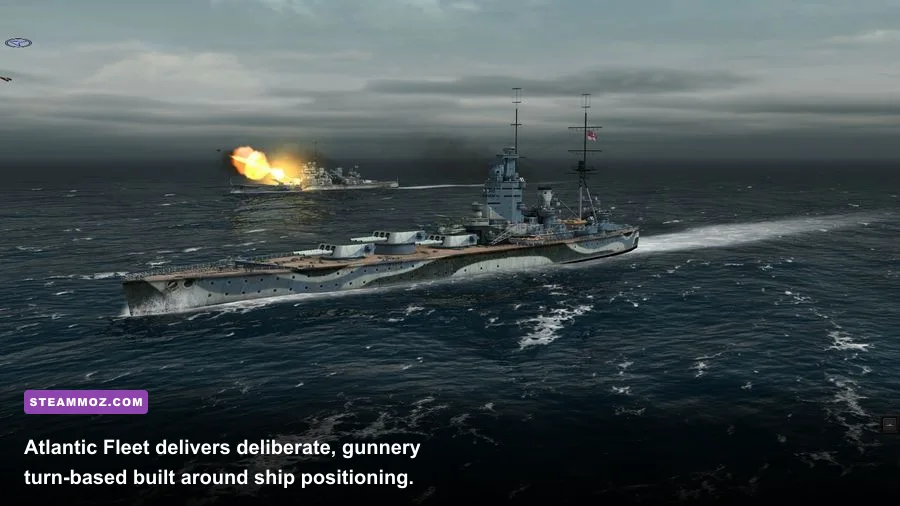
Atlantic Fleet is a turn-based naval game set across the Battle of the Atlantic and the Pacific. It lacks Midway's direct piloting, but its gunnery model is wonderfully tactile. You choose ammunition, account for range and bearing, adjust the elevation of individual turrets, and watch shells travel across the water. Armor penetration and hit location determine whether a volley destroys a gun battery, starts a fire, or floods a compartment.
The crucial skill is not simply aiming at the hull. Target the bridge to reduce command effectiveness, hit turrets to remove return fire, or damage propulsion when an enemy cruiser is trying to escape. Torpedoes are powerful but require patience because their approach angle and arming distance matter. Atlantic Fleet is slower than Midway, but every successful salvo feels earned.
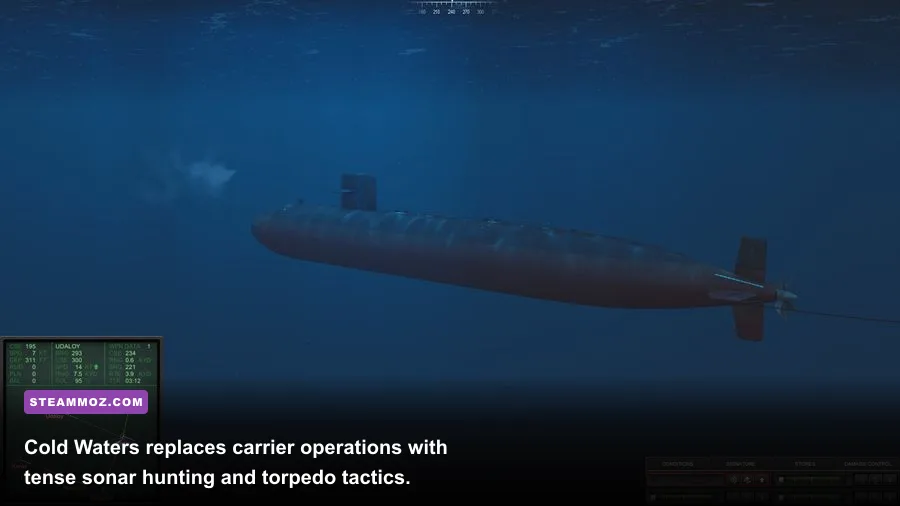
Cold Waters moves the action beneath the waves and uses the 1980s rather than World War II, but its cat-and-mouse tension feels familiar. You command a Los Angeles-class submarine and hunt Soviet surface groups using passive sonar, towed arrays, wire-guided torpedoes, and heavyweight Mk 48 torpedoes. The game rewards information control: stay quiet, classify contacts, and avoid revealing your position with unnecessary active sonar.
Its best encounters are built around enemy behavior. A Soviet helicopter can deploy sonobuoys, a destroyer can prosecute your last known position, and a torpedo launch forces you to decide between evasive maneuvers and a risky counterattack. Use the broadband waterfall to identify machinery noise, fire from a favorable aspect, then change depth and bearing before the escort triangulates you.
Ultimate Admiral: Dreadnoughts is a different kind of naval fantasy. Instead of jumping into a cockpit, you design ships from the keel up and take them into fleet battles spanning the late nineteenth and early twentieth centuries. Hull length, displacement, armor belt thickness, turret layout, funnel placement, engine power, and ammunition types all affect performance. A battleship that looks impressive in the designer can become a sluggish fuel-hungry liability in a campaign.
Build around a role rather than maximum armor. A fast cruiser benefits from 6-inch guns, a high-speed engine, and enough belt protection to survive destroyer fire. A battleship needs a sensible citadel, reliable secondary batteries, and fire-control equipment that supports its intended engagement range. The campaign's technology progression makes each refit meaningful, although the interface is less welcoming than Midway's pick-up-and-play controls.
| Game | Core mechanic | Progression strength | Main drawback |
|---|---|---|---|
| Atlantic Fleet | Turn-based gunnery and armor damage | Short campaigns and fleet control | No direct unit piloting |
| Cold Waters | Sonar, stealth, and torpedo attacks | Excellent tactical mastery | Cold War setting, not WWII |
| Ultimate Admiral: Dreadnoughts | Ship construction and fleet battles | Deep research and refitting | Complex menus and uneven AI |
B-Tier picks that still deserve your time
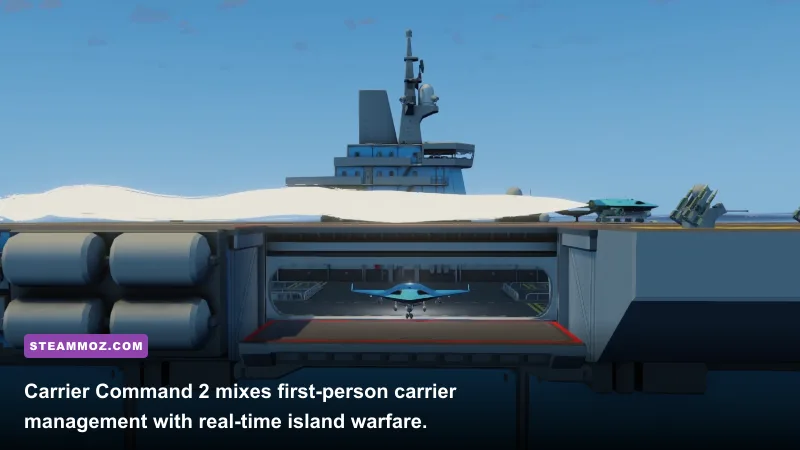
Carrier Command 2 earns its place because it understands the fantasy of being the person responsible for an entire mobile base. You operate a carrier directly from the bridge, launch aircraft and drones, assign vehicles to capture islands, and manage production while the enemy attacks your supply chain. The game supports first-person control, but the real challenge is keeping your carrier safe while extending your network of captured bases.
Its units are fictional and its warfare is modernized, so don't expect Midway's historical aircraft roster. The closest shared feeling is the workload. Launch a Walrus drone to scout, use a Manta to strike an enemy installation, then switch to a W.A.S.P. fighter when hostile aircraft approach. Fuel, ammunition, repair capacity, and bandwidth prevent you from solving every problem with constant air strikes.
Victory at Sea: Pacific offers a grand-strategy view of the Pacific war. You move task forces across a real-time campaign map, search for convoys, hunt submarines, raid ports, and fight battles with destroyers, cruisers, battleships, and carriers. Battles can be entered directly, but the operational layer is the reason to play: a damaged carrier group may need to withdraw, while a submarine wolfpack can quietly starve an island garrison.
It is less precise than War on the Sea and less immediate than Battlestations: Pacific. Still, it works well for players who enjoy seeing a campaign evolve over many hours. Escort duty matters, air reconnaissance matters, and losing a veteran ship can create a hole in your next operation rather than simply resetting after a mission.
For another fleet-focused recommendation, check our Everspace weapon upgrade guide. It covers a different genre, but the same principle applies here: spend resources on the tools that support your preferred combat loop rather than automatically buying the biggest damage number.
How these games compare on controls and realism
Midway sits between an arcade action game and a simulation. You can learn its controls in minutes, but positioning a battleship, timing a torpedo salvo, or coordinating fighters still takes practice. The alternatives split those ingredients apart. Pacific preserves the camera switching; War on the Sea expands the command layer; Atlantic Fleet focuses on gunnery; Cold Waters turns stealth into the entire game; and Ultimate Admiral makes preparation the main event.
| Game | Control style | Typical battle length | Realism profile |
|---|---|---|---|
| Battlestations: Pacific | Direct action plus tactical orders | 15–35 minutes | Arcade-simulation hybrid |
| War on the Sea | Real-time task-force command | 30–120 minutes | Operational simulation |
| Atlantic Fleet | Turn-based unit control | 20–60 minutes | Ballistics-focused |
| Cold Waters | First-person submarine command | 20–90 minutes | Sonar and stealth simulation |
| Carrier Command 2 | First-person carrier operations | 30–180 minutes | Systems-management sandbox |
That distinction matters when choosing your first download. If your favorite Midway moments were dive-bombing a carrier and switching to a damaged destroyer, choose Pacific. If you loved the tactical map and wanted more consequences for poor scouting, choose War on the Sea. If you spent more time studying enemy angles than firing weapons, Atlantic Fleet or Ultimate Admiral will feel more rewarding.
Best starting builds and tactics for each game
In Battlestations: Pacific, keep fighters on combat air patrol before launching bombers. Use the F4F Wildcat to clear enemy aircraft, then send SBD Dauntless dive-bombers against carrier decks. The Dauntless's armor-piercing bombs are most useful from a steep dive; level approaches expose you to more anti-aircraft fire and reduce accuracy. With ships, launch torpedoes from two different bearings so the target cannot turn away from every spread.
In War on the Sea, scouting is your first weapon. Keep floatplanes searching ahead of the formation, move destroyers in a screen, and avoid putting every valuable cruiser in one obvious column. Use night and weather to close the distance, but remember that torpedoes need an escape route; firing from point-blank range can leave your own ship unable to dodge the return spread.
In Atlantic Fleet, fire at range until you understand the target's armor profile. Start with a ranging salvo, correct the elevation, then commit the main battery. Against destroyers, high-explosive shells are usually more useful than armor-piercing rounds because disabling guns and engines matters more than punching through a belt that may not exist.
In Cold Waters, never linger after firing. Launch a pair of Mk 48 torpedoes, turn away, reduce speed, and change depth before the escorts establish a firing solution. If you must use active sonar, treat it as a brief information burst, not a permanent radar substitute. Silence is often worth more than a second target.
In Ultimate Admiral: Dreadnoughts, test new designs in custom battles before committing them to a campaign. Watch accuracy, reload time, fuel consumption, and turning radius rather than judging by displacement alone. In Carrier Command 2, capture resource islands early, maintain a reserve of fuel and ammunition, and never send every drone away from the carrier at once. A carrier without reconnaissance is practically blind.
Which Battlestations-like game should you play in 2026?
Choose Battlestations: Pacific for the closest overall match, War on the Sea for the deepest Pacific command experience, and Atlantic Fleet for methodical battles that respect positioning and ballistics. Cold Waters is the specialist pick for submarine fans, while Ultimate Admiral: Dreadnoughts is ideal if designing ships sounds more exciting than piloting them.
Carrier Command 2 and Victory at Sea: Pacific are the best choices when the carrier or the campaign map matters more than historical authenticity. None recreates every part of Midway's formula, but that is also why the list works: each game takes one of its strengths and pushes it further. If you want a broader strategy-game detour afterward, our Dungeons 3 strategy tips are a useful reminder that good battlefield decisions start with controlling information and resources.
My 2026 play order is simple: replay Battlestations: Pacific for the spectacle, install War on the Sea when you want a campaign that punishes careless scouting, then try Cold Waters or Ultimate Admiral for a more demanding tactical challenge. That sequence preserves the immediate thrill of Midway while showing just how many different ways naval warfare can work in a strategy game.
For official information, see the Battlestations: Pacific Steam page, the War on the Sea Steam page, the Atlantic Fleet Steam listing, and the Cold Waters Steam page.