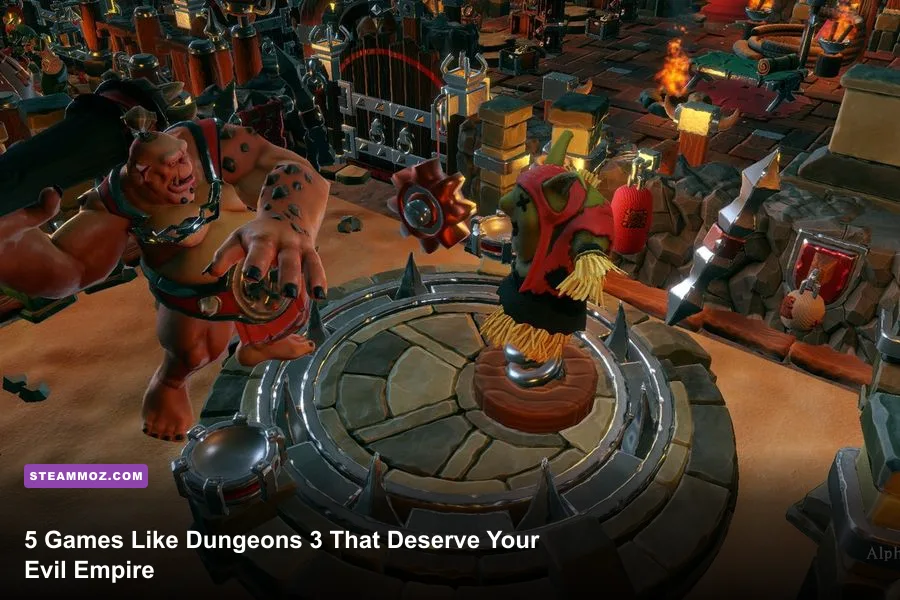
If you loved Dungeons 3: Evil of the Caribbean for its room-building, sarcastic campaign, and chaotic creature battles, start with Dungeons 4. It is the most direct modern follow-up, while War for the Overworld, Evil Genius 2, Dungeon Keeper 2, and Dungeons 2 each preserve a different piece of that evil-overlord fantasy.
The Caribbean expansion works because it doesn't merely add pirate costumes to the base game. Its campaign leans into treasure, ships, tropical scenery, and the familiar contrast between dungeon preparation and real-time surface combat. You still build around a Dungeon Heart, protect your economy with a Treasury, feed creatures through a Hatchery, and use rooms such as the Training Room, Library, Workshop, and Guard Room to turn a cramped cave into a lethal machine. The games below understand that rhythm: design the lair, manipulate resources, unlock stronger units, then watch heroic intruders regret coming inside.
The best alternatives ranked for 2026

These aren't interchangeable recommendations. Dungeons 4 wins for the closest overall experience, War for the Overworld wins for room-management depth, and Evil Genius 2 is the better pick if the base-building side matters more than direct combat. Dungeon Keeper 2 remains the historical master, although its age and setup requirements are impossible to ignore. Dungeons 2 is the budget-friendly choice for anyone who wants the same comic tone without a huge campaign commitment.
| Game | Best match for | Key systems | 2026 verdict |
|---|---|---|---|
| Dungeons 4 | Modern Dungeons 3 fans | Dungeon rooms, Horde units, overworld RTS | S-Tier |
| War for the Overworld | Classic Keeper-style management | Room efficiency, mana, traps, rituals | S-Tier |
| Evil Genius 2 | Long-form base construction | Minion jobs, heat, schemes, traps | A-Tier |
| Dungeon Keeper 2 | Original dungeon mastery | Possession, rooms, creature needs | A-Tier |
| Dungeons 2 | Shorter, lighter campaigns | Two-faction dungeon and surface RTS | B-Tier |

🎮 Dungeons 3: Evil of the Caribbean
Looking to experience this game? Grab your digital key directly on our store for $2.24.
View on Steammoz Store →1. Dungeons 4 is the obvious next descent
Dungeons 4 is the recommendation you'll feel within five minutes. The Dungeon Lord returns with Thalya, and the game keeps the split between an underground stronghold and an overworld where your forces raid settlements. That dual-layer structure is exactly what made Dungeons 3 feel more active than a pure management sim.
The biggest change is scale. Your dungeon is built around three major factions: the Horde, the Nature creatures, and the Demons. Horde units are the reliable frontline, Nature units bring different tactical tools, and Demons hit harder but demand more careful economic planning. You don't simply spam the strongest monster; you balance creature capacity, room access, production, and Evilness unlocks.
That Evilness meter is the progression spine. Expand rooms and territory, complete objectives, and spend Evilness to unlock new buildings, creatures, and spells. A strong opening usually prioritizes a Treasury and Hatchery before overbuilding defensive rooms. Gold bottlenecks your early expansion, while creature happiness and access routes determine whether your army actually reaches a fight on time.
Dungeons 4 also makes the surface layer more meaningful. Send the Horde through a village too early and you may win the skirmish while leaving your dungeon economy starved. Wait too long and enemy settlements gain defensive momentum. For a practical comparison, our Dungeons 3 campaign tips explain the same economy-first thinking in detail. Check the official Dungeons 4 Steam page for current editions and DLC.
Why it ranks S-Tier
It preserves the comedy, the dungeon furniture, the RTS interruptions, and the satisfying moment when heroes walk into a trap corridor you've been quietly designing for ten minutes. Its campaign is more demanding than Dungeons 3, but the extra faction variety gives repeat runs more texture.
2. War for the Overworld is the deeper dungeon sim
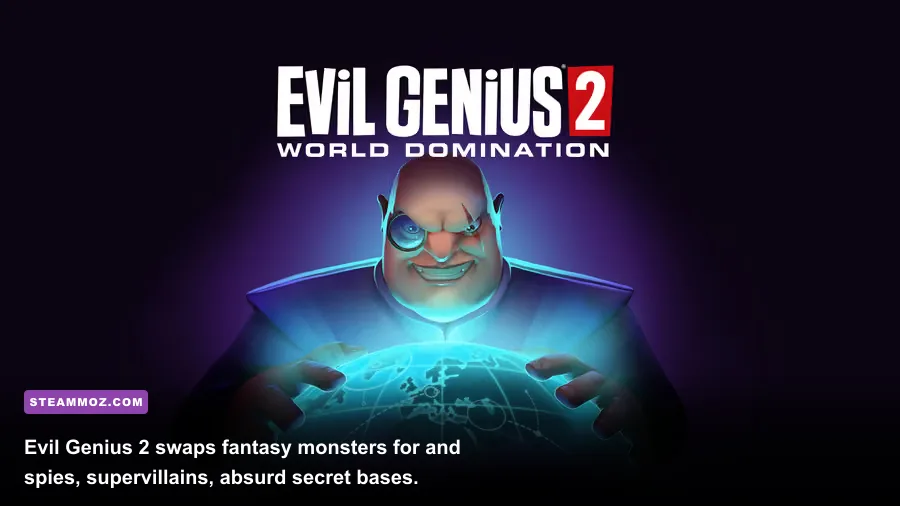
If your favorite part of Evil of the Caribbean was digging rooms, routing minions, and turning enemy pathfinding against itself, play War for the Overworld. It is less playful than Dungeons 3, but its systems are sharper. Every tile matters because room shape affects efficiency, walking distance, and how quickly workers can respond to threats.
The game divides your power between gold, mana, and worker labor. Gold pays for rooms and units; mana fuels spells and rituals; workers excavate, transport, repair, and claim territory. That creates a genuine priority puzzle. A Treasury placed too far from the excavation front wastes walking time, while a Hatchery without a clean route to your army turns food production into a hidden combat penalty.
Start with a compact core: Dungeon Core, Treasury, Lair, and Foundry. Add a Training Room once your gold income stabilizes, then place a Prison near the routes heroes use most often. Captured enemies can become a resource rather than a simple casualty, and torture-based systems reward players who plan several minutes ahead. Traps are strongest when they divide a wave, not when you stack every device in one doorway.
War for the Overworld's combat is also more deliberate. Possession lets you take direct control of a creature, which is useful for targeting healers, pulling enemies across hazards, or manually using a unit's ability at the right moment. That direct-control layer is the major difference from Dungeons 3's more hands-off battles. The official Steam listing remains the best place to check its current content and workshop support.
| Early priority | Build or resource | Reason | Common mistake |
|---|---|---|---|
| 1 | Treasury | Improves gold flow and room expansion | Digging too broadly before income starts |
| 2 | Lair and Hatchery | Supports creature capacity and recovery | Training an army without food coverage |
| 3 | Foundry | Unlocks defensive infrastructure | Building traps before securing workers |
| 4 | Prison | Turns captured heroes into long-term value | Placing it away from active corridors |
3. Evil Genius 2 trades monsters for minions
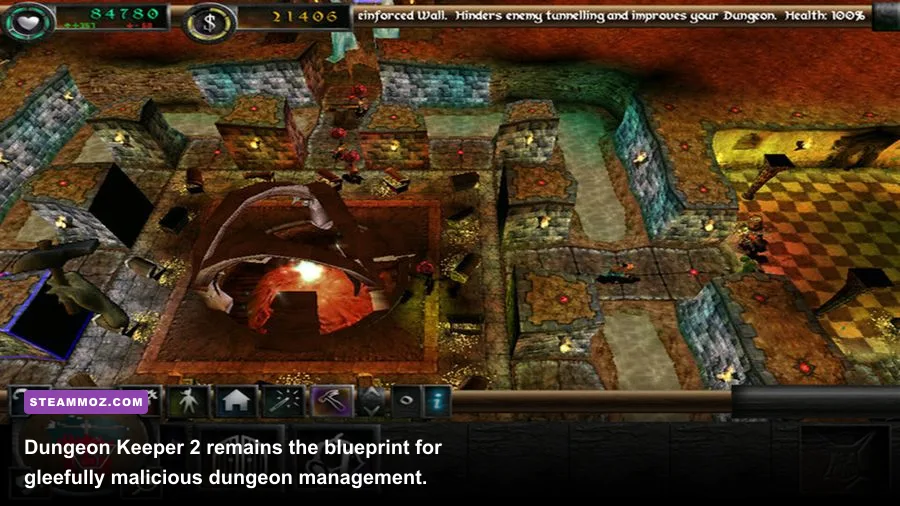
Evil Genius 2: World Domination is the best alternative if you want the base-building fantasy but can live without orcs, bile demons, and dungeon hearts. You choose between four evil masterminds: Maximilian, Red Ivan, Zalika, and Emma. Each changes the campaign's priorities, abilities, and preferred approach to global domination.
The key resource isn't Evilness. It's operational control. Your base must support worker jobs, power generation, cover operations, training rooms, and prisoner management while keeping Heat under control in world regions. Let Heat climb too high and investigators, soldiers, and super-agents become a constant drain on your defenses.
Maximilian is the cleanest starting point because his money-focused bonuses make early expansion forgiving. Red Ivan is more combat-forward, while Zalika leans into science and advanced technology. Build a compact inner base first, then place casino and hotel cover areas between the entrance and your restricted rooms. That layout slows investigators without forcing every minion through the same corridor.
Traps work best as a sequence rather than a single expensive surprise. Distract agents in the casino, drain their resolve, separate them from support, and only then finish the encounter with stronger defenses. This is slower than a Dungeons 3 battle, but it creates the same delicious payoff when an enemy squad collapses inside a fortress built around its weaknesses. Browse the official Evil Genius 2 Steam page for the latest version details.
4. Dungeon Keeper 2 is still the blueprint
Dungeon Keeper 2 is where the modern formula gets its wicked grin. You claim territory by digging, slap creatures when they need motivation, possess units directly, and construct rooms whose efficiency depends on shape and placement. The interface is old-fashioned, but the central loop remains remarkably readable: dig too fast, anger the wrong heroes, and your entire dungeon becomes a rescue operation.
The Possess spell is the star. Taking control of a creature changes the game from overhead management to first-person dungeon defense. A possessed Warlock can use ranged attacks from behind a doorway, while a possessed Bile Demon can hold a chokepoint and punish clustered enemies. The danger is tunnel vision: while you're enjoying direct control, workers may be idle and a second breach can open elsewhere.
Room planning matters more here than in Dungeons 3. Libraries need access for researchers, Training Rooms need a steady creature route, and larger rooms can improve capacity without forcing you to build several awkward annexes. Don't excavate the entire map at once. Claim a defensible perimeter, secure gold, and leave enough creature space to absorb the first hero wave.
Modern PCs may require compatibility tweaks, community patches, or a storefront release with bundled fixes. That's the trade-off for playing the original design document. If you want a less demanding classic RPG while you wait, Steamoz's Dungeon Siege retrospective is a useful companion read, though its combat loop is very different.
5. Dungeons 2 is the compact, comic alternative
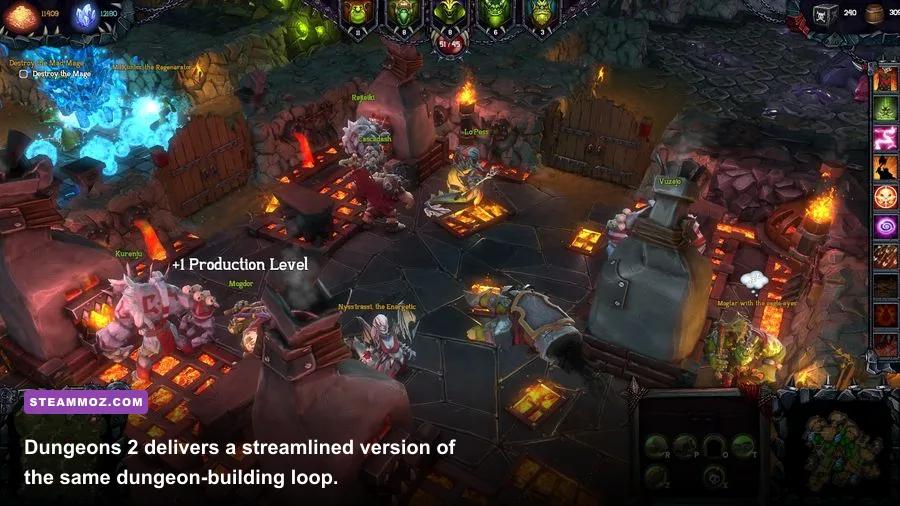
Dungeons 2 sits closest to Dungeons 3 in tone and structure, making it the easy pick for players who want a shorter commitment. The dungeon layer gives you rooms, creatures, gold, and traps; the overworld layer lets the Dungeon Lord push units across a traditional RTS map. It lacks some of Dungeons 3's polish, but it understands the appeal of switching between construction and conquest.
The two main creature groups create a straightforward tactical split. Horde units are durable and useful for holding a line, while demons offer stronger offensive pressure and more specialized abilities. The best early approach is to avoid spreading both groups across multiple fronts. Build one reliable strike force, keep a reserve near the Dungeon Heart, and only expand your surface assault after your Treasury and creature production are stable.
Its progression curve is friendlier than War for the Overworld's. You can learn room adjacency, creature recruitment, and surface objectives without juggling as many currencies. That makes it a strong warm-up before Dungeons 4. Our Dungeons 2 beginner build covers a dependable opening, while the fastest gold route shows why economy beats reckless expansion.
| What you want | Best choice | Why | Trade-off |
|---|---|---|---|
| Closest modern sequel | Dungeons 4 | Same dungeon-plus-overworld rhythm | Larger campaigns and more systems |
| Deepest room planning | War for the Overworld | Mana, rituals, prisons, and efficient layouts | Less comedic and less forgiving |
| Best base-building sandbox | Evil Genius 2 | Long-term minion and heat management | No fantasy creature armies |
| Pure classic experience | Dungeon Keeper 2 | Possession and foundational dungeon design | Older presentation and setup |
| Fastest way back in | Dungeons 2 | Familiar mechanics with a lighter campaign | Fewer refinements than Dungeons 3 |
Which game should you play first?
Choose Dungeons 4 if you want Dungeons 3's exact fantasy with more scale and more faction decisions. Choose War for the Overworld if room efficiency, traps, and resource routing are the real reason you enjoyed building an evil lair. Pick Evil Genius 2 for a slower management sandbox where Heat, minion jobs, and cover operations replace hero waves.
Go to Dungeon Keeper 2 if you want to see where the entire genre learned its tricks, and choose Dungeons 2 if you want a familiar campaign that gets to the joke and the dungeon-building quickly. None of them duplicates the pirate flavor of Evil of the Caribbean, but together they cover its best ingredients: a mischievous villain, a base that grows because of your decisions, and enemies who become funniest when your defenses work exactly as planned.
For performance, all five are broadly approachable on modern gaming PCs, but Dungeons 4 and Evil Genius 2 benefit most from an SSD and 16GB of RAM once bases or overworld battles become crowded. Keep shadows and ambient occlusion at medium first if frame pacing dips; reducing those settings usually preserves the readable room art better than lowering texture quality. Before buying, compare current editions through the official Dungeons 3 Steam page and check whether your preferred DLC is bundled.
In short, Dungeons 4 is the safest 2026 recommendation, but War for the Overworld is the one most likely to steal your weekend. The first continues the formula. The second understands why the formula works.