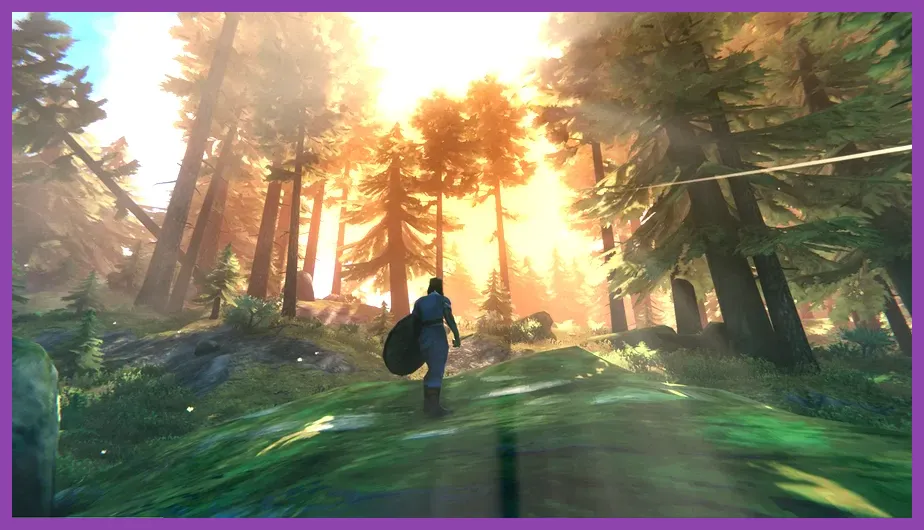
The best Valheim skills to prioritize first are Run, Jump, Blocking, Bows, Axes, and Pickaxes. Run and Jump improve exploration immediately, Blocking keeps you alive against Eikthyr and the Black Forest enemies, Bows give you safe damage, Axes handle both combat and woodcutting, and Pickaxes unlock copper, tin, iron, and silver progression. Valheim has no traditional skill tree or permanent skill-unlock menu: skills increase automatically when you repeatedly use the related action.
Your early objective is therefore not to grind every skill equally. Use a practical weapon, train movement during every trip, raise defense before challenging bosses, and avoid spending hours leveling skills that your current equipment cannot exploit. This order works in a fresh solo world and remains effective in multiplayer, where a shield user can protect a bow-focused teammate while both players develop different strengths.
1. Prioritize Run and Jump Immediately
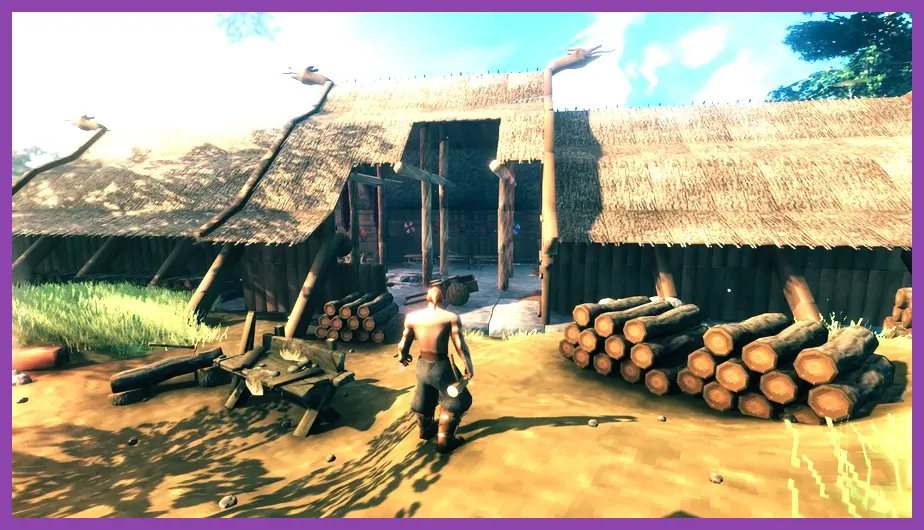
Run is the most valuable first skill because it affects travel, stamina efficiency, combat spacing, corpse recovery, and hauling resources back to your base. Running consumes stamina, but a higher Run level reduces the stamina cost of sprinting. That matters before you have better food such as Cooked Deer Meat, Carrot Soup, or Queen's Jam. Keep sprinting during normal travel instead of walking everywhere, but leave enough stamina to dodge or climb slopes.
Jump deserves the same early attention. It improves the stamina cost and effectiveness of jumping, allowing you to clear uneven Meadows terrain, escape Greydwarfs, climb ruined structures, and cross shallow obstacles without awkward detours. Jumping is especially useful while carrying ore, because terrain often causes more danger than enemies when your stamina is low.
How to train both skills efficiently
Make Run and Jump part of normal movement rather than treating them as separate grinding tasks. Sprint between your workbench, shelter, and resource nodes, then jump over small rocks and fallen logs. Do not repeatedly jump in place for long sessions: it consumes food-based stamina and exposes you to stamina starvation. A good early food set is Boar Meat, Deer Meat, and Honey, with Carrot Soup added after you find carrot seeds in the Black Forest.
Run and Jump also make the first boss easier. Against Eikthyr, sprint diagonally away from the lightning line and antler charge, then stop briefly to recover stamina behind a large rock or the boss's altar pillars. If your movement skills are neglected, the fight becomes a stamina-management problem before it becomes a combat test.
2. Make Blocking Your First Combat Skill
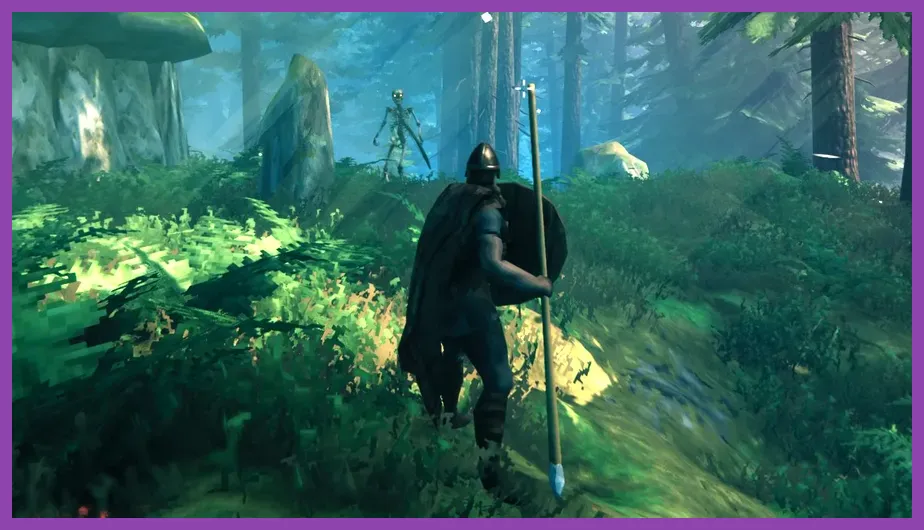
Blocking is the safest early combat investment because a shield can negate or greatly reduce damage from attacks that would otherwise force you to eat expensive food or retreat. Craft a Wood Shield or Wood Tower Shield as soon as you have a workbench and enough wood. The round Wood Shield is usually the better first choice because it supports parrying; the tower shield blocks more reliably but cannot parry.
Blocking increases when an attack is successfully blocked with a shield or weapon. A successful parry requires raising the shield shortly before impact. When the timing is correct, the enemy staggers and takes increased damage from your counterattack. Practice on Greylings and regular Greydwarfs before attempting it against a Troll. The skill level itself helps, but shield block power, your Block Armor, and the incoming attack's damage also determine the result.
The early blocking routine
Against a Greydwarf, keep the shield raised only as the stone projectile or club swing approaches. Lower it afterward so stamina can regenerate. Against a Greydwarf Brute, do not panic-block every hit. Watch the overhead weapon telegraph, block the strike, and counter with a flint spear, flint axe, or club. Trolls are different: their overhead smash and horizontal sweep have large hitboxes, so use a shield only when you have enough stamina and a clear timing window. Otherwise, circle at range with a bow.
Blocking becomes even more important in the Swamp, where a Bonemass expedition can punish poor stamina control and unblocked Blobs can apply poison. If you prefer broader beginner preparation, our beginner combat tips guide also explains the same core principle: defense timing is more valuable than chasing damage too early.
3. Level Bows Before Entering the Black Forest
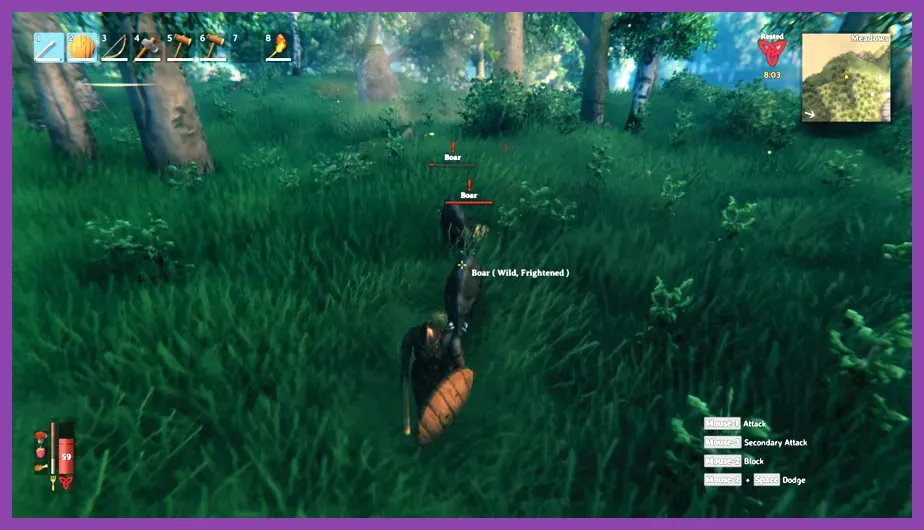
Bows should be your first dedicated ranged skill. Craft the Crude Bow from Wood, Resin, and Leather Scraps, then upgrade to the Finewood Bow after obtaining Fine Wood from Birch or Oak trees. The Crude Bow is slow and inaccurate at low skill levels, but it still lets you damage Deer, Trolls, Greydwarfs, and Eikthyr without standing in melee range.
Use Wood Arrows for ordinary Greydwarfs and hunting, then switch to Flinthead Arrows for tougher early targets. Fire Arrows are useful against enemies vulnerable to fire, especially Trolls and Eikthyr, but they are not universally stronger because arrow damage combines physical and elemental components. Against a Troll, aim for the head, keep moving around trees, and release shots after the Troll commits to its attack animation.
Why Bows outrank Spears and Clubs early
Spears and Clubs are perfectly viable, but Bows solve several early problems at once. They let you pull one enemy from a group, hunt Deer for reliable food, attack Trolls from terrain, and damage bosses while preserving health. The trade-off is stamina: drawing the bow drains stamina, and firing while exhausted causes poor timing. Carry stamina food and stop shooting before your bar reaches zero.
Do not grind Bow by shooting harmless walls for hours. Hunt Deer, clear Greydwarf nests, and practice against Trolls from safe distance. That approach raises the skill while producing meat, resin, trophies, and resources. Once you reach the Mountains, a stronger bow and better arrows make Drakes manageable; in the Plains, the same habits help you avoid reckless encounters with Deathsquitos and Fulings.
4. Choose Axes, Clubs, and Pickaxes for Progression
Axes are an excellent first melee skill because the same tool supports combat and woodcutting. Start with a Stone Axe, then craft a Flint Axe and eventually a Bronze Axe. Axes deal slash damage and are effective against many early creatures, while their woodcutting function reduces the time needed to gather core, fine wood, and later ancient bark. If you already have a dedicated shield-and-axe setup, raise Axes naturally instead of switching between multiple melee types.
Clubs are a strong alternative, particularly for the Swamp. A Wood Club and later Iron Mace deal blunt damage, which is highly effective against Skeletons, Blobs, Oozers, and Bonemass. If your planned route is Meadows, Black Forest, Swamp, and Mountains, Clubs are arguably more valuable than Axes for boss combat because Bonemass resists many damage types but is vulnerable to blunt attacks. Level only one main melee skill at first; splitting experience between Clubs, Axes, Spears, and Swords slows every weapon type.
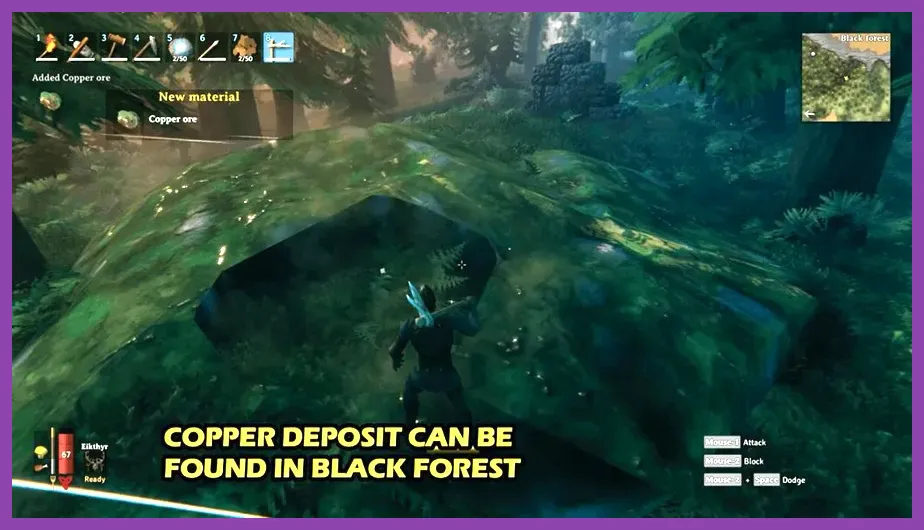
Pickaxes are not primarily combat skills, but they should be trained as soon as you defeat Eikthyr. The Antler Pickaxe is crafted from Eikthyr's Hard Antler and unlocks copper and tin mining in the Black Forest. Copper deposits are found underground but appear as large surface formations, while tin is located along Black Forest shoreline. Mine enough to make a Forge, Bronze tools, a Bronze Buckler, and your preferred Bronze weapon.
Skill priorities by equipment goal
- Wood and shelter: Axes first, with Run supporting every gathering trip.
- Early boss safety: Blocking, Bows, then one melee skill.
- Bronze rush: Pickaxes, Axes for wood, and Run for ore transport.
- Swamp preparation: Clubs, Blocking, Bows, and enough Jump to manage wet terrain.
For achievement-focused players, efficient progression matters more than blind grinding. A structured checklist such as Steamoz's achievement guide demonstrates the same useful approach: group related objectives together instead of repeating disconnected tasks.
5. Save Specialized Skills for Later Biomes
Several skills are powerful but inefficient choices for a new character. Sneak is useful for scouting, backstabs, and avoiding enemies, but it drains stamina while active and provides less value than Run or Blocking during the first boss cycle. Train it naturally when hunting Deer or infiltrating burial chambers rather than making it your first grind target.
Knives, Spears, and Swords become worthwhile when you commit to their weapon movesets. Knives offer fast attacks and strong backstabs, Spears provide cheap ranged throws, and Swords deliver consistent slash damage. However, early materials are limited, so crafting every weapon type creates repair and upgrade costs without giving you a clear combat identity. Pick one melee skill, one ranged option, and a shield.
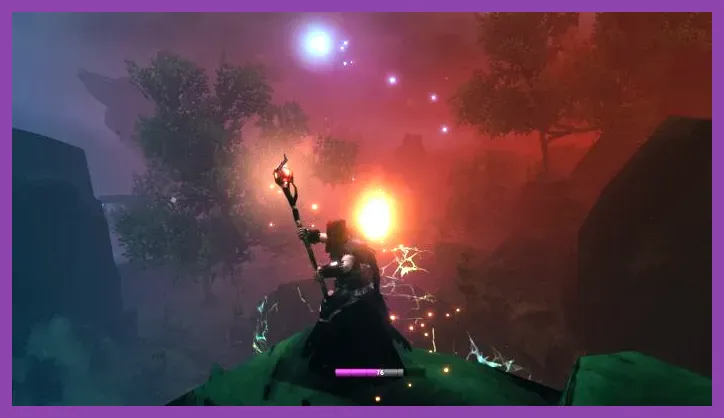
Blood Magic and Elemental Magic should wait until the Mistlands. They require the Galdr Table, Eitr-based food, and magical equipment such as the Staff of Embers, Staff of Frost, Dead Raiser, or Staff of Protection. Blood Magic levels through blood-magic actions, while Elemental Magic levels through elemental attacks. These are late-game systems, not early unlocks, and forcing them into a Meadows build wastes time.
Riding is similarly optional until you obtain a Lox and a Lox Saddle in the Plains. Fishing can improve food variety, but it should not replace hunting, farming, or gathering early staples. The priority order is simple: movement first, defense second, safe damage third, and specialized skills only after your biome and equipment support them.
Best First-Skill Order for a Fresh World
- Run: Use it on every expedition to improve travel, stamina control, and corpse recovery.
- Jump: Train naturally while crossing terrain, climbing ruins, and escaping enemies.
- Blocking: Equip a Wood Shield and practice parries against Greylings and Greydwarfs.
- Bows: Hunt Deer and kite Trolls with the Crude Bow before upgrading to Finewood.
- Axes or Clubs: Choose Axes for versatile gathering or Clubs for blunt-damage boss progression.
- Pickaxes: Defeat Eikthyr, craft the Antler Pickaxe, and begin the Bronze Age.
- Sneak and secondary weapons: Level them naturally once your core survival skills are established.
Remember that Valheim skills are temporary advantages, not permanent character classes. Dying removes a portion of your current skill levels, so avoid risky corpse runs with your only equipped gear. After death, the game provides a brief skill-loss protection period, making it wise to recover your tombstone promptly and avoid immediately repeating the same mistake. Keep spare food, arrows, and a backup shield at a nearby outpost.
For the latest platform information and development updates, check the official Valheim Steam page, the official Valheim website, and Iron Gate Studio. If you are comparing progression systems across survival games, Steamoz's Once Human endgame build guide offers a useful contrast, while the Pokémon GO attack upgrade guide covers a different but similarly priority-driven approach.
For most players, the winning Valheim opening is not a high-level weapon grind. Sprint everywhere, jump intelligently, block deliberately, use a bow to control distance, then specialize in Axes or Clubs before mining Bronze. That sequence gives you the mobility, survivability, and resource access needed for every major early-game milestone.