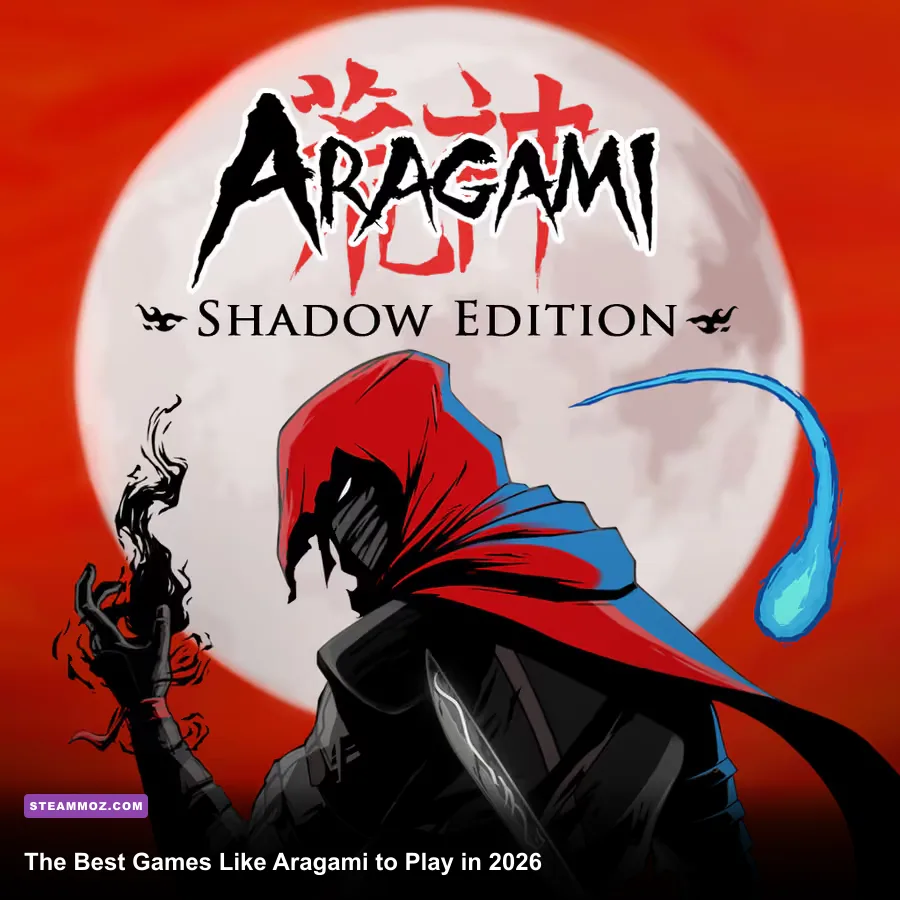
If Aragami: Shadow Edition hooked you with instant shadow teleports, one-hit assassinations, and missions built around staying unseen, start with Mark of the Ninja: Remastered, Styx: Shards of Darkness, and Shadow Tactics: Blades of the Shogun. They deliver the closest mix of readable stealth rules, deliberate infiltration, and satisfying escapes, while Dishonored 2 and Ghost of Tsushima Director's Cut are better picks if you want more powers, combat freedom, or a larger world.
Aragami is a very specific kind of stealth game. Its Shadow Leap lets you blink between darkness zones, Shadow Kill turns a clean assassination into a disappearing body, and limited resources such as Kunai and Smoke Bombs punish noisy improvisation. The best alternatives below aren't simply games with ninjas. They're games where patrol routes, visibility, sound, and positioning matter more than raw damage numbers.

The best Aragami alternatives ranked
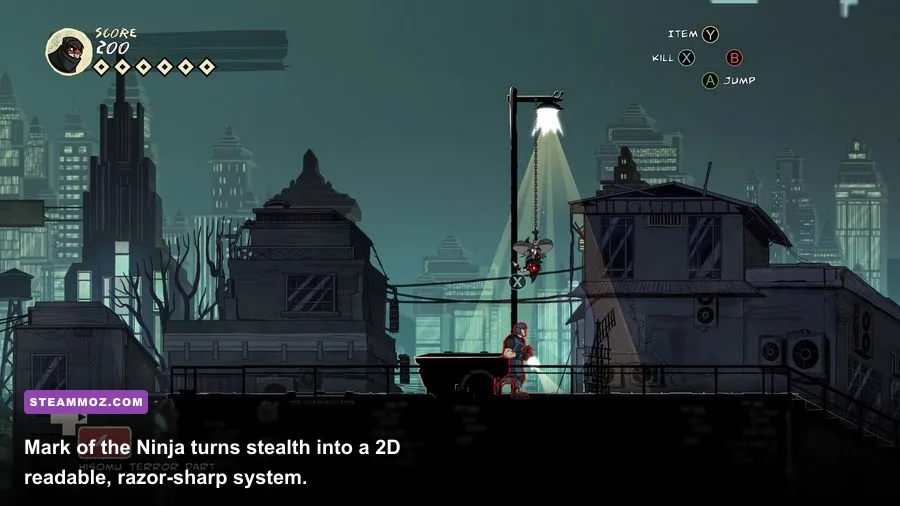
Here is the quick verdict before we get into the weeds. Mark of the Ninja is the purest stealth sandbox; its 2D presentation makes line of sight and sound unusually easy to read. Styx: Shards of Darkness is the closest third-person replacement, especially if you enjoy climbing, hiding bodies, and managing a fragile assassin. Shadow Tactics is the best choice for players who love Aragami's mission planning but want a squad instead of a single supernatural killer.
| Game | Stealth match | Best feature | Main warning |
|---|---|---|---|
| Mark of the Ninja: Remastered | S-Tier | Perfect visibility and sound feedback | 2D movement may not satisfy 3D stealth fans |
| Styx: Shards of Darkness | S-Tier | Vertical routes and assassination tools | Combat is weak and checkpoints can feel uneven |
| Shadow Tactics: Blades of the Shogun | S-Tier | Five-character coordinated takedowns | Real-time-with-pause takes practice |
| Dishonored 2 | A-Tier | Flexible powers and systemic levels | Easy to overpower if you stop caring about stealth |
| Ghost of Tsushima Director's Cut | A-Tier | Beautiful open-world infiltration | More combat-heavy than Aragami |
For broader stealth inspiration, Steamoz's breakdown of Children of Silentown's non-combat progression is also worth a look. It understands the same important lesson: tension often comes from what your character cannot do.

🎮 Aragami: Shadow Edition
Looking to experience this game? Grab your digital key directly on our store for $4.99.
View on Steammoz Store →Mark of the Ninja is the cleanest stealth masterpiece
Mark of the Ninja: Remastered is the recommendation I'd give to almost every Aragami player. It replaces Aragami's shadow meter with a beautifully legible information system. Bright silhouettes show what guards can see, sound-radius circles reveal how far footsteps travel, and visual indicators tell you whether a body, noise, or suspicious movement has been noticed.
That clarity makes the game harder in the right way. A guard does not magically know where you are; you can see the exact mistake that caused suspicion. Hide in a closet, break a light, throw a noise dart, or hang from a ceiling and wait for the patrol to pass. The tools are small but meaningfully different. The Noise Dart creates a distraction, the Smoke Bomb blocks vision, and the distraction bug can redirect a guard without immediately putting the whole room on alert.
How to play it like Aragami
Prioritize the Shadow Mind and Path of Wisdom upgrade routes if you want a clean assassination-focused run. Shadow Mind improves your ability to manipulate darkness and remain hidden, while Path of Wisdom supports a more tool-heavy approach. The crucial habit is to avoid treating every guard as a target. Aragami teaches you to spend Shadow Energy only when a teleport creates safety; Mark of the Ninja rewards the same discipline with Smoke Bombs and distraction tools.
Use the environment before using a gadget. Darkness, vents, bamboo cover, hanging points, and hiding spots often create a silent route that costs nothing. If a guard sees a body, don't panic and sprint. Break line of sight, move two or three screens away, and let the alert decay. The Remastered edition also includes the challenging Daredevil mode, which removes much of the safety net and is a superb post-game test for players who found Aragami's later chapters too forgiving.
Styx: Shards of Darkness is Aragami in 3D
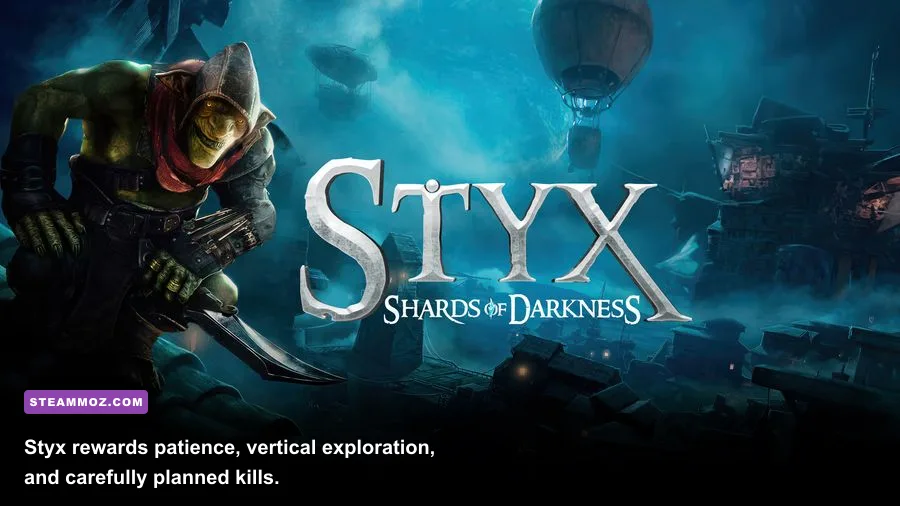
Styx: Shards of Darkness is the closest mechanical substitute for Aragami's third-person perspective. You play Styx, a goblin assassin who can climb, hang from ledges, hide inside barrels, and use a handful of goblin abilities to manipulate patrols. The difference is that Styx feels more vulnerable. A direct fight with a human guard is usually a terrible idea, while Aragami can sometimes recover through speed and Shadow Leap positioning.
The signature resource is Amber. It powers abilities including Clairvoyance, which reveals useful information through walls, and Invisibility, which lets Styx pass through dangerous sightlines. Amber is limited, so don't activate invisibility just because a guard is nearby. Wait until the patrol overlaps with another threat, then use it to cross the entire problem rather than solve one second of it.
The route-planning tricks that matter
Styx's verticality is its greatest strength. Look above the obvious corridor: rafters, wall pipes, balconies, and ledges frequently connect objectives without touching the floor. After an assassination, use a hiding spot immediately. Carrying a body across an exposed hall is slower than leaving it and taking a longer route, but leaving evidence can create a permanent patrol problem.
Styx also has a clone ability that creates a temporary duplicate. Use the clone to trigger a lever, lure a guard, or create a short distraction window, not as a disposable combat partner. On harder difficulties, detection escalates quickly and enemies can search likely hiding places. The game is rougher around the edges than Aragami, with occasional awkward animations and less forgiving checkpoint placement, but its level design delivers some of the best vertical stealth in the genre.
If performance is a concern, start with shadows and ambient occlusion at medium rather than sacrificing resolution. Styx's darker scenes can become muddy at low settings, and the visual loss makes stealth information harder to read. Steamoz has a similar performance-focused guide for fixing crashes and low FPS, useful if your PC struggles with older PC ports.
Shadow Tactics turns stealth into a tactical puzzle
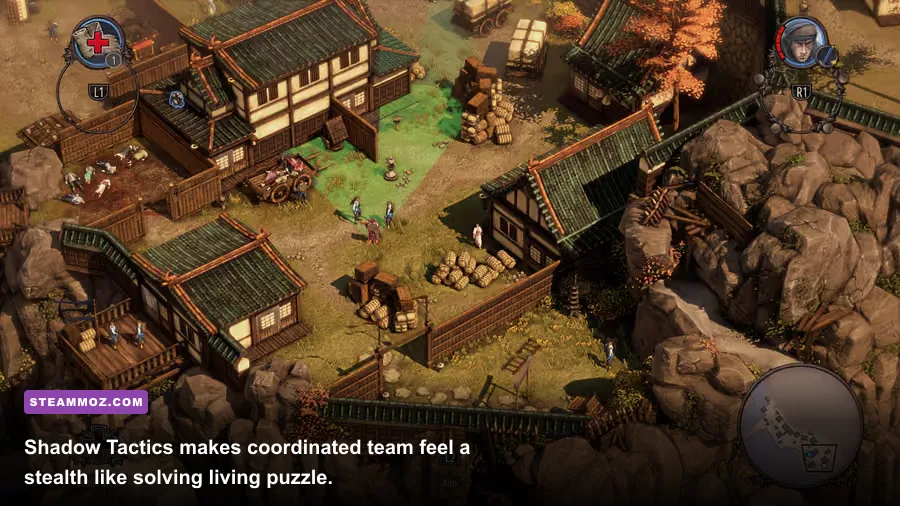
Shadow Tactics: Blades of the Shogun shifts the camera to an isometric view, but its stealth logic is pure Aragami. Patrol timing, visibility cones, alarm systems, and bodies left in the open all matter. The major twist is that you command five specialists: Hayato, Mugen, Aiko, Yuki, and Takuma.
Each character solves a different part of an infiltration. Hayato throws a Shuriken for ranged kills, Mugen uses Sake to lure guards and can kill multiple enemies with Wind Sword, Aiko disguises herself and charms targets, Yuki lays traps and uses a whistle, while Takuma provides long-range support with his matchlock and a bear trap. The game's Shadow Mode lets you queue actions for several characters, then execute them simultaneously. That is the secret sauce: don't think of it as pausing a real-time game; think of it as writing a short, lethal script.
| Character | Signature tool | Best Aragami-style use | Common mistake |
|---|---|---|---|
| Hayato | Shuriken | Silent ranged removal | Forgetting to recover the Shuriken |
| Mugen | Wind Sword | Multi-kills and body carrying | Using him before isolating patrols |
| Aiko | Disguise and perfume | Walking through restricted areas | Ignoring disguise-specific enemy types |
| Yuki | Trap and whistle | Separating guards at chokepoints | Placing traps where civilians can trigger them |
| Takuma | Matchlock | Removing distant priority targets | Firing before planning the escape route |
The smartest approach is to scout first, mark the dangerous sightlines, and identify where bodies can disappear. Then create a sequence: Yuki lures, Hayato kills, Mugen carries, and Aiko crosses the now-open route. The early missions teach this gently; later missions stack samurai, guards, civilians, and alarm bells until every action needs a reason. It lacks Aragami's immediate movement thrill, but it is arguably the superior game for players who enjoy perfecting a route.
Dishonored 2 gives you more ways to break the rules
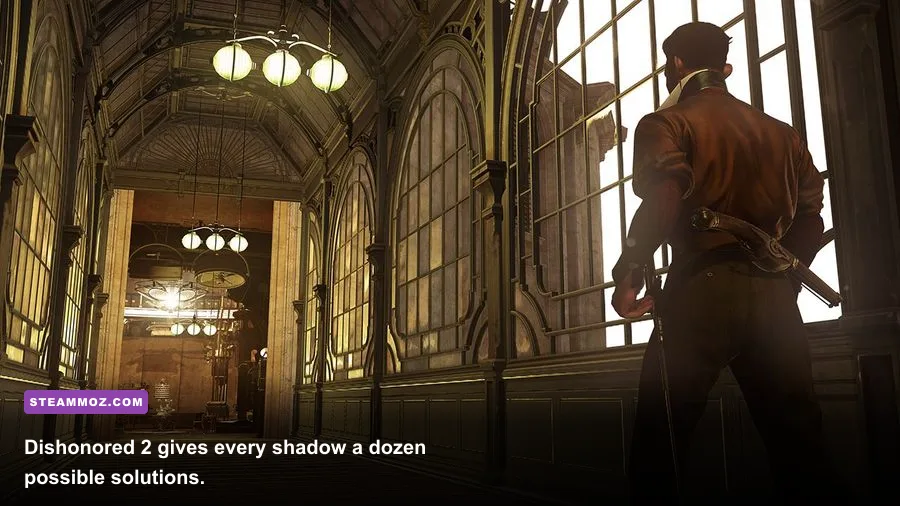
Dishonored 2 is less focused than Aragami but far more systemic. Choose Emily Kaldwin or Corvo Attano, then decide whether supernatural powers are part of the run. Corvo has Blink, Dark Vision, and Possession; Emily gets Far Reach, Domino, and Mesmerize. The no-powers option is especially good for Aragami veterans because it forces you to rely on routes, distractions, non-lethal takedowns, and vertical movement.
Emily's Domino is the standout ability. Link two or more enemies, then choke or sleep one and the others suffer the same fate. Combine it with a sleep dart and you can clear a group without a sword fight. Corvo's Bend Time is stronger for emergency escapes, while Possession can turn an animal or guard into a temporary route through a locked area.
The Clockwork Mansion is the essential mission. Its rooms shift mechanically as you pull levers, changing sightlines and opening new routes. Karnaca's Dust District also rewards careful faction manipulation, while the game's Chaos system reacts to killing and civilian harm. If you want Aragami's clean ghost fantasy, pursue a low-chaos, no-kill run. If you want experimentation, Dishonored is the better playground.
Ghost of Tsushima is the big-budget evolution
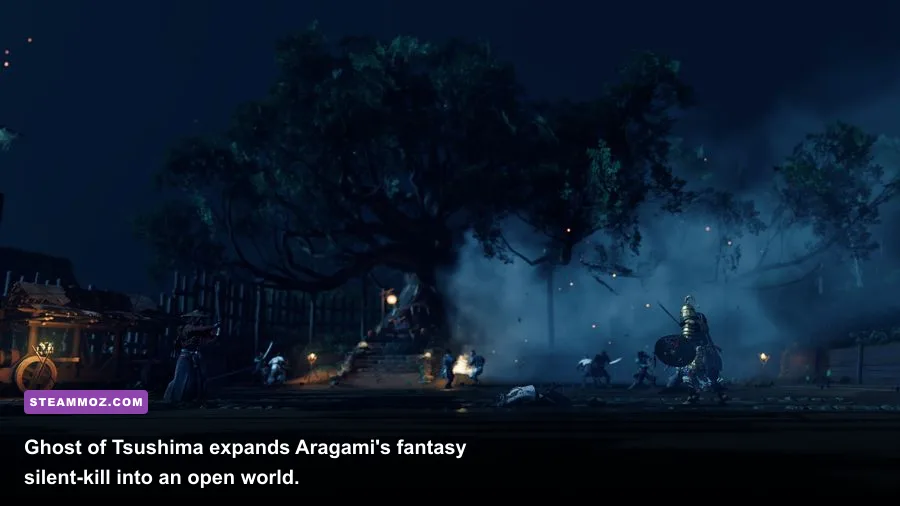
Ghost of Tsushima Director's Cut is the least exact match here, but it is the one to choose when you want Aragami's silent-killer fantasy scaled up to an open world. Jin Sakai can assassinate from above, chain stealth kills, use Kunai, throw Smoke Bombs, and whistle to pull enemies away from a camp. The visual language is familiar, even though the game gives you much more room to fight openly.
Upgrade Chain Assassination early if you want the closest Aragami rhythm. The standard assassination can remove one target, while Chain Assassination lets Jin continue through a tightly grouped pair or trio. Smoke Bombs create the safest reset, and the Ghost Stance becomes powerful after you defeat enough enemies without taking damage. Unlike Aragami, however, Ghost Stance is a reward for combat mastery, not a replacement for stealth.
Ghost of Tsushima's limitation is pacing. Camps are larger, travel takes time, and many encounters are designed to end with a sword duel. It is a magnificent stealth-action game, not a pure stealth game. For a tighter experience, play the main missions at night, avoid Charm of Resistance stacking, and use the Traveler's Attire only while exploring; switch to the Ghost Armor when infiltrating camps because its reduced detection speed and increased Ghost Stance gain support a stealth-first build.
Which game should you play first?
Pick Mark of the Ninja if you care most about precise stealth feedback. Pick Styx if climbing, body disposal, and third-person infiltration are non-negotiable. Choose Shadow Tactics if planning simultaneous takedowns sounds better than improvising. Go with Dishonored 2 for the deepest sandbox, or Ghost of Tsushima for a cinematic open-world version of the fantasy.
My personal order for an Aragami fan in 2026 is Mark of the Ninja first, Styx second, then Shadow Tactics. That sequence preserves the original game's core appeal while gradually expanding the problem: first readable stealth, then vertical stealth, then multi-character planning. If you want more recommendation-heavy reading after that, Steamoz's new-player tips for Death Note: Killer Within and its guide to Don't Be Afraid 2 offer two very different takes on tension and survival.
None of these games copies Aragami's shadow teleport perfectly, and that's a good thing. Mark of the Ninja makes information the weapon, Styx makes the level itself your escape route, Shadow Tactics turns every guard into a timing problem, Dishonored lets you rewrite the rules, and Ghost of Tsushima makes stealth part of a larger samurai story. Together, they're the best places to go when Aragami leaves you wanting one more perfect, silent kill.