The fastest way to uncover every secret location and hidden reward in Call of the Wild: The Angler’s Spain Reserve is to stop treating the map like a straight fishing trip. Unlock viewpoints first, inspect every remote dock and trail dead-end, then return with the right lure for the species-specific challenges. Spain’s best rewards are rarely sitting beside the starting dock: they’re connected to exploration activities, hidden shore access, photo opportunities, fishing challenges, and difficult-to-reach water.
This guide focuses on a clean completion route rather than random wandering. It also clears up an important point: the reserve does not use a traditional open-world loot system with dozens of identical treasure chests. “Hidden rewards” usually means exploration payouts, challenge unlocks, collectible progress, high-value catches, and access to isolated fishing areas. That distinction saves a lot of wasted time.
Start With Viewpoints, Camps, and Map Reveal
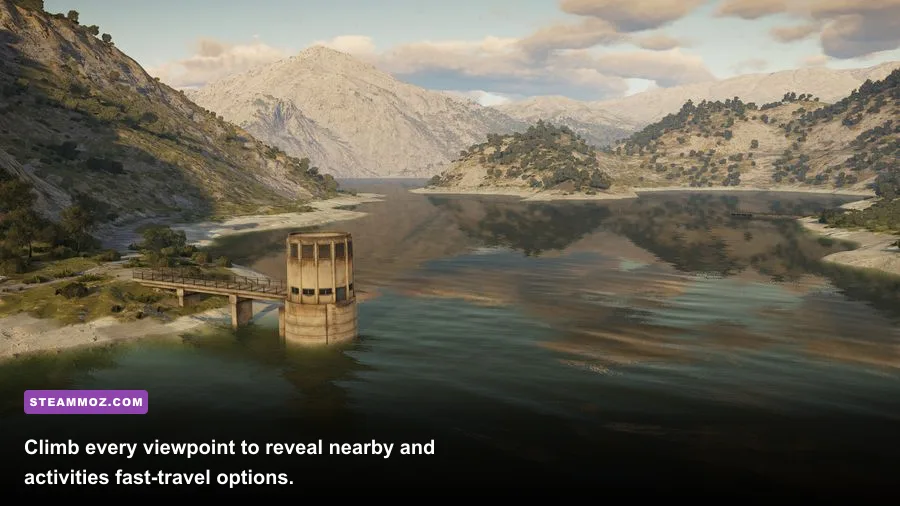
Before chasing secret fishing spots, activate every visible fast-travel point you can safely reach. Viewpoints are the priority because climbing them reveals nearby activities, roads, waterlines, and sometimes remote structures that remain hard to spot at ground level. Camps matter just as much: they let you change gear, restock, select a different rod setup, and return to a shoreline without repeating a long hike.
Use the map’s activity filters instead of zooming around blindly. Clear icons one region at a time, but leave unmarked coves and narrow river bends for a second sweep. The useful pattern is simple: when a road ends close to water, check both the road terminus and the shoreline below it. The game frequently places fishable access, a photo opportunity, or a small exploration interaction just beyond the obvious path.
Bring a light spinning setup for the first reveal run. A medium spinning rod with a small spoon or spinner keeps you mobile and lets you test perch-sized fish, trout, and bass without committing to a heavy tackle loadout. You’re not trying to land a trophy yet. You’re trying to expose the map, collect easy activity rewards, and identify which water bodies deserve a dedicated return trip.
| Exploration Target | Why It Matters | Best Approach | Reward Type |
|---|---|---|---|
| Viewpoints | Reveal nearby icons and terrain | Climb before fishing | Map information and exploration progress |
| Camps | Enable fast travel and loadout changes | Activate every camp on a loop | Travel shortcut and resupply access |
| Remote docks | Provide access to overlooked water | Inspect roads ending near lakes | Fishing activities and challenge progress |
| Trail dead-ends | Often hide photo or interaction points | Walk beyond the final sign or fence | Exploration payout or collectible progress |
If you’re playing on PC, keep the game’s official Steam page handy for current patch notes and DLC requirements. Map icons and activity behavior can change after updates, so an old video route may not line up perfectly with your version.
🎮 Call of the Wild: The Angler - Spain Reserve
Looking to experience this game? Grab your digital key directly on our store for $4.99.
View on Steammoz Store →Where the Spain Reserve’s Hidden Fishing Spots Actually Are
The most reliable secret locations are not always marked as “secret.” Search the reserve’s three types of overlooked terrain: reed-lined lake margins, narrow river mouths, and elevated banks that let you cast into deeper channels. These areas are valuable because fish behavior changes sharply with depth, cover, and current. A glamorous central pier may be convenient, but a quiet bank ten seconds away can offer cleaner casting angles and less spooking.
Check every river mouth
River mouths are the first places to revisit after unlocking the map. Cast parallel to the current with a spinner, spoon, or shallow-running plug, then work the edge where moving water meets still water. Fish often patrol that transition instead of sitting directly in the middle of the lake. If you see no bite after several casts, change retrieve speed before changing locations. A slow, steady retrieve can outperform frantic twitching when the water is clear.
Search behind reeds and rock shelves
Reeds provide cover and are easy to overlook from a road. Walk the bank until you find a casting lane that reaches the dark water beyond the vegetation. Rock shelves deserve the same treatment. Cast beyond the shelf and bring the lure across its edge; that route creates a natural depth change and frequently produces more convincing strikes than a straight bank retrieve.
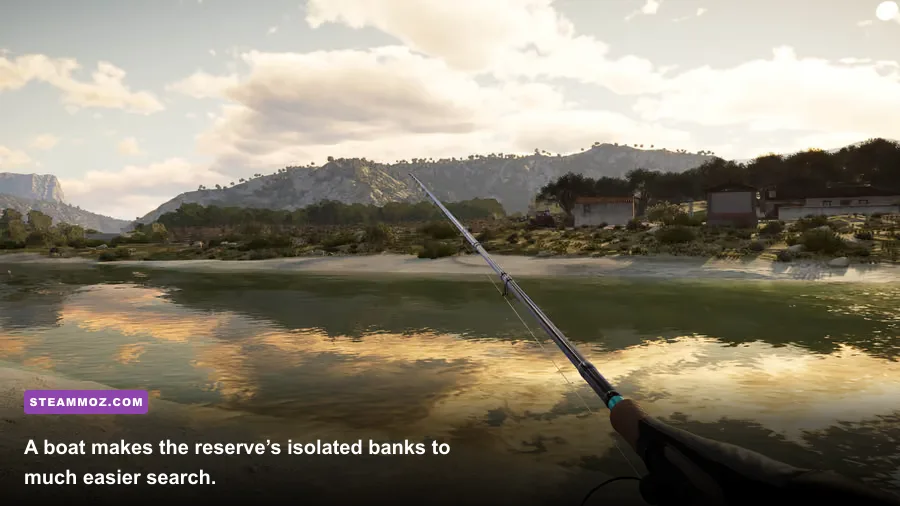
Use boats to locate isolated banks
Once boating is available, circle each major lake slowly and watch for tiny beaches, abandoned platforms, and narrow inlets. You don’t need to fish every shoreline immediately. Mark promising spots with custom waypoints, especially areas where the fish finder shows a concentrated signal or where several habitat types meet. Return later with a species-specific setup instead of burning time with a general-purpose lure.
For general open-world route planning, Steamoz’s Anachronox beginner tips offers a useful reminder that applies here too: mark your own discoveries rather than trusting the map to remember every useful detail.
Hidden Rewards, Challenges, and the Best Completion Order
Spain’s reward loop is easiest to understand when divided into three layers. Exploration activities pay for discovering and activating locations. Fishing challenges pay for landing particular species, sizes, or rarities. Progression rewards improve your ability to reach the next layer by unlocking better rods, reels, line strength, lures, and travel access. Skipping straight to trophy fishing can leave you under-equipped and turn a manageable catch into a frustrating broken-line sequence.
Clear easy activities first, then complete local fishing challenges while you’re already in the region. This prevents unnecessary backtracking and gives you money and tackle before the harder targets. Keep separate notes for “location discovered,” “challenge completed,” and “reward collected.” A completed activity can look similar to an undiscovered one when you’re moving quickly, and the game’s map is not a perfect checklist.
| Completion Tier | What to Do | Recommended Gear | Why Do It Now |
|---|---|---|---|
| Early sweep | Activate camps, viewpoints, and easy activities | Light spinning rod, 6–10 lb line | Builds map access and starter funds |
| Regional sweep | Fish river mouths and marked challenge waters | Medium rod, 10–15 lb line | Handles mixed species and stronger runs |
| Trophy sweep | Return for rare fish and difficult banks | Heavy setup, stronger leader | Reduces break-offs on large catches |
| Final cleanup | Recheck remote icons and unvisited water | Species-specific lure selection | Finds the rewards missed during progression |
Don’t confuse cash value with progression value. A large fish may sell well, but a challenge completion can be more useful because it unlocks tackle or advances reserve completion. Always read the challenge condition before casting: species, lure type, minimum weight, location, and time-of-day requirements can all matter.
Gear Setups for Spain’s Secret Fish

A flexible setup is better than carrying the heaviest gear everywhere. Use a light or medium spinning rod for exploration because it makes small fish entertaining and keeps your cast accurate around reeds. Move to a stronger rod and reel when the target species can make long runs. Line strength is not a magic “fish size” switch, but it gives you more margin when a fish changes direction close to cover.
Start with a spoon or spinner when you don’t know what occupies a hidden pool. These lures cover water quickly and reveal whether fish are active at the surface or holding deeper. Switch to a crankbait or plug when you need a more deliberate depth profile. For bottom-oriented fish, use the appropriate bait rig and let the water do more of the work instead of constantly jerking the rod.
When a fish strikes, don’t instantly hold maximum tension. Keep the rod angle controlled, avoid pointing the tip directly at the fish, and reduce pressure when the line approaches dangerous tension. The best landing technique is boring but effective: guide the fish away from reeds and rocks, recover line during its pauses, and only increase pressure when it turns toward open water.
| Situation | Setup | Retrieve | Main Mistake |
|---|---|---|---|
| Unknown cove | Medium spinning rod and spoon | Cast fan pattern, vary speed | Leaving after one empty cast |
| Reed edge | Light spinner or shallow plug | Parallel retrieve along cover | Dragging directly through vegetation |
| River mouth | Medium rod and current-friendly lure | Across-current, then downstream | Ignoring the depth transition |
| Large target | Heavy rod, reel, and stronger line | Slow pressure with controlled pauses | Holding maximum tension throughout the fight |
Players who enjoy optimizing settings can also compare their setup with Steamoz’s PC performance troubleshooting guide. The Angler’s open landscapes are much easier to search when streaming stutter and input delay aren’t hiding small paths or shoreline interactions.
Final Spain Reserve Cleanup Route
After your first completion pass, fast-travel to the camp closest to the reserve’s central water and work outward in a clockwise loop. At each stop, check four things: nearby viewpoint icons, roads that end at water, unmarked beaches visible from the bank, and any challenge whose condition you have not completed. Use custom waypoints for every suspicious location instead of assuming you’ll remember it later.
Next, take the boat around the largest lakes and inspect the opposite shore from the direction used during your first visit. Perspective matters. A small pier or trail can be nearly invisible when viewed from land but obvious from the water. Stop at isolated banks, cast three or four times with a search lure, and leave a marker if the fish finder or visual cover suggests the area is worth a dedicated return.
Finally, review your tackle and challenge pages before calling the reserve complete. If one reward remains missing, the cause is usually an overlooked activity, an incomplete species condition, or a location that was discovered but never interacted with. The official The Angler website and official game updates are the safest places to check for post-launch changes.
Spain rewards patience more than speed. Unlock the high ground, map the quiet water, return with targeted gear, and treat every remote shoreline as a possible activity rather than scenery. That route exposes the reserve’s hidden rewards while also giving you the tackle and travel network needed to land its most demanding fish.
For another gear-focused comparison, check Steamoz’s weapon tier-list breakdown; the same principle applies here: the “best” tool is the one matched to the situation, not automatically the most expensive item in your inventory.